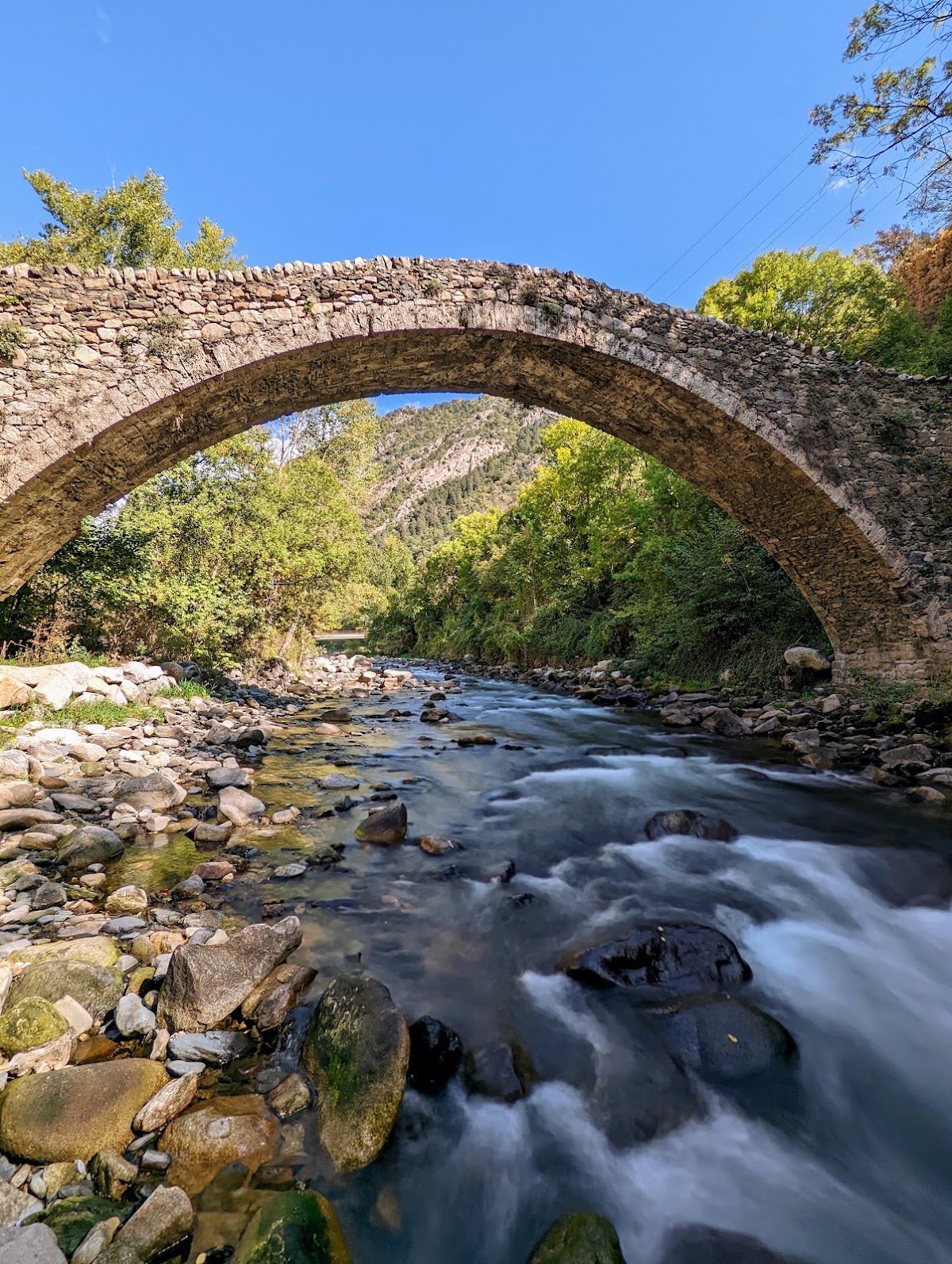
Pont de la Margineda

Pont de la Margineda

i

Pont de la Margineda

Photo by Marcos GF

Stone arches, labyrinthine paths, and gentle riverside breezes mark the crossing at Pont de la Margineda, a medieval bridge standing quietly among the wooded hills of Andorra. With each weathered stone, this iconic landmark reveals stories that stretch across centuries, inviting travelers to pause, explore, and imagine the lives that once depended on its sturdy grace.

Visiting Info

Currency
Entrance fee
Free
Hours
Opening hours
Monday: Open 24 hours
Tuesday: Open 24 hours
Wednesday: Open 24 hours
Thursday: Open 24 hours
Friday: Open 24 hours
Saturday: Open 24 hours
Sunday: Open 24 hours

Contact Information

Location
Address
AD500 Andorra la Vella, Andorra

Planning your visit

For those drawn to the enduring charm of Pont de la Margineda, early preparation can lead to a memorable trip. Set just outside the bustle of Andorra la Vella, the bridge offers a peaceful spot year-round. Spring and fall bring bright colors and crisp air, making strolls along the Valira River especially pleasant. Getting here is straightforward, whether by rental car, local bus, or even by foot for those staying nearby. The site rarely feels crowded outside midday weekends, and no ticket is required. Most visitors spend about an hour exploring the area—but slowing down rewards the observant.

  • Best time to visit: Spring and fall mornings offer lovely light and small crowds.
  • How to get there: Local bus lines stop nearby, and parking is available for private cars. The bridge sits along the CG-1 road, a short drive southwest of Andorra la Vella’s center.
  • Accessibility: The approach is paved, but the bridge itself has cobblestones and mild slopes. Families and seniors may find handrails helpful, but strollers or wheelchairs could face difficulty on the uneven surface.
  • Average visit duration: 30 to 60 minutes, plus time for a picnic or riverside walk.

Must see stuff

Pont de la Margineda captivates with its perfect, single span arch and ancient stones, but there’s more to discover beyond first glance. Bas-relief sculptures dot the nearby park, while hidden walking trails wind past wildflowers and picnic tables. The surrounding area, often overlooked by hurried travelers, opens up opportunities for quiet reflection and intimate snapshots. Centuries-old history blends with Andorran tradition, giving every visit a deeper meaning.

  • Key sights: The signature granite arch, standing five meters tall, is the most photogenic point. Don’t miss the historical information plaques nearby.
  • Unique experiences: Pause at sunset, when soft light glows on the stones and woodland birds return. For extra insight, join an occasional guided tour led by local heritage groups.
  • Photo-worthy locations: Stand upstream for panoramic shots of the bridge, or frame views from the riverside path beside wild mint and poplars.
  • Cultural and historical facts: Built in the 14th century, Pont de la Margineda is Andorra’s largest medieval bridge and once powered trade between Spain and France. Nearby, iron sculptures echo Andorra’s legacy in metallurgy.

Tips for your visit

A trip to Pont de la Margineda rewards little preparations. Weekdays or early mornings guarantee a quieter encounter, while sturdy shoes help on cobbled stones, slick from dew and river spray. Locals treat the bridge and riverbanks with respect, leaving no trace. Some benches invite a rest or a tucked-away picnic, but no restrooms or shops stand close—snacks and water should be packed ahead. Children often paddle near the banks, though currents after rain can run swift.

  • Best times to avoid crowds: Arrive before 10 AM or after 5 PM, especially outside school holidays.
  • What to bring: Water, light snacks, walking shoes with grip, and a camera for moody photos.
  • Local etiquette: Keep noise low, avoid climbing the parapets, and pack out all trash. Dogs are welcome but should stay leashed.
  • Safety and comfort: The bridge has no railings on the sides. Supervise young children and tread carefully in wet weather.