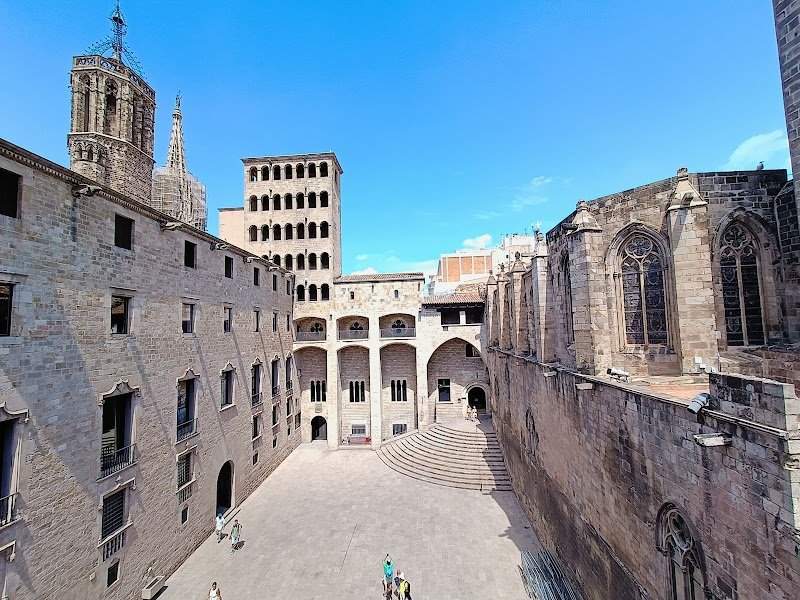
Google Places photo

Casa Padellàs (Barcelona History Museum MUHBA)

Barcelona, Spain
i

Google Places photo

Photo by Renaud Domont (Aka)

Shaded by the golden light of Plaça del Rei, Casa Padellàs rises quietly, its gothic arches and stone walls drawing visitors into centuries of Barcelona’s story. This grand house, a blend of medieval prestige and modern museum curation, brings together past and present within its carefully preserved halls. Inside, the echoes of Roman streets and noble families invite exploration, transforming an ordinary day into a journey across ages. Few places in Barcelona anchor visitors so firmly to the city’s layered history as Casa Padellàs, which now serves as the main site of the Barcelona History Museum (MUHBA).

Visiting Info

Currency
Entrance fee
7 EUR
Hours
Opening hours
Monday: Closed
Tuesday: 10:00 AM – 7:00 PM
Wednesday: 10:00 AM – 7:00 PM
Thursday: 10:00 AM – 7:00 PM
Friday: 10:00 AM – 7:00 PM
Saturday: 10:00 AM – 7:00 PM
Sunday: 10:00 AM – 8:00 PM

Contact Information

Location
Address
Pl. del Rei, s/n, Ciutat Vella, 08002 Barcelona, Spain

Planning your visit

Well-planned visits to Casa Padellàs can mean the difference between a rushed walk-through and a memorable experience that lingers long after leaving. Although weekends and midday hours tempt many travelers, mornings during the week offer a quieter pace, ideal for those who want to linger beside mosaics and marvel at city models. Located in the heart of the Gothic Quarter, reaching Casa Padellàs by Metro, bus, or on foot through winding medieval streets is as much a part of the experience as the destination itself. Some older stone stairways may challenge travelers with mobility limits, though lifts connect the main exhibition spaces. Families, history buffs, and curious wanderers alike find plenty here, but those with toddlers might want to pack an extra snack or two—café options nearby are limited.

  • Best time to visit: Weekday mornings (especially Tuesday to Thursday) or late afternoons in spring or fall.
  • How to get there: Metro L4 (Jaume I), walking from La Rambla or Plaça Catalunya, or city buses (lines V15, 47, or H16).
  • Accessibility: Major exhibits are accessible for wheelchairs and strollers, with some original stairs requiring staff assistance; stroller use works best for older babies or toddlers.
  • Average visit duration: 2 to 3 hours for highlights; history lovers should plan for at least half a day.

Must see stuff

Casa Padellàs offers a tapestry of discovery, starting with its own architecture. Visitors step through a magnificent Renaissance courtyard, carved with heraldic shields and soft archways, before descending into an awe-inspiring underground world. Here lie the Roman ruins of Barcino—ancient streets, workshops, and baths unearthed by archaeologists. Upstairs, carefully curated exhibits trace Barcelona’s story through city maps, everyday objects, and digital models, bridging the ages and showing how the same streets evolved over time. The hushed Sala Martí l'Humà, once a throne room of King Martin, impresses with soaring ceilings and historical ambiance. Some interactive areas enchant younger guests, while the archives and temporary exhibitions draw the deep curiosity of locals and return visitors. Photographers linger by sunny windows or in the echoing patios, capturing details lost to rush.

  • Key sights: The underground Roman street grid, medieval walls, and Renaissance courtyard.
  • Unique experiences: Guided archaeology tours, children’s workshops, and temporary exhibitions on Barcelona’s changing identity.
  • Photo-worthy locations: Stone staircases in the central patio, the mosaic hallways, and the throne room windows overlooking Plaça del Rei.
  • Cultural facts: The building was moved stone-by-stone here in the 1930s; the underground ruins reveal ancient winemaking and laundry workshops from Roman times.

Tips for your visit

A little planning goes a long way when visiting Casa Padellàs. Early risers enjoy emptier corridors and quiet moments among the exhibits, while late afternoon light brings out the stone’s warm hues—though crowds can return just before closing. Autumn and spring bring extra comfort, as the stone keeps a pleasant temperature. Water bottles and good shoes make wandering beneath the city more enjoyable, since floors can be uneven or cold even on a sunny day. Flash photography is restricted in several exhibit areas to preserve ancient materials, so check for signage before snapping a shot. Courteous exploration keeps the visit smooth: keep voices low in the underground halls, respect barriers near the oldest artifacts, and take advantage of lockers for bags and coats. Those with kids will find the museum staff welcoming, but a quick look at the program for family-friendly workshops can pay off.

  • Best times to avoid crowds: Arrive within the first hour after opening, especially midweek.
  • What to bring: Refillable water bottle, camera (no flash), sturdy shoes, and a light sweater for underground rooms.
  • Local etiquette: Speak quietly in the underground spaces, don’t touch artifacts or displays, and wait your turn in narrow passageways.
  • Safety and comfort: Watch for uneven stone floors, use lockers for heavy bags, and check the museum’s website for temporary closure notices during special events or exhibit changes.
Casa Padellàs (Barcelona History Museum MUHBA) – Tickets, Hours & Visitor Guide