
National Museum of Romanian History: comprehensive exhibits on Romania’s past.
National Museum of Romanian History: treasures spanning ancient to modern eras.

National Museum of Romanian History

Bucharest, Romania
i

National Museum of Romanian History: comprehensive exhibits on Romania’s past.

Behind stately stone columns on Bucharest’s Calea Victoriei, a journey through centuries of Romanian history waits inside the National Museum of Romanian History. Housed in a grand former postal palace—younger than it looks—the museum brings together treasures, forgotten everyday objects, and legends carved in marble. For anyone interested in stories shaped by kings, revolutions, and ordinary lives, this museum has a way of making the past feel close at hand.

Visiting Info

Currency
Entrance fee
20 RON
Hours
Opening hours
Monday: Closed
Tuesday: Closed
Wednesday: 9:00 AM – 5:00 PM
Thursday: 9:00 AM – 5:00 PM
Friday: 9:00 AM – 5:00 PM
Saturday: 9:00 AM – 5:00 PM
Sunday: 9:00 AM – 5:00 PM

Contact Information

Location
Address
Calea Victoriei 12, 030026 București, Romania

Planning your visit

The National Museum of Romanian History is right in the heart of Bucharest, making it easy to fit into most city itineraries. Because exhibitions can be extensive, planning ahead helps make the most of your visit. Weekends, especially in summer, attract large tour groups, while weekdays are noticeably quieter. Buying tickets at the door is standard, but during peak months, expect a short wait, especially for special exhibitions.

  • Best time to visit: Late mornings on weekdays or early afternoons in spring and fall bring fewer crowds and softer natural light in the galleries.
  • How to get there: The museum stands on Calea Victoriei, directly reachable by Metro (Piata Unirii or Universitate stations) or frequent bus routes. Taxis and rideshares easily drop visitors nearby.
  • Accessibility: The main entrance offers ramps; wide corridors allow movement with wheelchairs or strollers, but some sections have original steps. Staff help when needed.
  • Average visit duration: Two hours gives enough time for main highlights, but history fans can linger half a day.

Must see stuff

The museum’s galleries invite visitors to wander through vivid stories, from prehistoric times to the 20th-century revolution. Each wing or room can surprise: glittering crowns, tiny Roman figurines, or grimy coins once traded by peasants. Even those new to Romanian history will find accessible displays and interactive screens that add color to old facts.

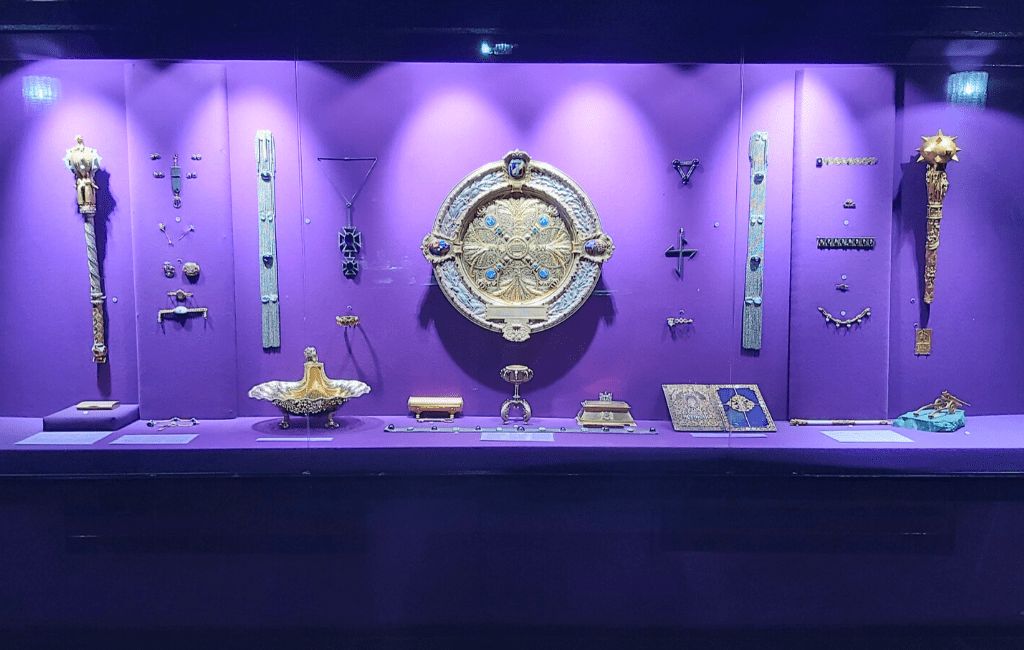
  • Key sights or features: The National Treasury Hall, home to the gold and sparkling Crown Jewels; the full-scale replica of Trajan’s Column, which tells the Roman conquest story in incredible detail; and the Lapidarium, filled with ancient stone carvings under a cool glass roof.
  • Unique experiences: English-language guided tours (offered most days) shed new light on royal scandals or hidden gems. Quiet side halls display rare postage stamps and quirky “peasant bling”—folk jewelry from remote villages.
  • Photo-worthy locations: The grand staircase, with marble columns and stained glass; the Lapidarium’s mix of stone and sunlight; and the striking historical costumes in upstairs rooms.
  • Cultural or historical facts: The museum’s crown jewels include pieces made for Romania’s first royal family. Roman artifacts highlight how the capital stands on former fortresses. The Lapidarium’s mosaics and tombstones reveal ancient beliefs about life and death.

Tips for your visit

Visiting the museum is usually a smooth experience. Some galleries, though, can feel chilly or warm depending on the season—especially in the extra-high Lapidarium hall. Photography is allowed without flash, but some rooms feel dim, so a steady hand helps. Friendly staff keep an eye out—backpacks sometimes must be left in free lockers. Short rest breaks are possible in quiet corners but there’s no café inside, so snacks beforehand help. Temporary exhibitions rotate, giving return visitors new reasons to stop by.

  • Best times to avoid crowds: Before noon on Tuesdays or Thursdays; avoid weekends after lunch in summer.
  • What to bring: Water bottle, comfortable shoes for marble floors, a camera or phone for photos. Light sweater in spring or fall.
  • Local etiquette or rules: Speak quietly in smaller rooms. Don’t touch artifacts. Leave large bags at the cloakroom.
  • Safety or comfort advice: Watch steps in older corners and curb around columns. Children enjoy some hands-on displays, but remind them to stay beside parents in busy halls.