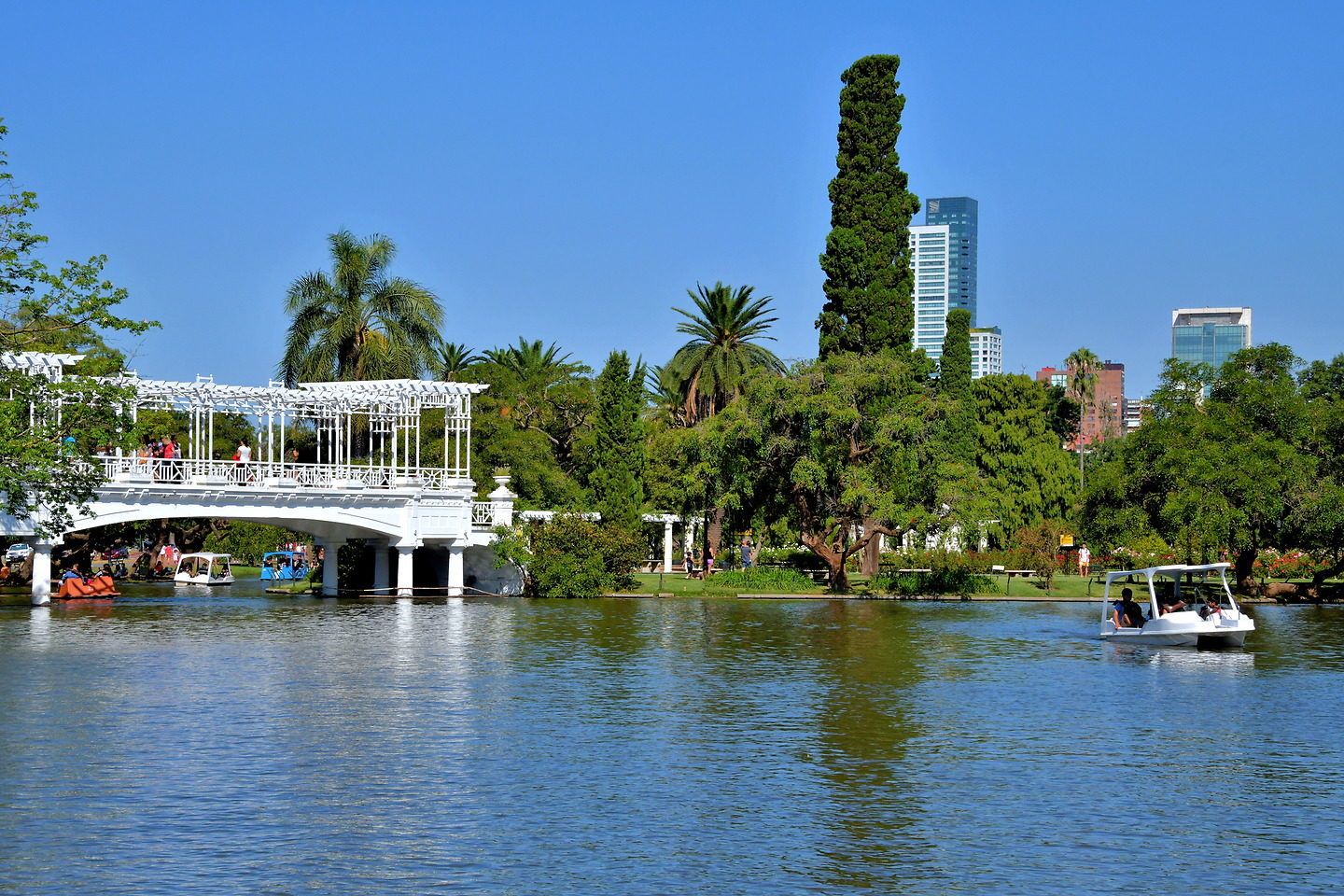
Beautiful view of Tres de Febrero Park

Tres de Febrero Park

Buenos Aires, Argentina
i

Beautiful view of Tres de Febrero Park

Green spaces often reveal the best of a city, and in Buenos Aires, Tres de Febrero Park stands as proof. Stretching across the Palermo neighborhood, this park invites both locals and visitors to slow down and enjoy life’s little moments. The open lawns, flower-filled gardens, and well-placed benches foster equal opportunities for relaxation, fitness, socializing, and quiet contemplation. Far from just another pretty backdrop, Tres de Febrero Park pulses with activity, history, and the daily rhythm of urban Argentina.

Visiting Info

Currency
Entrance fee
Free
Hours
Opening hours
Monday: Open 24 hours
Tuesday: Open 24 hours
Wednesday: Open 24 hours
Thursday: Open 24 hours
Friday: Open 24 hours
Saturday: Open 24 hours
Sunday: Open 24 hours

Contact Information

Location
Address
Av. Infanta Isabel 110, C1425 Cdad. Autónoma de Buenos Aires, Argentina

Planning your visit

Smart planning can turn a stroll through Tres de Febrero Park from a simple visit into a memorable day. The park thrives with families, joggers, couples, and weekday workers on leisurely breaks—so timing matters. Buenos Aires’ mild spring and fall months fill the grounds with color and moderate temperatures that encourage lingered walks. On weekends, expect more local families with children, while weekdays tend to be quieter. Getting there is straightforward, thanks to the city’s abundant transportation options. Parking, though, can be scarce around main gateways. The park’s wide paths invite strollers and wheelchairs, but some areas with cobblestones may challenge visitors with limited mobility. Exploring at a relaxed pace takes two to three hours; those chasing every hidden corner could easily spend longer.

  • Best time to visit: Spring (September–November) and fall (March–May) mornings or late afternoons. Weekdays for fewer crowds.
  • How to get there: Accessible by Subte (Palermo station, Line D), several city buses, taxis, or by bike. Parking spots around entrances, but may fill up early.
  • Accessibility: Family-friendly paths and playgrounds, some cobblestone areas. Most main areas accessible to seniors and wheelchairs.
  • Average visit duration: 2–3 hours for the main sights, up to half a day for in-depth exploration.

Must see stuff

Within Tres de Febrero Park, multiple worlds await discovery. Locals know it as “El Rosedal,” thanks to the famous Rosendal Rose Garden, but the park’s reach stretches beyond blooms. Shady gardens, sparkling lakes, art installations, and historic pavilions share the landscape, making each section worth a pause. Standout features draw crowds, while quieter corners reward curious wanderers. Photography lovers will find endless backdrops, and history buffs can uncover stories of Argentine writers and leaders hiding in plain sight.

  • The Rose Garden (El Rosedal): Over 18,000 rosebushes in neat clusters, with seasonal fountains and a white marble bridge ideal for photo-ops.
  • Paddle boating on El Lago de Regatas: Rent pedalos or rowboats for a unique view of greenery and the city skyline reflected on the water.
  • Sculpture Garden and Poets’ Walk: Bronze busts honor great Latin American literary figures. Seek out Jorge Luis Borges or Alfonsina Storni statues along arched, tree-lined paths.
  • Planetarium Galileo Galilei: The glass-and-concrete dome rises near the parkside and hosts interactive astronomy exhibits and light shows.
  • Secret reading nooks near the public library: Locals hide with a mate gourd and a paperback beneath tall eucalyptus trees for the ultimate siesta spot.
  • Photo moment: Marble Greek Bridge over the main lake, especially at dusk, when the water glows gold and pink.
  • Culture fact: Founded in 1874, the park originated as a project to give the city “lungs”—public green space designed for public health and leisure.

Tips for your visit

A visit to Tres de Febrero Park unfolds best with a few smart tricks in mind. The park’s size dazzles at first, so picking a general route—around the lakes, through the gardens, or toward the museums—saves sore feet and guesswork. Water bottles and snacks come in handy, since food stalls cluster mainly near entrances and major roads, not deep within the grounds. Most people picnic on the open lawns or benches, and local etiquette respects the tranquility—ball games and loud music suit the outer fields but not the rose gardens. Though the atmosphere feels safe, like anywhere in a big city, it pays to keep bags close and valuables discreet, especially in crowded or festival times. Summer days can turn hot and humid; shade, hats, and sunscreen are good companions. Dogs are welcome, but leash rules apply near play and garden areas.

  • Best times to avoid crowds: Weekday mornings or evenings, especially outside national holidays or spring weekends.
  • What to bring: Water, a camera, sunscreen, optional picnic blanket, comfortable shoes. Cash for food stalls or rental boats.
  • Local etiquette: Be mindful with noise, keep to the right on walking or bike paths, and tidy up after picnics.
  • Safety and comfort: Stick to lit areas after dusk; watch for cyclists and rollerbladers along wider paths.