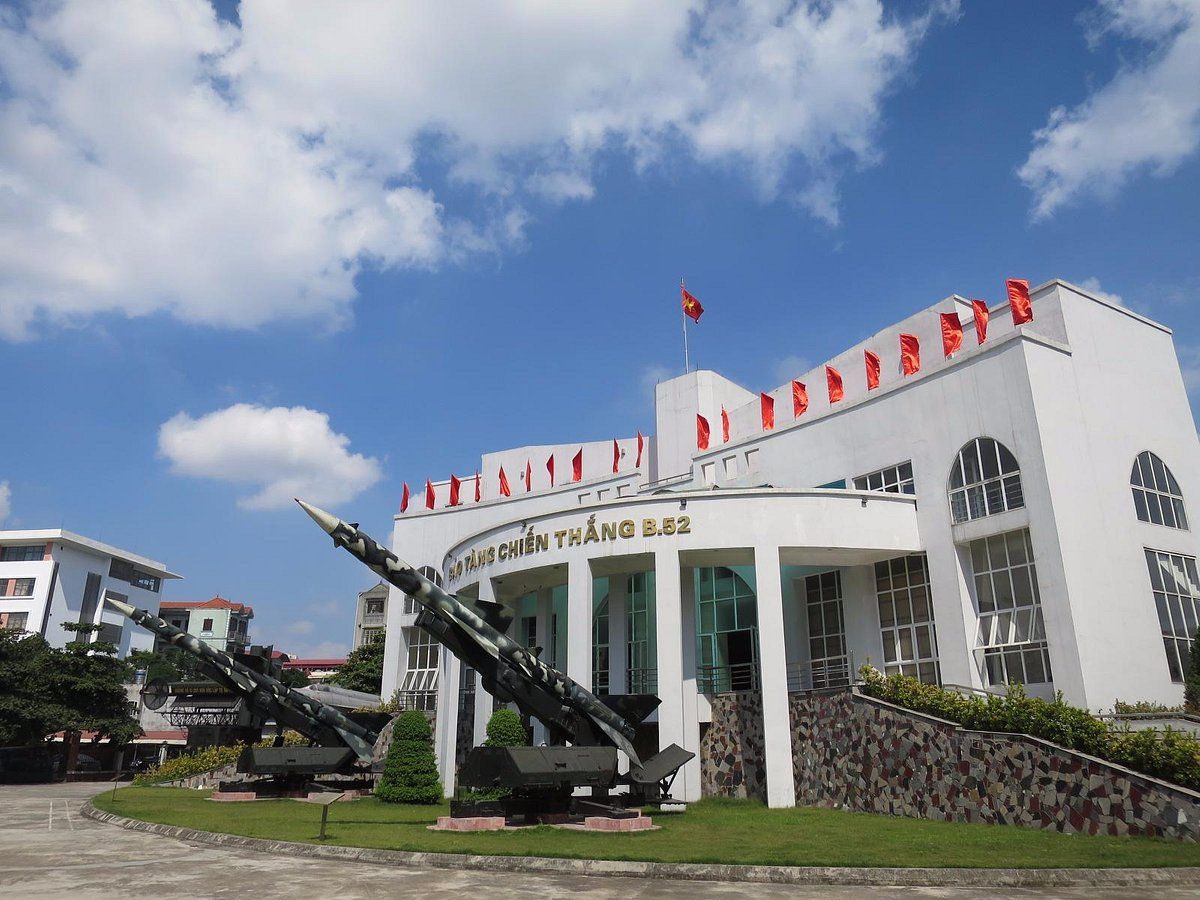
Beautiful view of B52 Victory Museum

B52 Victory Museum

Hanoi, Vietnam
i

Beautiful view of B52 Victory Museum

Few places capture the tension and resilience of twentieth-century warfare like the B52 Victory Museum. Surrounded by leafy lanes and the quiet hum of city life, the site brings Vietnam’s air defense history into sharp focus. Here, hunks of shattered metal and detailed exhibits invite visitors to look closely at conflict, ingenuity, and survival. Exploring the museum grounds is more than a walk through history; it’s an encounter with the grit and spirit of a country shaped by struggle.

Visiting Info

Currency
Entrance fee
40000 VND
Hours
Opening hours
Monday: Closed
Tuesday: 8:00 – 11:00 AM, 1:30 – 4:30 PM
Wednesday: 8:00 – 11:00 AM, 1:30 – 4:30 PM
Thursday: 8:00 – 11:00 AM, 1:30 – 4:30 PM
Friday: Closed
Saturday: 8:00 – 11:00 AM, 1:30 – 4:30 PM
Sunday: 8:00 – 11:00 AM, 1:30 – 4:30 PM

Contact Information

Location
Address
157 Đội Cấn, Ba Đình, Hà Nội, Vietnam

Planning your visit

Visiting the B52 Victory Museum requires a bit of forethought. The location sits in Ba Dinh District, away from the usual tourist crowds but easily reached by taxi or motorbike. Mornings are less crowded, letting visitors linger among the displays undisturbed. The museum remains modest in size, making for an intimate experience—if you time your arrival well.

  • Best time to visit: Early morning or late afternoon for cooler temperatures and fewer groups.
  • How to get there: Short taxi ride from Old Quarter or use ride-hailing apps; bus routes #09 and #14 also stop nearby.
  • Accessibility: Outdoor paths are paved, but some indoor exhibit spaces have steps, which may be challenging for wheelchairs or strollers.
  • Average visit duration: 60–90 minutes is typical for most visitors.

Must see stuff

The museum’s centerpiece looms outside: the massive wreckage of a U.S. B-52 Stratofortress bomber. Unearthed from Hanoi’s lakes, the twisted fuselage stands as both a memorial and a photographic magnet. The collection of Soviet-era anti-aircraft missiles, artillery, and radar units offer a close-up view rarely seen elsewhere. Indoors, map-lined halls and poignant dioramas trace the battles of “Operation Linebacker II,” unraveling strategic moves and everyday lives during air raids. Children in school uniforms often file past, evidence of the museum’s living link to the city’s collective memory.

  • Main sights: Outdoor B-52 wreckage, MIG fighter jets, and the anti-air defense gun placements.
  • Unique experiences: Pause by the site’s original bomb crater—a somber spot often overlooked—where locals tell stories of the December 1972 raids.
  • Photo-worthy locations: Wide shots of the open-air exhibition yard at sunset, or close-ups of bomb fragments and plane panels marked by shrapnel.
  • Cultural or historical facts: The displays highlight both military strategy and civilian fortitude, captured through Vietnamese-language news clippings, relics, and uniforms worn during the bombings.

Tips for your visit

While entry fees are modest, expect few English labels—helpful if you come with a guide or translation app. Summer heat can be fierce, and a lack of shade in the yard means sun protection is a must for those exploring the outdoor exhibits. Though photography is allowed, some displays have “do not touch” signs; respecting these helps maintain the artifacts for future generations. Small snacks or bottled drinks aren’t sold onsite, so bringing your own prevents wandering off hungry.

  • Best times to avoid crowds: Weekdays, especially before 10 AM.
  • What to bring: Water bottle, sunhat, sunscreen, and a camera for unique angles.
  • Local etiquette: Step carefully and keep voices low, as student groups and veterans often visit for reflection and commemoration.
  • Safety or comfort: Some walkways are uneven; sturdy shoes offer better footing, especially after rain.