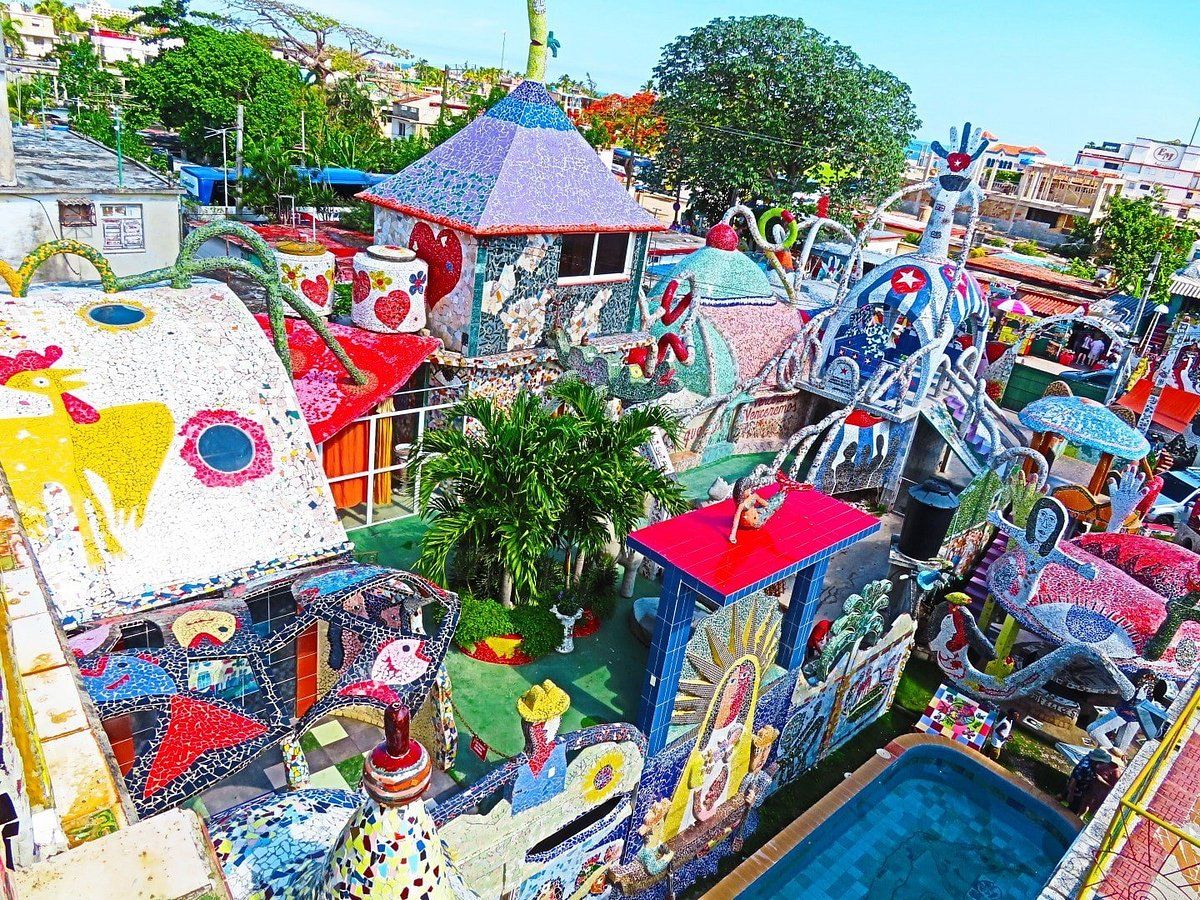
Beautiful view of Fusterlandia

Fusterlandia

Havana, Cuba
i

Beautiful view of Fusterlandia

Just outside central Havana stands a wonderland unlike any other in Cuba. A kaleidoscope of color and creativity, this public art project invites curious travelers into a swirl of mosaic tiles and sculptures. Here, visitors of all ages wander through streets transformed by imagination, discovering new works of art around every corner and reconsidering what a neighborhood can become.

Visiting Info

Currency
Entrance fee
Free
Hours
Opening hours
Monday: 9:30 AM – 4:00 PM
Tuesday: 9:30 AM – 4:00 PM
Wednesday: 9:30 AM – 4:00 PM
Thursday: 9:30 AM – 4:00 PM
Friday: 9:30 AM – 4:00 PM
Saturday: 9:30 AM – 4:00 PM
Sunday: 9:30 AM – 4:00 PM

Contact Information

Location
Address
3GQ8+WPQ, La Habana, Cuba

Planning your visit

A visit to this whimsical destination requires a bit of preparation. Although located in the seaside neighborhood of Jaimanitas on Havana’s outskirts, travelers can reach the site by car, taxi, or occasionally by public bus. Weekends and holidays get lively, with local families and visitors mingling, so those seeking a quieter experience should plan accordingly. There is no entrance fee, but local guides sometimes offer impromptu tours for a small tip. Comfort and open minds are essential—expect uneven terrain, sun, and plenty of inspiration.

  • Best time to visit: Weekday mornings for fewer crowds or late afternoons for softer light
  • How to get there: 25-minute taxi from central Havana; bus routes available but less reliable
  • Accessibility: Most streets are accessible for strollers and wheelchairs, though some uneven sidewalks may make navigation tricky in spots
  • Average visit duration: 1-2 hours for a full stroll, longer for photo fans or art lovers
Must see stuff

Wandering these streets, visitors are greeted by towering figures and houses clad in wild, joyful mosaics. Sculptures inspired by Cuban folklore and Gaudí’s Barcelona seem to spring from every surface. Just steps from the main road, those with curious eyes spot entire houses covered in swirling ceramic—evidence of an artist’s decades-long labor of love. Throughout the neighborhood, public benches become works of art, garden walls burst with laughter, and a blue serpent wraps around a rooftop. Each turn brings a new surprise, and a story unfolds for anyone who slows down and looks.

  • Key sights or features: The artist’s home, local gardens filled with mosaic figures, and the iconic mosaic-covered bus stop
  • Unique experiences: Watching artists at work, chatting with locals who helped build the project, finding personal touches—each tile tells a part of someone’s story
  • Photo-worthy locations: The rooftop oasis, the rainbow tunnel, and the brightly tiled staircases
  • Cultural or historical facts: Born from Cuban artist José Fuster’s vision in the 1990s, this project transformed Jaimanitas through community collaboration, making art a daily part of life

Tips for your visit

A little preparation can transform an enjoyable visit into something extraordinary. Early arrivals avoid busier midday crowds and catch the best light for photos, though lively afternoons provide a peek into local life and culture. Good walking shoes make the wandering easier; sun hats and water are wise on hot Cuban days. Although visitors may feel free to explore, the neighborhood remains a living, working community—quiet respect for local families and homes is appreciated. Bargaining isn’t common, but supporting artists through small purchases or tips helps the project continue. On rare days, heavy rain can make outdoor tiles slippery, so a bit of caution is prudent.

  • Best times to avoid crowds: Arrive before 11am or after 4pm, especially on Sundays and holidays
  • What to bring: Reusable water bottle, camera or phone, sunscreen, light clothes, and comfortable shoes
  • Local etiquette or rules: Ask before entering private spaces; respect artists and residents; don’t climb on delicate walls or sculptures
  • Safety or comfort advice: Watch for sloping tiles; mind children near art installations; bring small bills for art purchases or donations