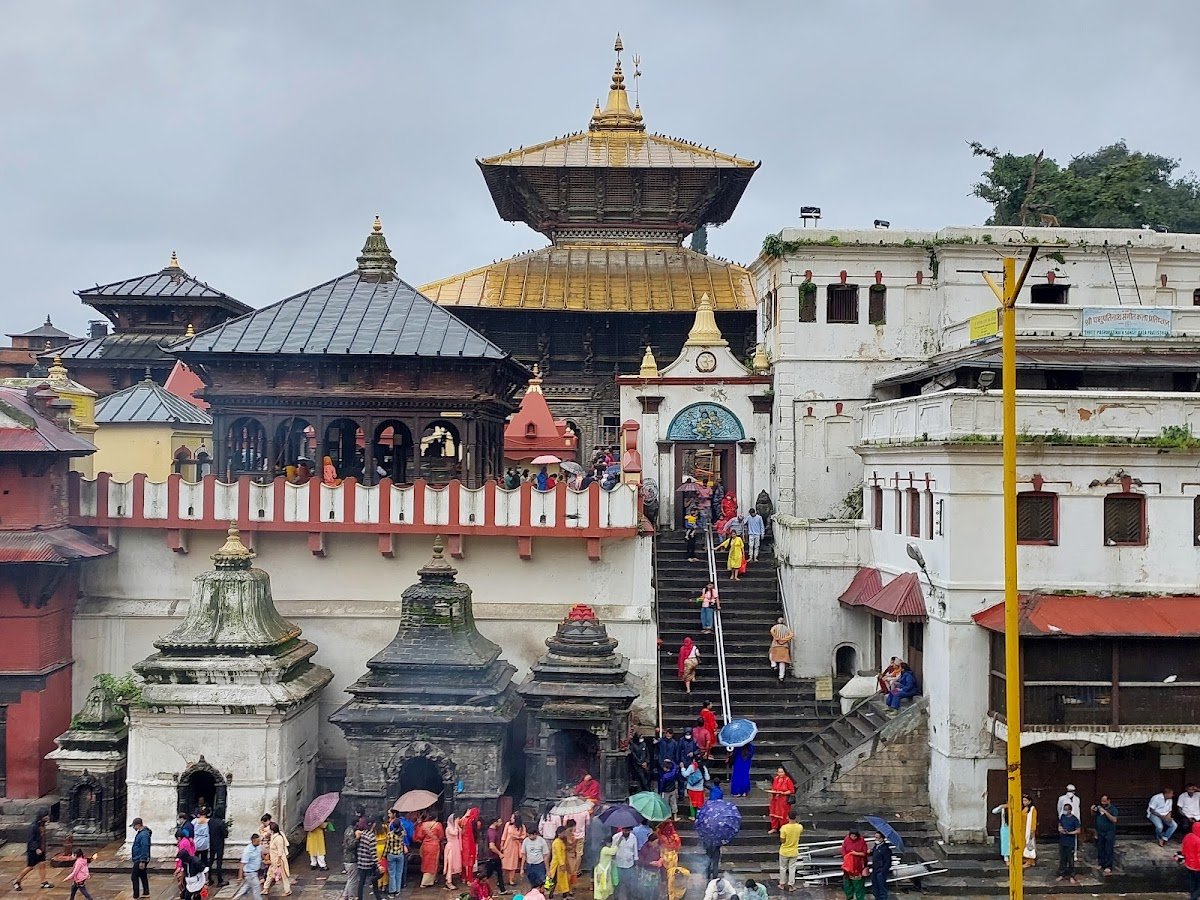
Pashupatinath Temple

Pashupatinath Temple

Kathmandu, Nepal
i

Standing on the misty banks of the Bagmati River, Pashupatinath Temple draws pilgrims and travelers into the living heartbeat of Nepal’s spiritual world. Here, the sacred and the everyday blend. Sadhus, or holy men, rest in the dappled shade. Families stream through ancient gates to light lamps and pray. Smoke drifts up from riverside ghats, mingling with the chants that echo across carved rooftops. Pashupatinath is more than an icon; this is a crossroads of history, belief, and daily life.

Visiting Info

Currency
Entrance fee
1000 NPR
Hours
Opening hours
Monday: 10:00 AM – 5:00 PM
Tuesday: 10:00 AM – 5:00 PM
Wednesday: 10:00 AM – 5:00 PM
Thursday: 10:00 AM – 5:00 PM
Friday: 10:00 AM – 5:00 PM
Saturday: 10:00 AM – 5:00 PM
Sunday: 10:00 AM – 5:00 PM

Contact Information

Location
Address
44621 Pashupati Nath Road, Kathmandu 44600, Nepal

Planning your visit

Arriving at Pashupatinath Temple takes a little preparation, whether coming for religious reasons or as a curious traveler. The temple, around six kilometers from Kathmandu’s bustling center, stays busy year-round—especially during holy festivals like Maha Shivaratri. Early mornings bring quiet, soft sun, and a more reflective pace before crowds build. Non-Hindus cannot enter the main temple courtyard but can explore the wide grounds, visit nearby shrines, and watch riverside rituals. No ticket is needed for the outer areas, though a small entry fee applies for foreigners. The walk is gentle but the many stone steps can be challenging for some; riverside ramps and benches offer rest.

  • Best time to visit: October to March, early mornings for fewer crowds; Maha Shivaratri festival (late February/March) if seeking cultural vibrancy
  • How to get there: Taxi, ride-share, or local bus from central Kathmandu; around 20-minute drive
  • Accessibility: Families and seniors should expect uneven paths and steps; paved entry and some ramps; wheelchair access limited
  • Average visit duration: 1.5–3 hours, longer during festivals

Must see stuff

Pashupatinath Temple’s vast complex offers more than first meets the eye. Temples big and small, colorful statues, and shaded courtyards stretch along both banks. The main gold-topped pagoda stands at the center, visible from the eastern riverbank, where non-Hindus can watch ceremonies from a respectful distance. Ghats for ritual cremations line the river—an experience that’s both moving and humbling. Lesser-known gems dot the complex: the Ram Temple, ancient shrines dedicated to Ganesha, and the quiet forest walk behind the main temple. Vendors along the lanes sell flower offerings and spiced tea, while sacred cows wander between pilgrims, unfazed by the steady flow of visitors.

  • Key sights: Main Pashupatinath pagoda (outside view for most), Arya Ghat cremation steps, bamboo bridges, and the red-roofed Ram Temple
  • Unique experiences: Observing evening aarti (prayer ceremony) on the riverbank, exploring hidden shrines behind the temple, talking with sadhus (many are happy to take photos—sometimes for a small tip)
  • Photo-worthy spots: High terraces above the eastern riverbank, vibrant mural walls near the entrance, wide views toward the temple roofs at sunset
  • Cultural facts: Pashupatinath is a UNESCO World Heritage Site; the temple dates back to at least the 5th century; still an active center for both Hindu worship and local festivals

Tips for your visit

Confident planning turns a trip to Pashupatinath from just sightseeing into memories that linger. Get there early—just after sunrise, the air feels clear and the paths less cramped. The main season (October to March) means more mild weather, but light jackets are wise through winter. Always dress respectfully, with shoulders and knees covered. Shoes come off before sacred spaces, so slip-ons come in handy. While friendly sadhus welcome conversation, always ask before taking photos. The cremation ghats are a place of mourning; watch quietly and never intrude. Be mindful around the uneven stones and give a wide berth to river monkeys, who can be bold but are best enjoyed from afar. Local snacks, bottled water, and small change for entry fees or donations keep things simple.

  • Best times to avoid crowds: Weekday mornings before 9am; avoid festival dates unless purposefully seeking the bustle
  • What to bring: Water bottle, sun hat, easy-on shoes, modest clothing, extra camera battery
  • Local etiquette: Dress and act modestly; no photos inside main temples; respect rituals at riverbanks
  • Safety/comfort: Watch for slippery stones in rainy weather; keep valuables secure; skip snacks left out by street vendors—choose cooked food instead

Similar Attractions

Pashupatinath Temple – Tickets, Hours & Visitor Guide