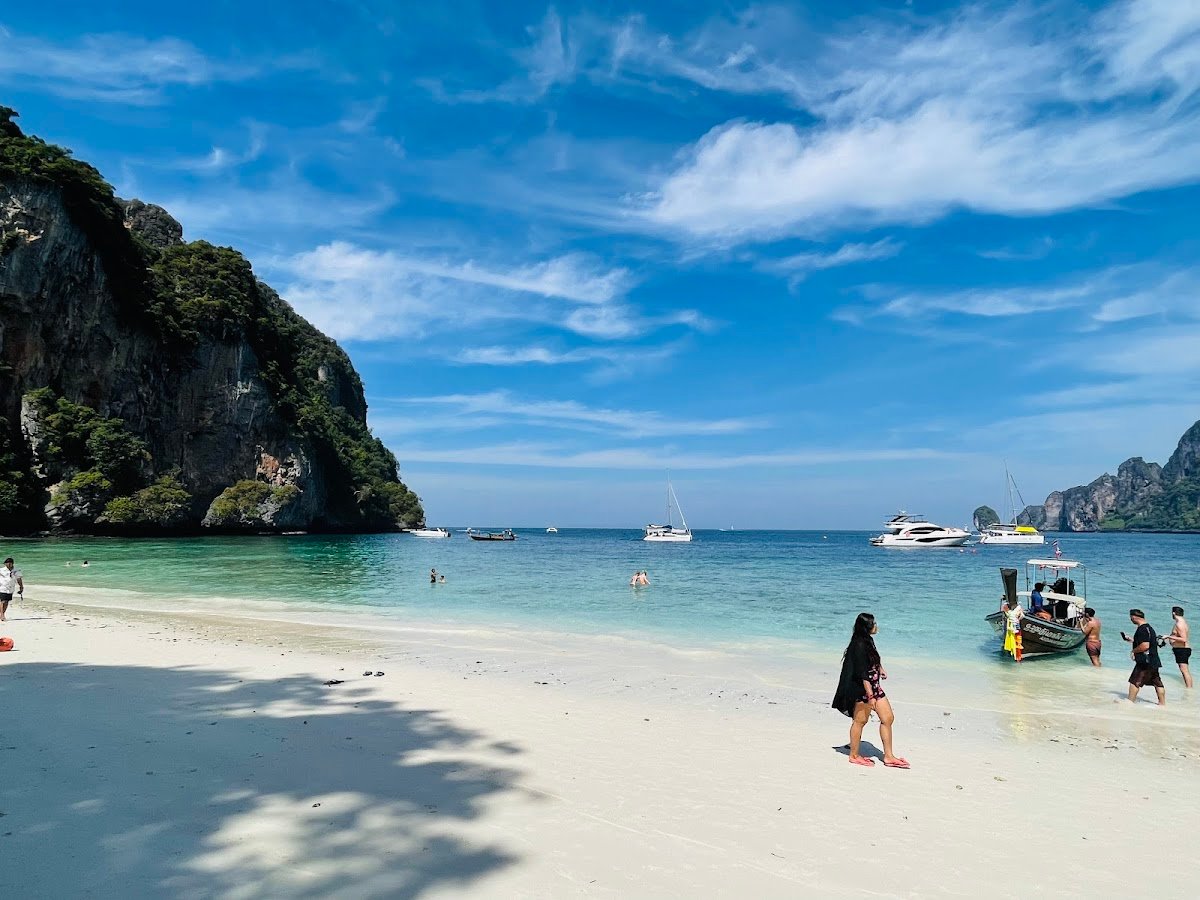
Monkey Beach

Monkey Beach

Krabi, Thailand

Hidden beneath soaring limestone cliffs and veiled by emerald jungle, Monkey Beach near Krabi offers a sugar-white haven that feels far removed from the busy world. While boats occasionally crowd the turquoise bay, the famous crab-eating macaques saunter across the sand like royalty. Guided by their playful antics, visitors discover that this slice of Thailand’s coastline delivers far more than curious monkeys—it promises a lush, lively adventure blending natural spectacle, local rhythms, and a brush with real tropical wildness.

Visiting Info

Currency
Entrance fee
Free

Contact Information

Location
Address
PQV6+7JX, Mueang Krabi District, Krabi 81000, Thailand

Planning your visit

Getting to Monkey Beach requires a bit of forethought. Mornings, before the crowds and heat arrive, deliver the calmest atmosphere and clearest water. Although most come by longtail boat from Ao Nang or Railay Beach, some circle around on organized tours, which often combine Monkey Beach with snorkeling at nearby islets. Families with children or seniors should note that the surf can be choppy, and the climb from boat to shore isn’t very gentle. No entrance ticket is required to visit, but bring small bills for local boat operators. During peak season from November to April, the boat lines get longer, so patience is key. Most visitors spend one to two hours exploring, which fits easily into a larger day of island-hopping.

  • Best time to visit: Early morning (7–10 a.m.), November to April for dry, sunny weather.
  • How to get there: Longtail boat from Ao Nang, Railay, or Ao Tonsai (private or group tours available).
  • Accessibility: Not wheelchair-friendly; boat transfer and beach landing require moderate mobility.
  • Average visit duration: 1–2 hours, longer if combining with snorkeling or a picnic.

Must see stuff

Monkey Beach delivers on its promises of wild beauty—limestone cliffs soar overhead, powdery sand sparkles below, and the water glows turquoise and green. Yet the real draw remains those nimble macaques. While the animals charm visitors with their antics, a closer look reveals thriving coral gardens just off the beach and a labyrinth of shaded trails leading to hidden nooks. A few minutes of silence reveals the chatter of birds, the flick of lizards, and the steady rhythm of waves. For camera fans, the curve of the bay paired with the monkey’s energy creates iconic photos found nowhere else in Krabi. Independent guides sometimes linger on the sand, offering stories about the wild residents and the legends that surround them.

  • Key sights: The main sandy cove fringed with sea almond trees, limestone rock outcrops, and thick jungle.
  • Unique experiences: Watching macaques leap between branches and beg by the water’s edge, snorkeling among soft corals just offshore, or joining a local guide for a nature talk.
  • Photo-worthy spots: Cliff-backed shoreline, monkeys silhouetted against bright surf, longtail boats anchored in aquamarine shallows.
  • Cultural or historical facts: Local lore claims the monkey population grew when fishermen released pets on the island; traditional boats have plied these waters for generations, carrying traders and families long before tourists arrived.

Tips for your visit

Enjoying Monkey Beach goes beyond watching the monkeys. While most remain friendly, some snatch food or lose interest quickly. Seasonal crowds arrive in bursts when boat tours land, so early hours or late afternoons guarantee more calm. Sunscreen, plenty of water, and sturdy sandals protect against the fierce sun and unexpected pebbles. Visitors should leave snacks behind or keep food sealed, since the monkeys associate crinkling wrappers with easy treats. Swimming and snorkeling are safest near anchored boats, away from swift currents at the headlands. Respect local customs: avoid feeding wildlife and keep distance when taking photos. Gentle care for the beach and its residents ensures visitors can return for years to come.

  • Best times to avoid crowds: Arrive before 10 a.m. or after 4 p.m.
  • What to bring: Water, reef-safe sunscreen, sandals, camera, and a dry bag for valuables.
  • Local etiquette: Do not feed the monkeys, keep a respectful distance, and avoid loud noise.
  • Safety or comfort advice: Watch belongings around monkeys, use caution on rocky sections, and bring all trash back to your boat.