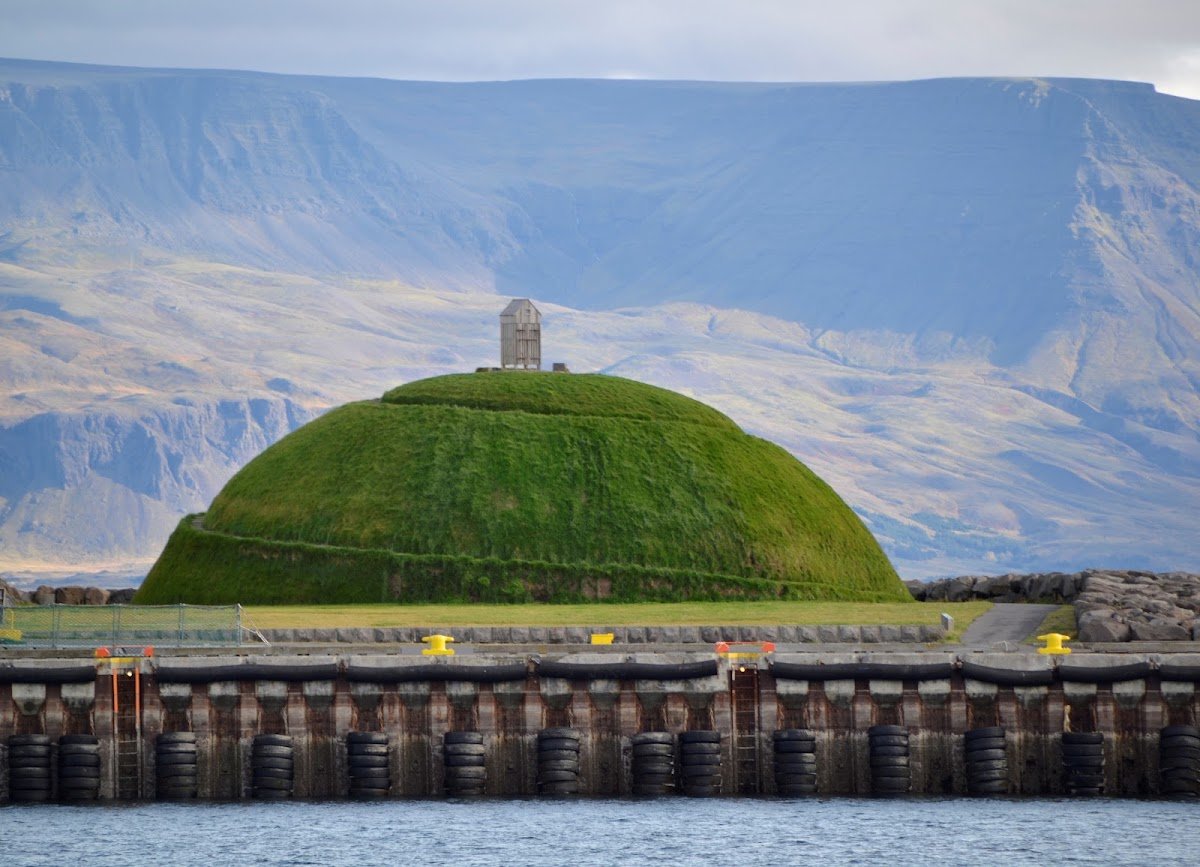
Þúfa

Þúfa

Reykjavik, Iceland

Shaped like a gentle, grassy mound, Þúfa rises quietly on the Reykjavik waterfront, inviting travelers and locals alike to pause above the bustle of the city and look out to sea. This striking artwork and walking path, tucked on the edge of the Grandi Harbor, offers visitors a living lookout: a place designed for reflection, simple adventure, and the embracing Icelandic wind.

Visiting Info

Currency
Entrance fee
Free
Hours
Opening hours
Monday: Open 24 hours
Tuesday: Open 24 hours
Wednesday: Open 24 hours
Thursday: Open 24 hours
Friday: Open 24 hours
Saturday: Open 24 hours
Sunday: Open 24 hours

Contact Information

Location
Address
5338+QF4, Norðurslóð, 101 Reykjavík, Iceland

Planning your visit

Careful timing brings out the best experiences at Þúfa. As daylight hours change with the seasons in Reykjavik, visitors should consider both lighting and weather. The grassy paths become slick after rain, but the surrounding harbor glows in the golden sun of long summer evenings. While Þúfa has no entrance fee or ticket booth, it can feel crowded at midday, especially when groups arrive from city tours. Early mornings or late afternoons often deliver more peace and a quieter sense of place.

  • Best time to visit: Late spring through early fall, ideally at sunrise or in the long dusk of summer evenings.
  • How to get there: Walkable from central Reykjavik (15-20 minutes), or ride bus line 14 to the Grandi area. Cycling paths also lead directly to Þúfa along the waterfront.
  • Accessibility: The gravel and grassy ramp spiraling up Þúfa may challenge wheelchairs and strollers, but the surrounding harbor paths are smooth and easy for all.
  • Average visit duration: About 30 to 45 minutes, including time for photos, views, and a slow walk up and down the mound.

Must see stuff

Þúfa itself offers both a creative walk and a lookout post over Reykjavik’s changing light. Designed by artist Ólöf Nordal, the earthwork sculpture draws attention from all sides, shifting with each step up its spiraled path. At the summit, unexpected details reward those who linger. Views stretch over working shipyards, Harpa Concert Hall’s colored glass, and the snowy top of Mount Esja across the bay. Near the top sits a small fish-drying hut—a nod to the area’s fishing heritage and a favorite spot for quiet reflection.

  • Key sights: The spiraling path, views over Faxaflói Bay, and the rustic wooden fish hut at the summit.
  • Unique experiences: Walking the grassy spiral at sunset, watching fishing boats glide past, or finding local sculptures hidden nearby.
  • Photo-worthy spots: The plateau at the top, with panoramic views; close-ups of wildflowers or hardy moss along the path; the hut silhouetted against stormy clouds.
  • Cultural or historical notes: Þúfa was created in 2013 to honor Iceland’s traditional fishing and working life. The mound itself invites the kind of quiet, meditative walk that suits Iceland’s landscape traditions.

Tips for your visit

Travelers who slow their pace at Þúfa find the experience richer. Wind can surprise on the open summit, so dressing for Reykjavik’s changeable weather matters. Flat shoes make the grassy, sometimes slick spiral easier, especially on misty or wet days. While the simple earth mound draws smartphone photographers and social media wanderers, quiet moments away from the camera often linger in memory longer.

  • Best times to avoid crowds: Come early (before 10 a.m.) or after 8 p.m. during summer months.
  • What to bring: A windproof jacket, comfortable walking shoes, and a camera.
  • Local etiquette: The fish hut is for viewing only; please do not enter or disturb drying racks, if in use for art or demonstration.
  • Safety and comfort: Paths are uneven in places and the summit can be windy, so steady footing is important for children and seniors. No restrooms or water fountains are on site, but cafés nearby offer a warm break after the walk.