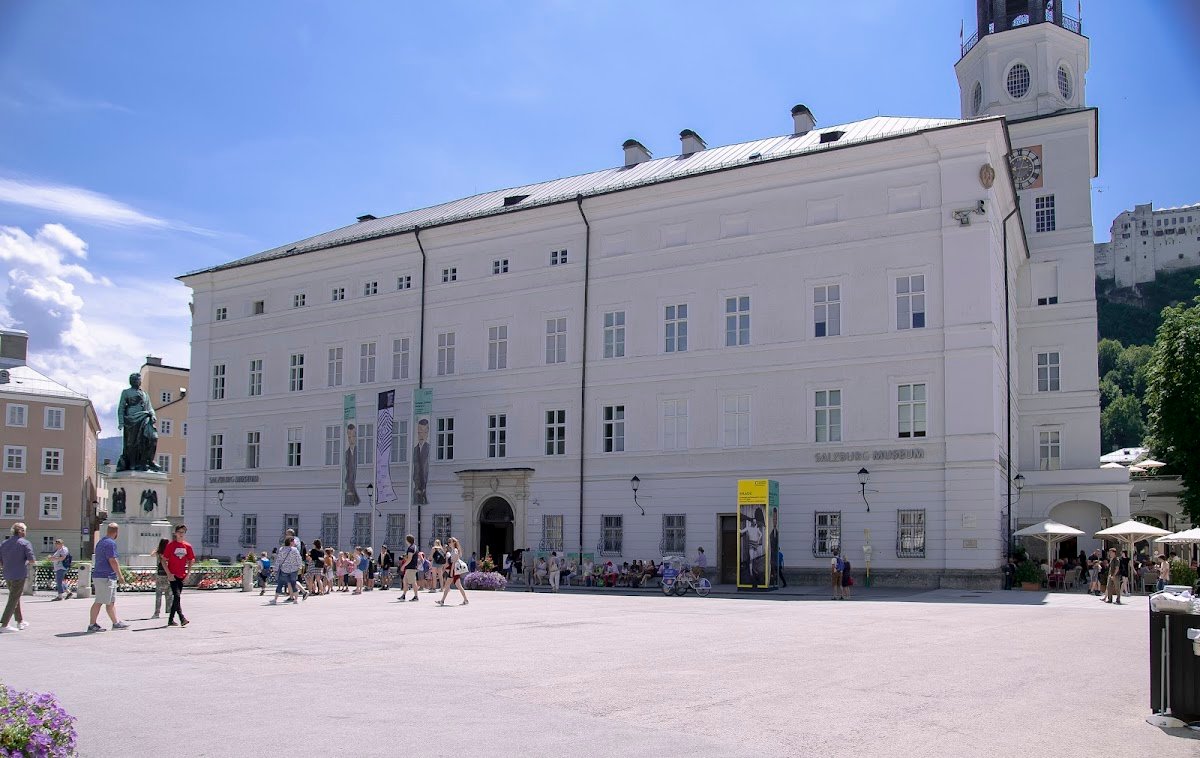
Salzburg Museum

Salzburg Museum

Salzburg, Austria
i

Salzburg Museum sits at the beating heart of Salzburg’s Old Town, welcoming art lovers, history buffs, and curious families every day. While famous for its classical music heritage and Baroque beauty, Salzburg Museum offers visitors a chance to step deeper into the soul of the region—a space where centuries-old artifacts mingle with creative exhibits, and where Austria’s stories come to life in unexpected ways. Modern without losing its sense of tradition, the museum acts as a gateway to Salzburg’s layered past and vibrant present.

Visiting Info

Currency
Entrance fee
9 EUR

Contact Information

Location
Address
Mozartpl. 1, 5020 Salzburg, Austria

Planning your visit

Arriving at Salzburg Museum can be as effortless as a stroll past the Domplatz’s golden statues or as adventurous as a cycle along the Salzach River. Set amid the Old Town’s cobbled squares, the museum draws steady crowds for good reason, but careful planning can make a visit feel private and personal. Advance tickets help avoid lines on busy days, but spontaneous travelers rarely wait long outside peak festival weeks. Most find the museum both family-friendly and accessible; wide doorways and elevators connect each level, and the courtyard offers benches for a restful pause.

  • Best time to visit: Spring and autumn weekdays tend to be quieter. Arrive before 11:00 am or after 3:00 pm for fewer crowds.
  • How to get there: Easily reached by foot from any Old Town hotel. Buses 1, 2, 3, or 5, stop nearby at Mozartsteg or Rathaus; parking garages sit a ten-minute walk away.
  • Accessibility: Wheelchair-accessible entrance, elevators, and restrooms are available. Stroller-friendly for families. Audio guides and group tours can be arranged in many languages.
  • Average visit duration: Plan on 90 to 120 minutes, with extra time for the toy museum next door or a coffee break in the Residenzplatz cafés.

Must see stuff

Those expecting silent galleries and dusty collections will be happily surprised. Inside, Salzburg Museum balances elegance and playfulness, offering something for history experts, art fans, and curious kids alike. Colorful exhibits highlight Salzburg’s local costumes, medieval coins, musical legends, and the city’s ever-changing face. Hidden corners reveal rare treasures—a painting here, an ancient salt stone there. Modern interactive displays share space with centuries-old charm, making every room worth a look.

  • The Golden Hall: Marvel at ornate ceilings and centuries-old frescoes, where imperial history shines beneath modern skylights.
  • Archaeological Vaults: Get close to prehistoric jewelry, ancient tools, and Roman relics unearthed right below the city’s streets.
  • ‘Myth of Salzburg’ Exhibit: Dive into the city’s identity through music, trade, politics, and everyday stories. Includes an interactive scale model of historic Salzburg.
  • The New Gallery: Find rotating art exhibitions by local and national talents. This space often features contemporary installations alongside traditional paintings.
  • Courtyard café: Take a break in the peaceful inner courtyard, where local artists sometimes perform and Salzburgers chat over coffee.
  • Photo spots: Don’t miss the view of Salzburg Cathedral from the windows upstairs or the playful statues in the entrance hall.
  • Historical tidbit: The museum building itself has served as a palace, treasury, and town hall since the late 16th century.

Tips for your visit

Seasoned travelers often mention the balance Salzburg Museum strikes between accessibility and authenticity. To make the most of a visit, small details help: comfortable walking shoes are a smart choice, and light layers suit the sometimes-cool stone halls. English signs accompany every main exhibit, but personal audio guides add color to Austrian German or local dialect displays. Friendly staff gladly answer questions, often sharing tips about exhibitions or nearby galleries.

  • Best times to avoid crowds: Late afternoons on weekdays, especially outside summer festival season.
  • What to bring: A camera for unexpected art finds, a refillable water bottle (staff will point out fountains), and a small bag for souvenirs from the gift shop.
  • Local etiquette: Keep voices low in exhibit halls. Photography is usually allowed, but flash is discouraged. Food and drink are welcome only in the courtyard.
  • Safety or comfort advice: The stone floors can be slippery after rain. Use handrails on stairs and watch for uneven steps in older sections.

Similar Attractions