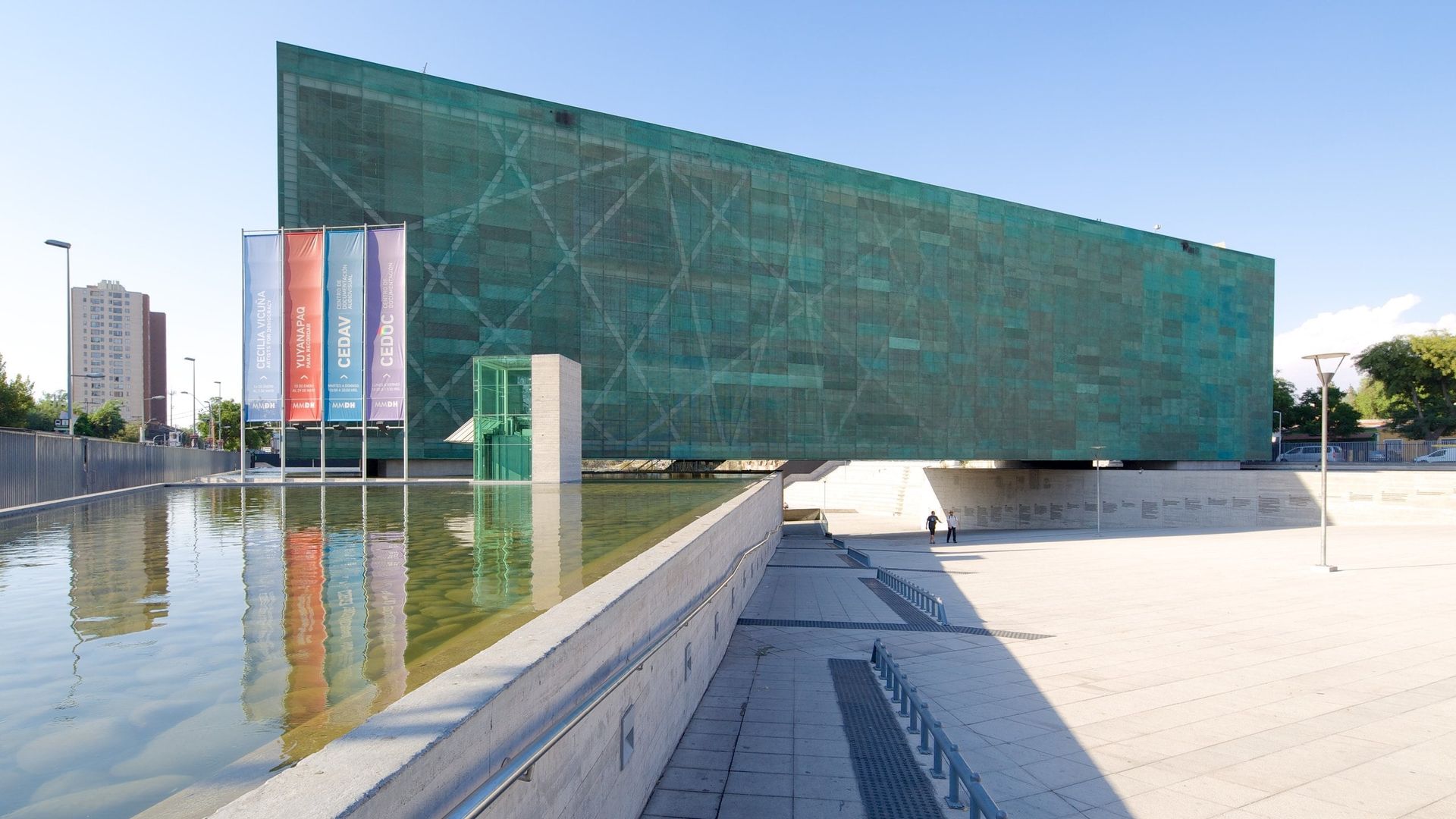
Beautiful view of Museum of Memory & Human Rights

Museum of Memory & Human Rights

Santiago, Chile
i

Beautiful view of Museum of Memory & Human Rights

Chile’s Museum of Memory and Human Rights stands as a major landmark. This striking building, dedicated to the victims of state violence during the Pinochet dictatorship, invites visitors to reflect and learn. Somber yet enlightening, the museum draws in travelers searching for meaning, history, and connection. A visit makes an impression that lingers long after leaving its walls.

Visiting Info

Currency
Entrance fee
Free
Hours
Opening hours
Monday: Closed
Tuesday: 10:00 AM – 6:00 PM
Wednesday: 10:00 AM – 6:00 PM
Thursday: 10:00 AM – 6:00 PM
Friday: 10:00 AM – 6:00 PM
Saturday: 10:00 AM – 6:00 PM
Sunday: 10:00 AM – 6:00 PM

Contact Information

Location
Address
Av. Matucana 501, 8500000 Santiago, Región Metropolitana, Chile

Planning your visit

Choosing the right moment to visit Santiago’s Museum of Memory and Human Rights makes a real difference. While weekends draw local families and student groups, weekdays usually promise more space and quiet contemplation. Located in the city’s Yungay district, the museum is easy to reach by public transportation—especially the Quinta Normal Metro stop just steps away. Admission is free, although some temporary exhibits or guided tours may charge a small fee. For longer visits, the plaza outside, dotted with benches and nearby snack vendors, provides a welcome spot to pause. Visitors should arrive with respect and curiosity. The exhibits, covering intense topics, may unsettle young children, but the layout and amenities support people of all ages and abilities.

  • Best time to visit: Weekday mornings offer the calmest experience, with late afternoons also less crowded than weekends.
  • How to get there: Metro Line 5, exit at Quinta Normal. Buses and taxis are also options, and there is bike parking nearby.
  • Accessibility: The museum is fully wheelchair accessible and provides elevators, ramps, and accessible restrooms. Helpful for families and seniors.
  • Average visit duration: Most visitors spend between 1.5 and 3 hours, depending on interest and exhibit engagement.

Must see stuff

The museum’s striking glass and concrete exterior hints at the stories held inside. Displayed across several levels, the powerful permanent exhibition walks visitors through Chile’s turbulent history from 1973 to 1990. Beyond this central timeline, several smaller galleries showcase personal artifacts, audio-visual testimonies, and artistic responses to trauma. The memorial courtyard, often blooming with native plants, offers a quiet place for reflection or photos.

  • Permanent Exhibition: Thoughtfully designed displays deliver a clear, chronological journey through the dictatorship years with letters, everyday objects, and witness accounts.
  • Testimony Room: Audio booths allow visitors to hear directly from survivors and witnesses. A moving and memorable encounter.
  • Wall of Photos: Hundreds of black-and-white photographs honor victims—one of the building’s most iconic, deeply moving sights for both reflection and photos.
  • Interactive Touch Screens: Interactive panels let guests explore legal documents and international press coverage rarely seen elsewhere.
  • Temporary Exhibitions: Lesser-known corners regularly feature rotating art shows and workshops with strong local relevance—sometimes including voices seldom heard elsewhere.
  • Rooftop Viewpoint: Hidden from street level, a small outdoor terrace looks toward downtown Santiago, popular for quiet moments or panoramic pictures.
  • Cultural Facts: Each sign, film, and artifact links to Chile’s ongoing journey for truth and remembrance, sparking conversations about justice in Latin America and beyond.

Tips for your visit

While the Museum of Memory and Human Rights is thoughtfully organized, a few practical pointers improve the experience. Early visitors beat the largest groups that often arrive by midday. Some signs lack English translations, so downloading the official app before arrival helps non-Spanish speakers get the most from each room. Photography is allowed in most areas, but keeping a low profile and observing the mood inside is important out of respect. The museum is air-conditioned—bring a light sweater. Staff at the welcome desk share free pamphlets, answer questions, and sometimes offer mini-guided tours in Spanish or English.

  • Best times to avoid crowds: Arrive at opening or late afternoon, especially on Tuesdays and Thursdays.
  • What to bring: Reusable water bottle (no food allowed inside), camera, phone with downloaded app, and comfortable walking shoes.
  • Local etiquette: No loud talking, avoid flash photography, and show sensitivity, as many Chileans visit to honor family and friends.
  • Safety/comfort: Restrooms and lockers are available; free WiFi helps with translations or further research onsite.
Museum of Memory & Human Rights – Tickets, Hours & Visitor Guide