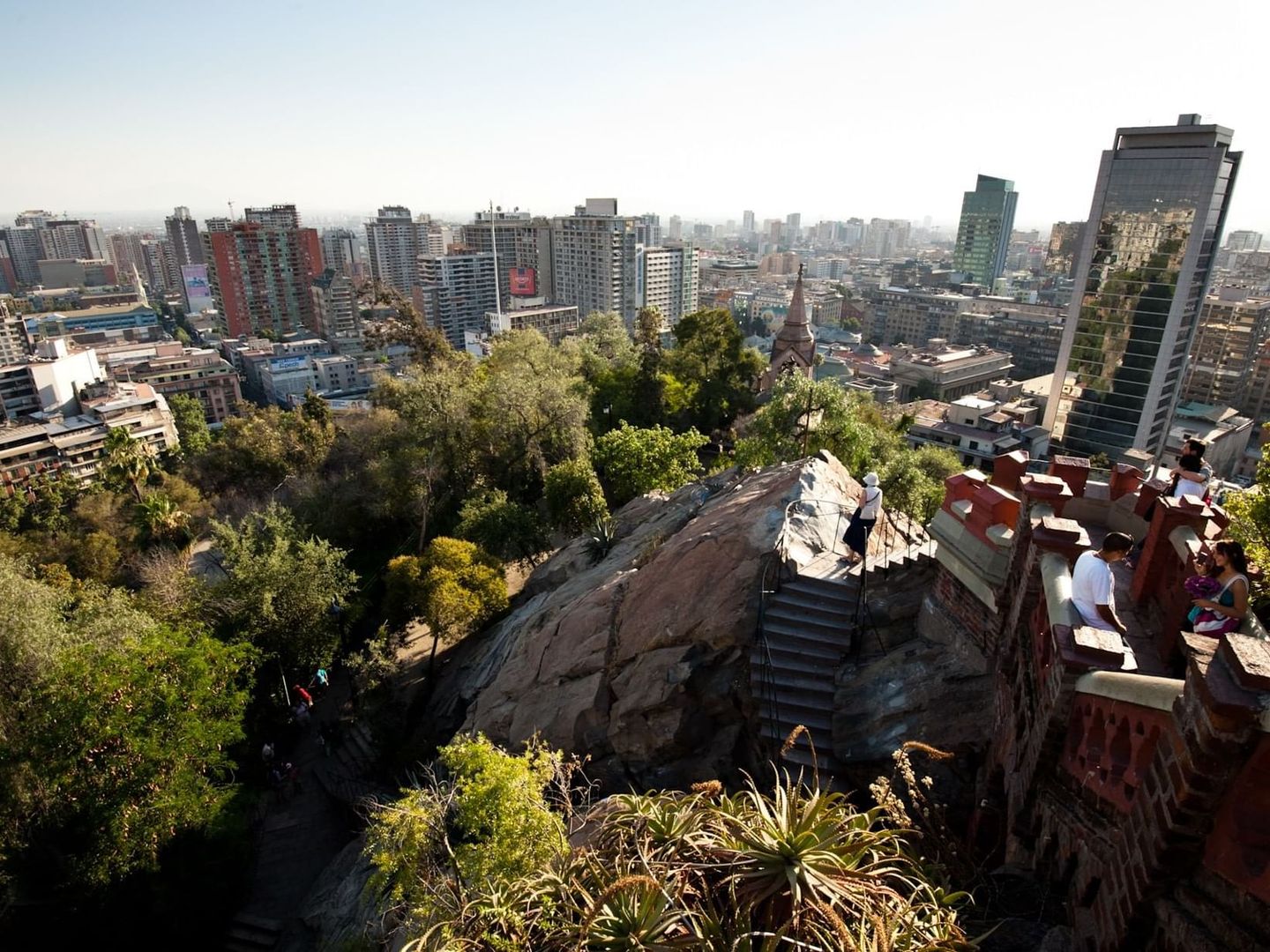
Beautiful view of Santa Lucía Hill

Santa Lucía Hill

Santiago, Chile
i

Beautiful view of Santa Lucía Hill

Santa Lucía Hill rises from the dense heart of Santiago like a pocket of calm and color. Once a volcanic outcrop, today the hill glows with gardens, fountains, and winding staircases. For travelers, students, and families, Santa Lucía offers a blend of city views, local history, and small surprises—within easy reach of cafés, museums, and daily city life. In every season, it blends urban pulse with a sense of escape.

Visiting Info

Currency
Entrance fee
Free

Contact Information

Location
Address
Santa Lucía Hill, Santiago, Santiago Metropolitan Region, Chile

Planning your visit

Planning a visit to Santa Lucía Hill is as simple as catching a metro train or slipping away on foot from downtown. Entry is free, and the central neighborhood makes it simple for nearly anyone to approach. While weekends and afternoons can bring more crowds, quieter hours reward early risers or dusk wanderers with soft light and more space. Most stairs have railings, though families with strollers and anyone with mobility issues may find some slopes and cobblestones challenging.

  • Best time to visit: Early mornings or weekdays in spring (September–November) or fall (March–May) for mild weather and lighter crowds.
  • How to get there: Santa Lucía Metro Station (Line 1) sits right at the base. Many city buses stop nearby. Taxis and rideshares can drop visitors at the main entrance on Avenida Libertador Bernardo O'Higgins.
  • Accessibility: Some paths are steep or uneven; wheelchair access is limited. Families will find shade and rest areas, but be ready for stairs if exploring higher terraces.
  • Average visit duration: 1–2 hours is usually enough for a full walk, more with guided tours or longer rests.

Must see stuff

Santa Lucía Hill may look compact from the outside, but inside, a network of terraces, fountains, and lookouts creates a world of discoveries. The main climb follows stone pathways, up through cool shade and between blooming flowerbeds. History buffs meet colonial cannon placements and ornate gates, while photographers praise the staircases and energetic city views. The mix of old and new gives every turn something to remember.

  • Cerro Santa Lucía Entrance: Bright yellow and white arches open onto a leafy promenade dotted with street vendors and locals relaxing in the sun.
  • Terraza Neptuno Fountain: A dramatic fountain cascades into gilded pools, framed by carved balustrades—a favorite for photos and people-watching.
  • Castillo Hidalgo: A 19th-century fort at the summit, now an event space, with sweeping views across Santiago’s skyline and peaks of the Andes.
  • Hidden gardens: Quiet benches and mural-covered stonework appear around corners; listen for birds or glimpses of couples reading under the trees.
  • City lookout points: Several terraces face east, back over central Santiago and mountains—a favorite spot at sunset or after a rain for clear skies.
  • Fun fact: Santa Lucía's summit marks the old site where Pedro de Valdivia founded Santiago in 1541.

Tips for your visit

A gentle climb up Santa Lucía Hill rewards with fresh air, but a little planning smooths the journey. Shade can be scarce at midday. The cobbled paths may be slick after rain, so tread carefully. Vendors around the entrance offer fresh fruit juice and crafts, but prices sometimes run high. Noise from nearby avenues may fade quickly higher up. Groups tend to cluster near the fountains, so wander a little further for peace.

  • Best times to avoid crowds: Arrive soon after opening (usually 9 am) or come during lunch hour; avoid weekends if possible.
  • What to bring: Comfortable walking shoes, a camera, bottled water, sunscreen, and a light jacket for breezy afternoons.
  • Local etiquette: Respect posted signs, avoid picking flowers, and leave bikes at the base. Picnic quietly—locals value the calm atmosphere.
  • Safety or comfort: Keep an eye on valuables, especially near the base. Watch your step on uneven stairs. Use restrooms at the base—options are limited at the summit.