Google Places photo

Baščaršija

Sarajevo, Bosnia and Herzegovina
i

Google Places photo

Photo by N S

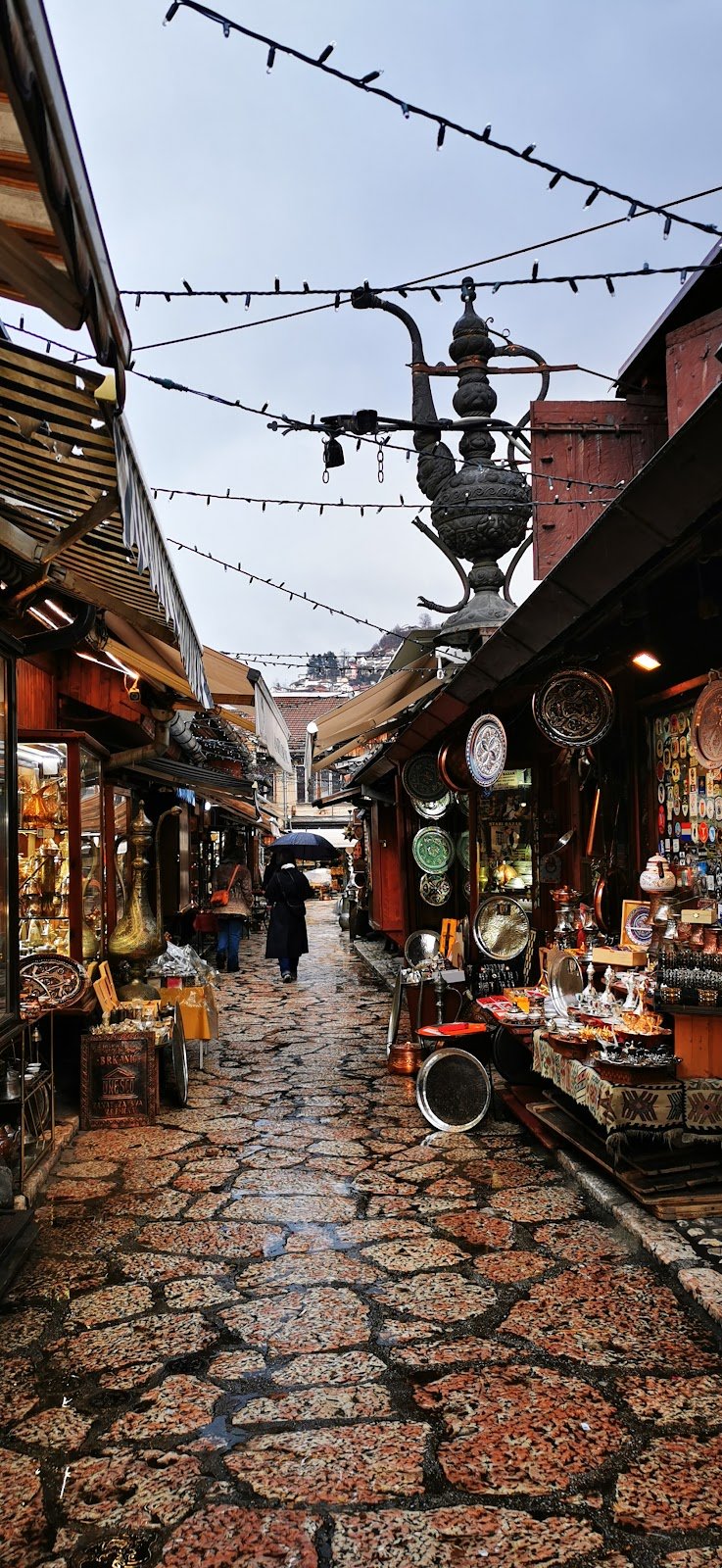
Winding cobblestone lanes, a chorus of minaret calls, and the clinking of coffee cups mark the heart of Sarajevo’s most captivating neighborhood: Baščaršija. Step inside this centuries-old bazaar, and vivid scenes of Ottoman history, living culture, and local life converge in every stone and spice. It is not only Sarajevo’s soul—it is its living room and marketplace, alive with stories that rise from the pavement itself.

Visiting Info

Currency
Entrance fee
Free
Hours
Opening hours
Monday: 8:00 AM – 8:00 PM
Tuesday: 8:00 AM – 8:00 PM
Wednesday: 8:00 AM – 8:00 PM
Thursday: 8:00 AM – 8:00 PM
Friday: 8:00 AM – 8:00 PM
Saturday: 8:00 AM – 4:00 PM
Sunday: Closed

Contact Information

Location
Address
Baščaršija 1, Sarajevo 71000, Bosnia and Herzegovina

Planning your visit

For first-time and returning travelers alike, a visit to Baščaršija is best enjoyed with some planning. No tickets are needed, but the buzz of the bazaar depends greatly on the season and time of day. Summer brings festival crowds, autumn cools with quieter mornings. The Stari Grad district, home to Baščaršija, sits easily within reach by tram, bus, or a gentle walk from central hotels. Visitors will find cobblestone streets; comfortable shoes are a must. The area’s age brings character, but also mixed accessibility. Families and older visitors can navigate best by sticking to the main lanes.

  • Best time to visit: Early mornings or late afternoons in spring and autumn; avoid peak summer midday crowds
  • How to get there: Tram line 1 from Sarajevo main station stops steps away; taxis and rideshares are also convenient
  • Accessibility: Largely walkable, but uneven stone streets may be challenging for wheelchairs and strollers
  • Average visit duration: 2 to 4 hours for exploration, longer if dining or shopping

Must see stuff

Baščaršija’s charm unfolds in layers. Merchants pour sweet-smelling coffee, coppersmiths hammer intricate designs beside arched alleyways, and the domes of mosques shimmer above wooden eaves. Many visit for the famed Sebilj fountain, but the magic lies in the details: hand-woven carpets catching the sun, the call of the noon muezzin, and the neighborly glow of local bakeries. Stand beneath the Gazi Husrev-beg Mosque’s silent arches or explore tucked-away courtyards where only the whisper of history lingers.

  • Sebilj Fountain: Iconic 18th-century wooden fountain; pigeons gather, and photos are a must
  • Gazi Husrev-beg Mosque: Largest historical mosque in Bosnia; open to respectful visitors and guided tours
  • Bravadžiluk and Kazandžiluk Streets: Coppersmiths’ lane and grill street—ideal for souvenirs, local ćevapi, and photo stops
  • Morića Han: 16th-century caravanserai now housing cafes and crafts
  • War Childhood Museum (just outside the core): Award-winning, powerful storytelling from Sarajevo’s recent history
  • Cultural insight: The bazaar’s origins date to the 15th century; Ottoman and Austro-Hungarian influences blend in both architecture and customs

Tips for your visit

The best Baščaršija moments reward patience and curiosity. Some parts grow crowded in summer, making early mornings the best time for photos or quiet browsing. Exploring side lanes uncovers gentle scenes with fewer tourists. Carry small notes for local shops—many decline cards. Respectful dress is needed for mosques; scarves are usually available at entrances. While safety is generally good, keep your bag close in bustling spots and watch for uneven stones on rainy days.

  • Beat the crowds: Arrive before 9am for quiet lanes, or linger after 5pm
  • What to bring: Water, a camera, comfortable shoes, sunscreen in summer, scarf for mosque entry
  • Local etiquette: Greet shopkeepers; haggle politely in markets; dress modestly near religious sites
  • Stay comfortable: Watch your footing, wear layers (mountain weather shifts fast), enjoy coffee breaks to rest