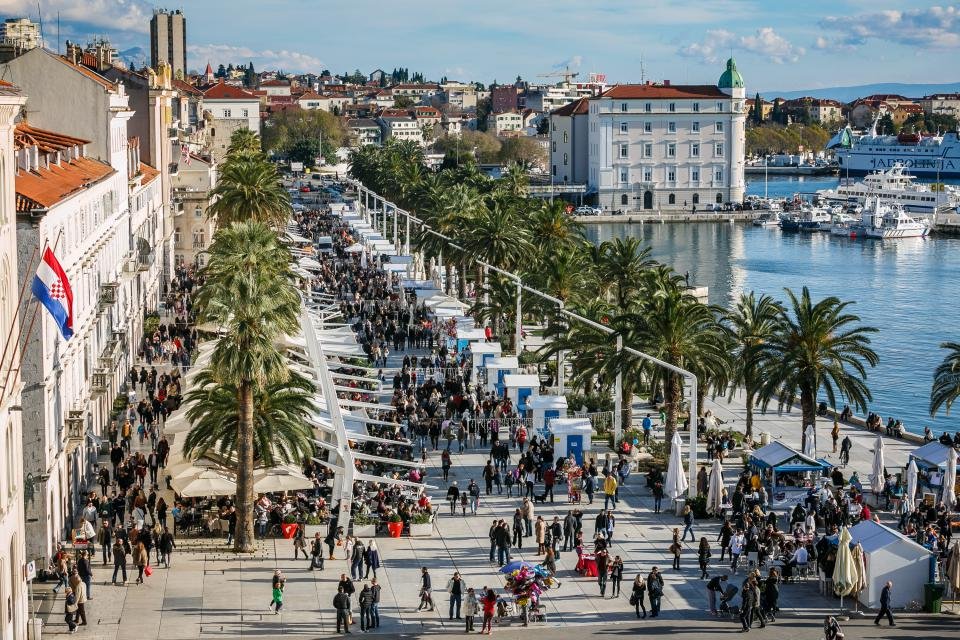
Split Riva

Riva

Split, Croatia
i

Split Riva

Photo by Riva

Croatia’s Adriatic coast is filled with postcard-perfect corners, but few places capture the country’s relaxed spirit quite like Riva. This legendary waterfront promenade, located in Split’s historic heart, draws both locals and visitors with its mix of old-world charm and coastal vibrancy. Bustling yet laid-back, shaded by tall palms, and lined with welcoming cafés, Riva feels like a main stage where the drama of daily life—both grand and familiar—unfolds beside blue-green seas.

Visiting Info

Currency
Entrance fee
Free
Hours
Opening hours
Monday: Open 24 hours
Tuesday: Open 24 hours
Wednesday: Open 24 hours
Thursday: Open 24 hours
Friday: Open 24 hours
Saturday: Open 24 hours
Sunday: Open 24 hours

Contact Information

Location
Address
21.000, Obala Hrvatskog narodnog preporoda 23, 21000, Split, Croatia

Planning your visit

A trip to Riva rewards a bit of planning. This beloved promenade can feel busy, especially in the summer months, yet quiet mornings and cool evenings offer a more peaceful atmosphere. Getting to Riva is simple; it sits alongside Split’s city center, right by the port and below the walls of Diocletian’s Palace. Expect a relaxed energy, occasional street performers, and crowds varying by season. While there’s no entrance fee or ticket, finding a seat at one of Riva’s famed cafés can require patience during peak times.

  • Best time to visit: Spring or early fall for mild weather; sunrise or sunset for quieter strolls.
  • How to get there: Short walk from Split’s ferry terminal, bus station, or main public parking lots.
  • Accessibility: Wide, flat walkway suitable for strollers and wheelchairs; benches and shade throughout.
  • Average visit duration: 1–2 hours for a stroll and coffee; linger longer to soak in the atmosphere.

Must see stuff

Riva is more than just a walkway beside the sea. Here, urban life and Croatian tradition meet in surprising ways. The stone-paved promenade, stretching parallel to Split’s ancient palace walls, offers far more than a scenic backdrop. Sailboats bob offshore, towering palm trees cast dappled shadows, and the buzz of conversation drifts from stylish bars, gelato stands, and open-air restaurants. For many, simply sitting and people-watching feels like the main event. Yet there are iconic sights, hidden gems, and authentic local experiences woven in for those who look a little closer.

  • Key sights: The bronze model of Split, commemorating the city’s history; restored Art Deco streetlights; the grand Digital Clock at Riva’s eastern end.
  • Unique experiences: Sunrise coffee as fishermen return with the morning’s catch; evening concerts on the open-air stage; watching Split’s elders play chess under the palms.
  • Photo-worthy spots: Sea-view benches facing Marjan Hill; colorful café terraces; the intricate southern façade of Diocletian’s Palace framing the promenade.
  • Cultural tidbit: Riva acts as Split’s “living room”—a tradition dating back centuries when citizens gathered here to share news, celebrate festivals, or simply stroll with family.
  • Lesser-known gem: Pop into the alleyways just behind Riva, such as Marmontova, for indie boutiques and cozy wine bars where the crowds thin and local flavor deepens.

Tips for your visit

Enjoying Riva to the fullest is all about timing and a comfortable pace. Early risers witness the city’s peaceful side, with locals greeting the day over coffee. Later, the midday rush fills terraces, sometimes making service a bit slow—embrace the unhurried rhythm. Evening brings a golden sunset and a lively crowd, but also the best atmosphere for people-watching. Riva is almost entirely flat, but summer heat can be intense and shade limited; plan accordingly. While street music and events add charm, larger festivals might mean noisy crowds or blocked pathways. For a deeper experience, join an informal walking tour or simply chat with friendly café staff, who often share stories or local tips.

  • Best times to avoid crowds: Before 10 am or after 8 pm, especially in July and August.
  • What to bring: A refillable water bottle, sunglasses, hat, and camera or phone for photos.
  • Local etiquette: Dress casually but tidy; say “Dobar dan” (Good day) when entering shops or ordering at cafés; tipping is customary but modest.
  • Comfort advice: Wear comfortable shoes for walking on stone and take breaks often to enjoy the scenery.
  • Safety note: Pickpocketing is rare but can happen during festivals or crowded events—keep valuables close.