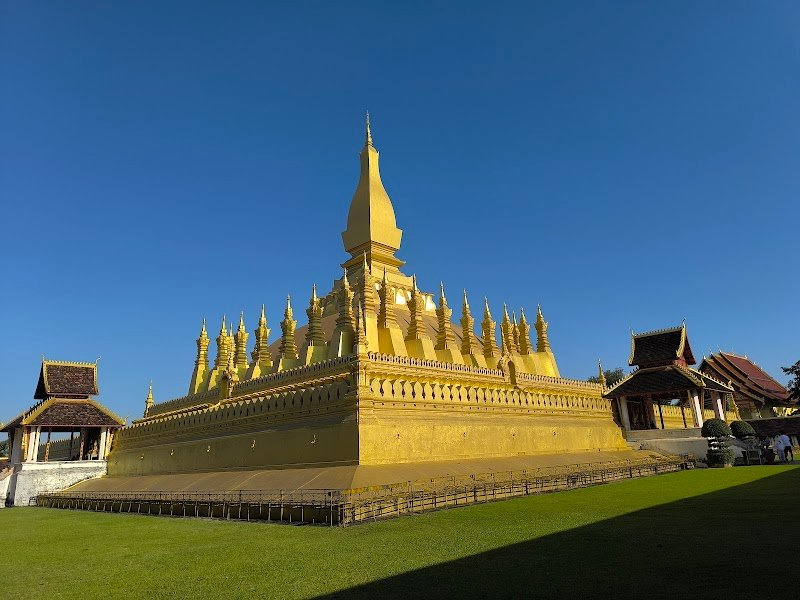
Google Places photo

Pha That Luang Vientiane

Vientiane, Laos
i

Google Places photo

Photo by Marx Jay

Golden in the sunlight, layered with centuries-old tradition, Pha That Luang rises above Vientiane’s gentle skyline as the heart of Lao Buddhism. The stupa’s spire glimmers in the humid air, drawing travelers and pilgrims from across Southeast Asia. Around its courtyard, saffron-robed monks walk among crimson and white frangipani blossoms. Here, the rhythms of Lao life gather in harmony, revealing a place where quiet reflection and celebration coexist.

Visiting Info

Currency
Entrance fee
10000 LAK
Hours
Opening hours
Monday: 8:00 AM – 5:00 PM
Tuesday: 8:00 AM – 5:00 PM
Wednesday: 8:00 AM – 5:00 PM
Thursday: 8:00 AM – 5:00 PM
Friday: 8:00 AM – 5:00 PM
Saturday: 8:00 AM – 5:00 PM
Sunday: 8:00 AM – 5:00 PM

Contact Information

Location
Address
That Luang, Xaysettha 10009, Laos

Planning your visit

Timing matters at Pha That Luang. The landmark’s golden surface shows its best hue in the softer light of morning or late afternoon, while its grounds fill with a mix of local worshippers and travelers. The site sits just outside central Vientiane, accessible by tuk-tuk, rented bicycle, or taxi. Entrance is affordable and casual, but small ticket queues sometimes form in peak season. Though the stupa is the main draw, don’t rush—there’s time to slow down and let the sounds of temple bells echo across the lawns.

  • Best time to visit: Early morning or before sunset, especially in the dry season (November to February)
  • How to get there: Tuk-tuk, bicycle (flat, safe for cycling), or taxi from Vientiane city center (15–20 minutes)
  • Accessibility: Most of the grounds have paved pathways, but some uneven areas and steps may pose small challenges for wheelchairs or strollers
  • Average visit duration: 1–2 hours, longer if exploring nearby temples or museums

Must see stuff

Once inside the original walls, visitors face a world of details. The main stupa shines with 45 meters of gold leaf, surrounded by smaller towers, ornate gateways, and peaceful gardens. In the adjoining cloister, faded murals tell stories of past dynasties and city guardians. Morning and evening offer glimpses of monks in prayer, while midday brings laughter from students on the lawns. In quieter corners, vendors sell sticky rice and coconut drinks—fuel for wandering under the hot sun. Each season, locals gather for vibrant candlelit processions, turning the landmark into a celebration of Lao identity.

  • Key sights: The 44-meter-high main stupa, decorated gates, and inner cloister with old murals
  • Unique experiences: Joining a guided walking tour, hearing monks chant at sunrise, attending the That Luang Festival in November
  • Photo-worthy locations: Base of the main stupa at sunrise or sunset, shaded frangipani trees, dramatic archways
  • Cultural/historical facts: Thought to house a Buddha relic brought from India in the 3rd century; rebuilt many times due to wars and weather; national symbol featured on Lao currency

Tips for your visit

Visitors will notice both reverence and relaxed local routines in the grounds. Modest clothing is a must—shoulders and knees covered out of respect. Food and photography are generally welcome outdoors, but check for posted signs before entering sacred spaces. The heat can be tiring, so hats, sunscreen, and a water bottle help make your time more pleasant. While most people feel safe, bags should be watched in crowded festive periods. If crowds grow, spend a few minutes at nearby Wat That Luang Tai where fewer tourists wander, or sit under the banyan trees to rest.

  • Best times to avoid crowds: Weekday mornings or late afternoons, especially outside festival dates
  • What to bring: Comfortable walking shoes, camera, hat, water, and clothing to cover shoulders/knees
  • Local etiquette: Remove shoes before entering temple buildings; speak softly; do not pose for photos facing monks in prayer
  • Comfort and safety: Carry small bills for entrance fees; mind valuables during festivals; seek shade if the midday heat rises