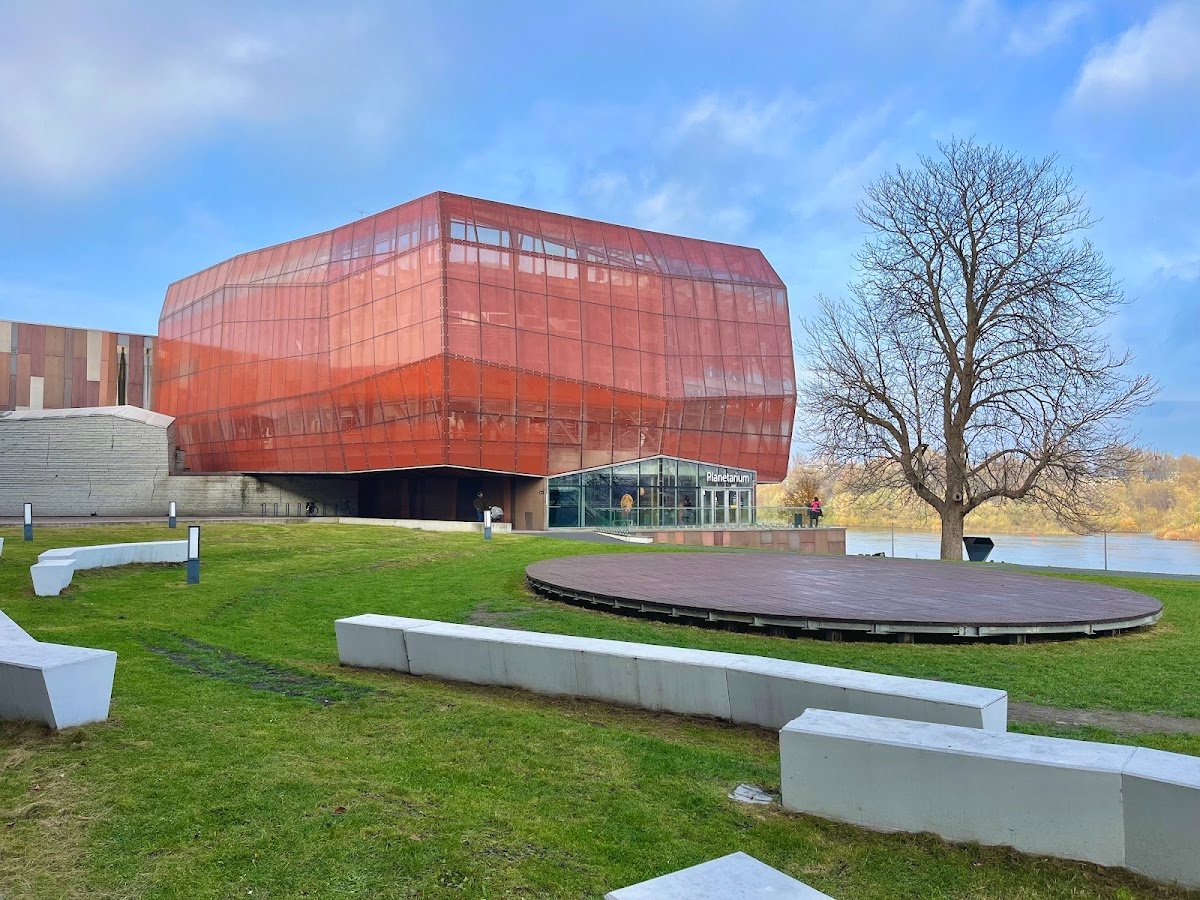
Copernicus Science Centre

Copernicus Science Centre

Warsaw, Poland
i

Copernicus Science Centre

Photo by Winson Lee

Curiosity comes alive at the Copernicus Science Centre: a landmark where discovery turns into play and learning. Travelers find experiences to stretch the imagination, whether traveling with children, friends, or simply a notebook and a sense of wonder. The energy inside does not fade with age or knowledge. It invites everyone, from first-timers to amateur astronomers, to open doors into new worlds.

Visiting Info

Currency
Entrance fee
48 PLN
Hours
Opening hours
Monday: 8:00 AM – 6:00 PM
Tuesday: 8:00 AM – 6:00 PM
Wednesday: 8:00 AM – 6:00 PM
Thursday: 8:00 AM – 6:00 PM
Friday: 8:00 AM – 8:00 PM
Saturday: 9:00 AM – 7:00 PM
Sunday: 9:00 AM – 7:00 PM

Contact Information

Location
Address
Wybrzeże Kościuszkowskie 20, 00-390 Warszawa, Poland

Planning your visit

With the bustle of Warsaw just outside, accessing the Copernicus Science Centre proves surprisingly simple. The riverside setting provides a tranquil approach. Weekends and school holidays, however, bring young families and excited tour groups. Consider planning a visit early in the morning or on a weekday for a more relaxed pace. Tickets are best booked online, as queues can get long during peak times, and special exhibitions sometimes sell out weeks in advance.

  • Best time to visit: Weekday mornings or late afternoons, outside school breaks.
  • How to get there: Take Metro Line M2 to Centrum Nauki Kopernik station, or several tram lines along Świętokrzyska Street, taxi, or Veturilo city bikes along the riverfront. On foot, expect a scenic 15-minute walk from Warsaw’s Old Town.
  • Accessibility: Ramps, lifts, and accessible restrooms make it easy for wheelchair users and families with strollers. Most exhibits are interactive and at accessible height.
  • Average visit duration: 3 to 4 hours, though science lovers may want to spend a full day.

Must see stuff

The Copernicus Science Centre delights with hands-on experiments, immersive rooms, and unexpected corners. Each section invites every guest to push buttons, launch rockets, whisper across parabolic dishes, or simply gape at the wonders of the universe. Even the architecture, all geometric glass and broad spaces, seems to dance in the sunlight. Some experiences define the visit; others, tucked away in side rooms, reward extra attention.

  • Key sights or features: The Robotic Theatre, where machines put on a show; the Human and Environment Zone, exploring biology; and the Buzzing Physics Lab, with crowd-pleasing demonstrations.
  • Unique experiences: The Planetarium—Heaven of Copernicus—offers digital journeys through the cosmos. The rooftop Garden is a quiet spot for city and river views, especially on summer evenings.
  • Photo-worthy locations: The “Wave Machine” exhibit’s shimmering effect, sunlight streaking across the glass foyer, and interactive pendulums create memorable backgrounds.
  • Cultural or historical facts: Named after Nicolaus Copernicus, the Polish astronomer who moved the sun to the center of the universe, the Centre celebrates both national pride and global curiosity. The science playground for children outside is open for free. Temporary exhibitions often cover both science and culture—a recent feature explored the science of Polish cuisine.

Tips for your visit

Planning ahead leads to a smoother experience. When the Centre fills up, noise levels climb near midday, making the contemplative joys of science a little less magic for adults. Eyes open for free science shows or demonstrations—the schedule changes often. Lockers at the entrance help lighten the load. Dining options inside tend toward quick, kid-friendly meals; more adventurous palates find better choices in nearby Powiśle or along the Vistula boulevards.

  • Best times to avoid crowds: Arrive just as doors open or late in the day; skip public holidays for quieter moments.
  • What to bring: Comfortable shoes, water bottle, phone or camera (photography is welcome almost everywhere), and a sweater for the cooler planetarium shows.
  • Local etiquette or rules: Supervise children, as lost explorers are a regular sight; some hands-on displays have brief instructions in English and Polish, so patience pays off.
  • Safety or comfort advice: Use lockers for coats or backpacks, as exhibit spaces get tight. Rest spots are available, but the best quiet corners hide near the outdoor river path.
Copernicus Science Centre – Tickets, Hours & Visitor Guide