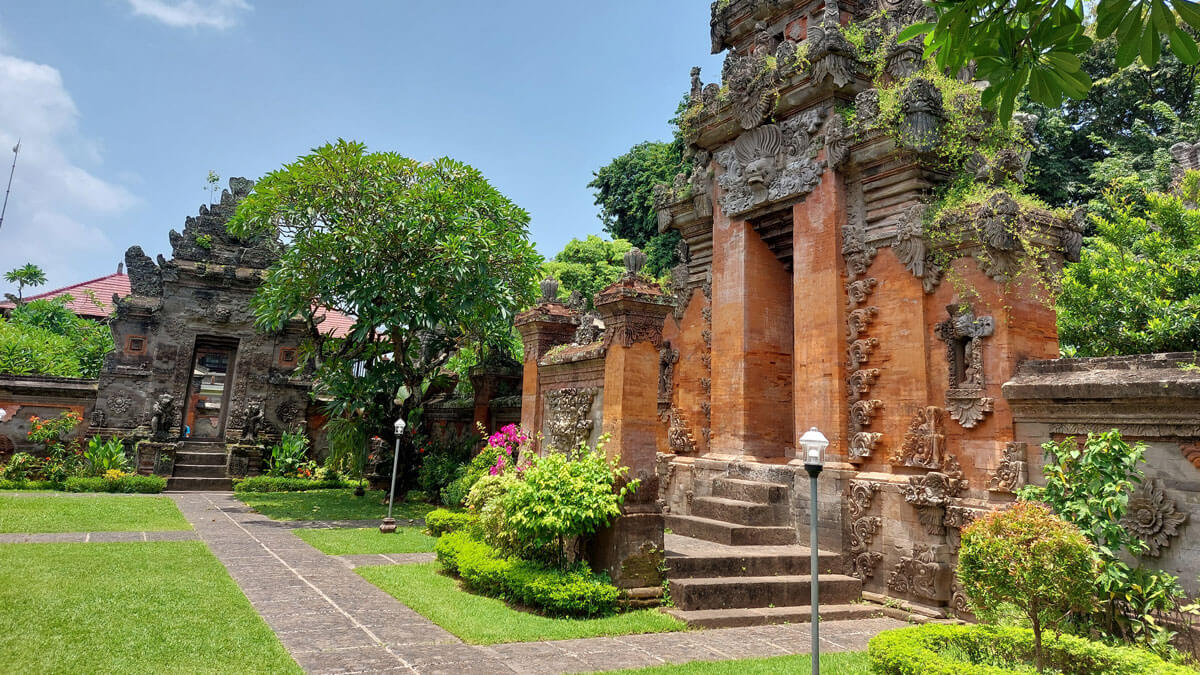
Beautiful view of Bali Museum

Bali Museum

Bali, Indonesia
i

Beautiful view of Bali Museum

Bali Museum stands quietly in the heart of Denpasar, where old Balinese culture and everyday city scenes meet. The carved gates and timeworn courtyards hold stories from centuries past. Visitors discover a calm escape from crowded markets and beach buzz just beyond the museum walls. While Bali’s beaches and temples may draw global attention, this museum offers something more lasting—a close look at the heart and history of Balinese life.

Visiting Info

Currency
Entrance fee
50000 IDR
Hours
Opening hours
Monday: 7:30 AM – 4:30 PM
Tuesday: 7:30 AM – 4:30 PM
Wednesday: 7:30 AM – 4:30 PM
Thursday: 7:30 AM – 4:30 PM
Friday: 7:30 AM – 2:30 PM
Saturday: 7:30 AM – 4:30 PM
Sunday: 7:30 AM – 4:30 PM

Contact Information

Location
Address
Jl. Mayor Wisnu No.1, Dangin Puri, Kec. Denpasar Tim., Kota Denpasar, Bali 80232, Indonesia

Planning your Visit

A great museum visit begins with some planning. The Bali Museum sits beside the city’s leafy Puputan Square, making it both easy to find and an ideal stop between urban adventures. The space rarely feels packed, yet midday hours attract school groups and local families. Sundays and holidays can be lively and noisy but still manageable for most travelers. No need to buy tickets in advance, as walk-in entry is the norm.

  • Best time to visit: Early morning or late afternoon for cooler temperatures and quieter galleries. The dry season (April–October) avoids afternoon showers.
  • How to get there: By taxi, private driver, or public shuttle from Ubud, Kuta, Sanur, or the Ngurah Rai International Airport. Local buses stop nearby at Puputan Square.
  • Accessibility: Ground-floor galleries have easy ramps and pathways. Stair-free options for families with strollers or seniors are available, but some older buildings may have small steps.
  • Average visit duration: 1–2 hours offers a relaxed look. Add extra time for guided tours or art workshops.

Must see stuff

A few hours at Bali Museum opens a world of stories and art. These halls—designed in four traditional pavilions—capture transitions from ancient kingdoms to the modern era. Palm-leaf manuscripts, sacred Kris daggers, and bold paintings fill the glass cases. Each courtyard, shaded by frangipani and banyan trees, holds quiet corners perfect for exploring.

  • Key sights or features: The Tabanan Pavilion displays royal costumes and carved temple models. The Karangasem Pavilion houses prehistoric stone tools and ceramics.
  • Unique experiences: Watch local artists demonstrate woodcarving and mask-making in the garden. Special exhibits sometimes showcase contemporary Balinese painters or children’s crafts.
  • Photo-worthy locations: The grand split gate (candi bentar) at the entrance, koi pond reflections, traditional statues, and tiled rooftop vistas.
  • Cultural or historical facts: The museum’s design borrows from classic Balinese palaces, down to the frescoes and open-air shrines. Placards (mostly in English and Indonesian) tell the story of Bali from prehistoric times through Dutch colonial years.

Tips for your visit

A little knowledge makes this trip even easier. Bring a bottle of water, as the tropical heat can sink into cloistered courtyards. Most displays have English signs, but hiring a local guide (ask at the ticket booth) unlocks more folk tales and legends. Modest dress is appreciated around shrines. A few corners lack air-conditioning, so a hat and patience for midday humidity help.

  • Best times to avoid crowds: Weekday mornings, just after opening time. Skip weekends if you want solitude.
  • What to bring: Water, camera, lightweight scarf or hat, comfortable shoes for walking uneven paths.
  • Local etiquette: Ask quietly before photographing other guests, especially school groups. Keep voices low in indoor galleries.
  • Safety or comfort advice: Watch for sloping walkways slippery after rain. Some rooms get warm in the late afternoon; shaded benches outside offer a break.