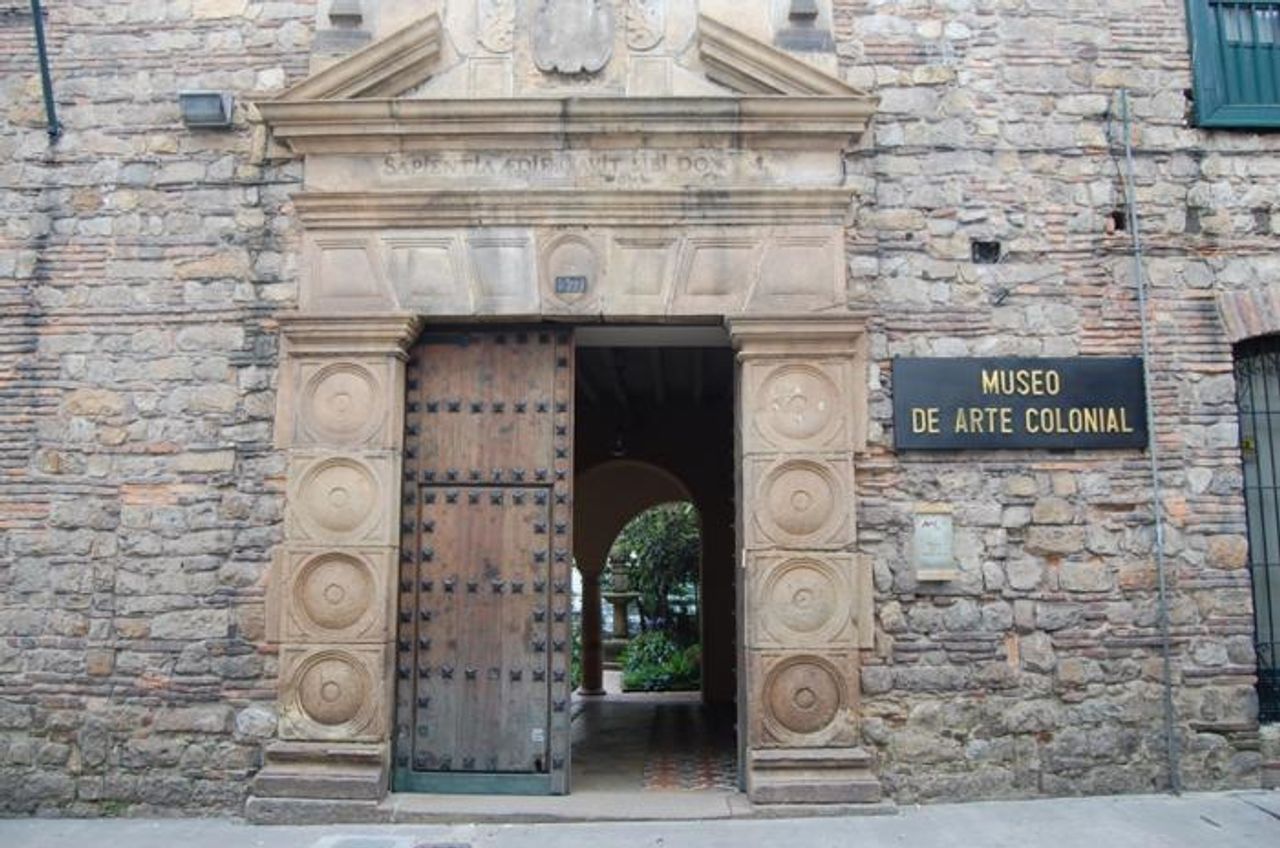
Beautiful view of Museo Colonial

Museo Colonial

Bogota, Columbia
i

Beautiful view of Museo Colonial

Behind thick, ochre walls in Bogotá’s historic heart, Museo Colonial preserves stories older than the republic itself. Quiet gardens, sun-dappled corridors, and rooms filled with Baroque treasures bring Colombia’s colonial era vividly to life. Centuries-old paintings, rare manuscripts, and intricate wooden carvings invite visitors to step into an age of viceroys, saints, and revolutionaries. More than a museum, this landmark provides a living link to the complex stories that shaped the nation.

Visiting Info

Currency
Entrance fee
4000 COP
Hours
Opening hours
Monday: Closed
Tuesday: 9:00 AM – 4:30 PM
Wednesday: 9:00 AM – 4:30 PM
Thursday: 9:00 AM – 4:30 PM
Friday: 9:00 AM – 4:30 PM
Saturday: 9:00 AM – 4:30 PM
Sunday: 9:00 AM – 4:00 PM

Contact Information

Location
Address
Cra. 6 #9-77, Bogotá, Colombia

Planning your visit

Museo Colonial sits in Bogotá’s cobbled La Candelaria district, surrounded by historic churches and public squares. A trip here works well for anyone wanting to explore Colombian history at a gentle pace. Most days, the museum rarely feels crowded, especially on weekdays or early mornings. Advance tickets aren’t usually required, but checking the calendar for special exhibits or school groups can help avoid busy periods. The historic building has narrow doorways and a few staircases, so visitors with mobility needs should plan accordingly. Rain is frequent in Bogotá; carrying an umbrella makes moving between courtyards and rooms easier.

  • Best time to visit: Weekdays in the morning or late afternoon, during Bogotá’s dry season (December to March)
  • How to get there: Easy walking distance from Plaza de Bolívar; several TransMilenio bus stops nearby; paid parking two blocks away
  • Accessibility: Some uneven stone floors and steps; museum staff can help those with limited mobility
  • Average visit duration: 1–2 hours, depending on interest and pace

Must see stuff

Walking through Museo Colonial reveals shifting layers of the past. Down quiet hallways, Spanish religious art hangs beside indigenous works. Richly carved chests and ceremonial robes stand in glass cases, while the tranquil inner courtyard provides a spot for reflection. Several landmark rooms anchor the museum experience—each packed with beautiful and sometimes curious artifacts. While some visitors come just for the finely preserved colonial paintings, others find fascination in the everyday objects: letters, candlesticks, even a battered old book that may have survived the fires of independence. The blend of sacred and secular, official and personal, gives Museo Colonial its special appeal.

  • Key sights: The main Colonial Hall with oversized altarpieces; the library packed with early printed books; San Agustín cloister gardens
  • Unique experiences: Guided tours led by local historians; rare manuscripts on display; occasional exhibitions featuring women’s lives in colonial times
  • Photo-worthy locations: Arched stone corridors; palm-shaded central courtyard; ornate ironwork balconies overlooking Calle 10
  • Cultural facts: Many items belonged to notable Colombians—like Viceroy Sámano’s desk and original Santa Fe manuscripts—that tell the story of religious, social, and political life during Spanish rule

Tips for your visit

Sturdy shoes make exploring Museo Colonial’s old stone floors much easier. Some rooms can feel chilly, especially on rainy days, so a light jacket proves useful. Quiet, respectful conversation is encouraged, as many locals visit to reflect or study. Photography is allowed in most areas, but using flash may be restricted to protect fragile artworks. Expect less signage in English than in Spanish—downloading a translation app or joining a guided tour will help. Don’t skip the small upstairs room; it often hosts rotating exhibits on forgotten chapters of Colombia’s past. And for a snack or light lunch, nearby Calle 11 has several cozy cafés where history lovers chat under centuries-old beams.

  • Best times to avoid crowds: Mornings before 11am; most locals visit later or on weekends
  • What to bring: Water bottle, camera, light jacket, notebook for sketching or notes
  • Local etiquette/rules: Speak softly, avoid touching exhibits, ask staff before taking photos with flash
  • Safety/comfort advice: Watch for uneven floors; keep valuables close in busy areas outside the museum