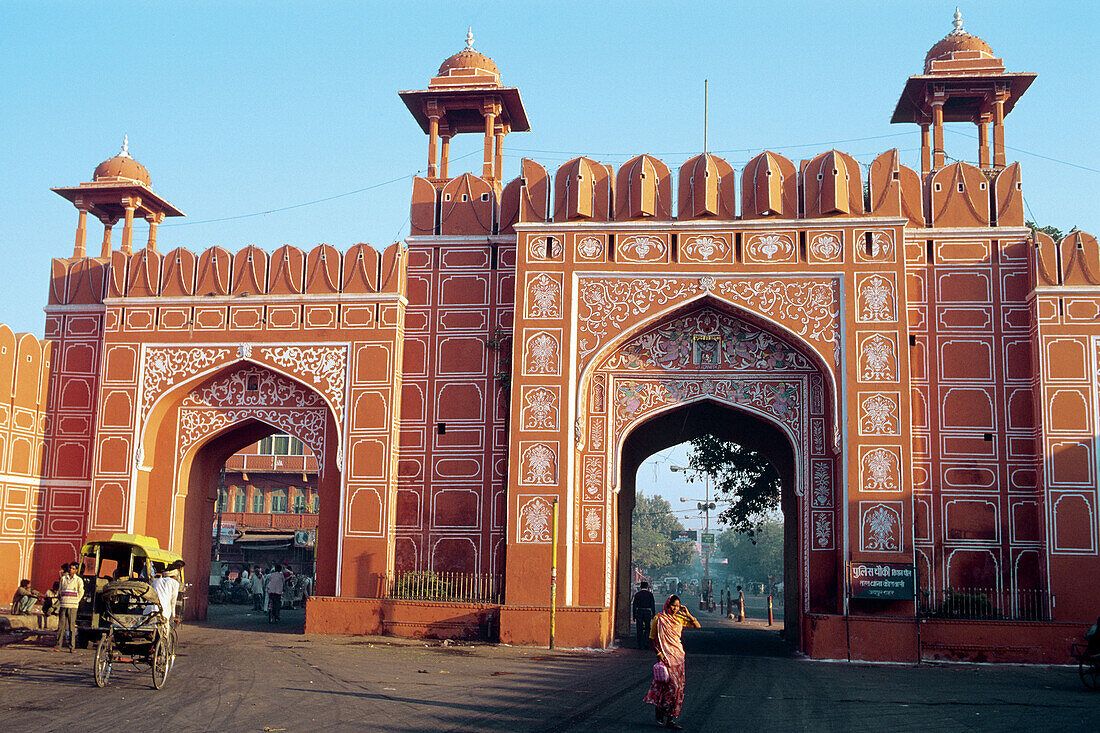
Beautiful view of Ajmeri Gate

Ajmeri Gate

Jaipur, India
i

Beautiful view of Ajmeri Gate

In Jaipur’s rush and riot of color, a stone arch marks the pulse of an older age—Ajmeri Gate. Travelers pass beneath this gateway into neighborhoods alive with stories. While many hurry toward the city’s palaces, those who stop at Ajmeri Gate discover a place where ancient walls frame modern routines. City life swirls outside, but within the gateway’s shadow, time slows just enough to notice careful details chiselled centuries ago.

Visiting Info

Currency
Entrance fee
Free

Contact Information

Location
Address
Ajmeri Gate, Sangram Colony, Ashok Nagar, Jaipur, Rajasthan, India

Planning your visit

Ajmeri Gate sits on a busy stretch of Jaipur, acting as a bridge between old and new. Visitors should plan a trip in the cooler, quieter hours; the crowds can swell at midday, and the stone radiates heat. Entry is free, and the area is open at all hours, though mornings and late afternoons are most comfortable and atmospheric. While Ajmeri Gate stands at a crossroads for vehicles and pedestrians, traffic sometimes complicates a peaceful visit. Those needing step-free access might face mild challenges—though the roads are level, the area can grow crowded and uneven during market days.

  • Best time to visit: Early morning or late afternoon, October to March.
  • How to get there: Accessible by auto-rickshaw, cab, or city bus; Jaipur Junction railway station is about 4 km away.
  • Accessibility: Generally family-friendly, but wheelchairs may find some sidewalks narrow.
  • Average visit duration: 30 minutes to 1 hour (longer if combining with local markets or food stops).

Must see stuff

Ajmeri Gate commands attention with its grand, triple-arched façade, original 18th-century brickwork, and faded yet intricate Mughal motifs. Walkers find more than just a photo opportunity; this is a living part of Jaipur’s Pink City design, anchoring busy thoroughfares and guiding locals between markets. The stone pavilions and domes above the arch reflect Amber’s royal legacy, but on street level, the energy shifts—street vendors fry samosas, tailors trade jokes, and voices rise in every language of Rajasthan. A stroll under Ajmeri Gate rewards those ready to look closer.

  • Key sights or features: Triple arches, Mughal ornamental plasterwork, original fortifications just beyond the gate.
  • Unique experiences: Unexpected glimpses of city life from beneath the arch, early-morning ceremonies at roadside shrines, impromptu chats with shopkeepers.
  • Photo-worthy locations: Symmetrical arches from a distance (especially at sunrise); bustling bazaars framed by the gate; amber light on the sandstone at dusk.
  • Cultural or historical facts: Built under Maharaja Sawai Jai Singh II in 1734, Ajmeri Gate linked Jaipur with Ajmer, a once-vital trade and pilgrimage route.

Tips for your visit

Success at Ajmeri Gate depends on patience and curiosity. Market carts can block easy passage, and sometimes exhaust fumes compete with spice scents. Still, a little planning goes far. Travelers do best with comfortable shoes, a sense of humor, and an appetite for street snacks. Photography is welcomed, but always ask before focusing on local faces. Respectful distance at shrines and an easy greeting in Hindi break the first barriers. After the gateway, wander 50 meters west to find sweet shops kept by the same families for generations—here, Jaipur’s warmth runs thicker than the crowds.

  • Best times to avoid crowds: Just after sunrise or around sunset, especially on weekdays.
  • What to bring: Water bottle, charged phone or camera, lightweight scarf for dust or sun, sturdy walking shoes.
  • Local etiquette or rules: Step aside for locals in a hurry, keep noise low around religious spots, buy from vendors with clear prices.
  • Safety or comfort advice: Watch for uneven pavement near the arch, and keep valuables close in busy moments.