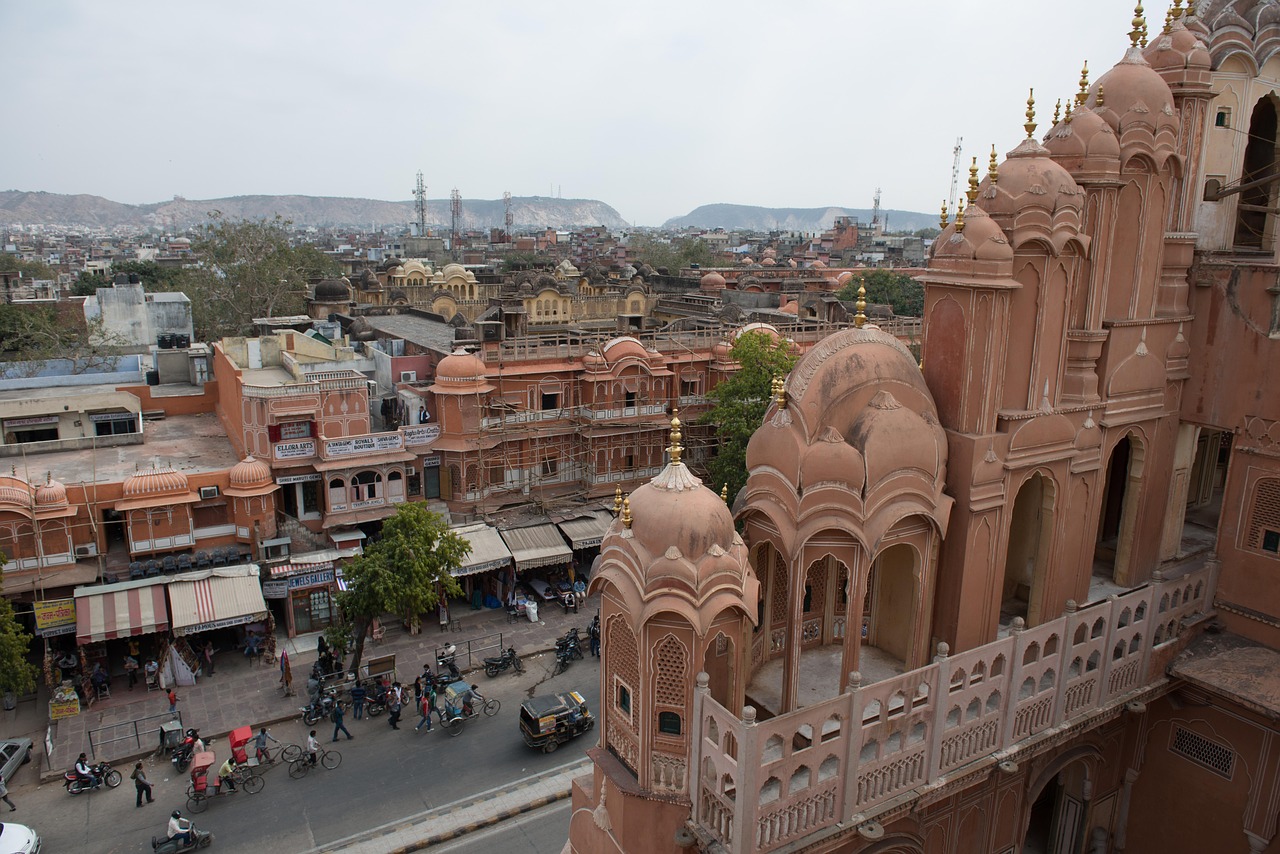
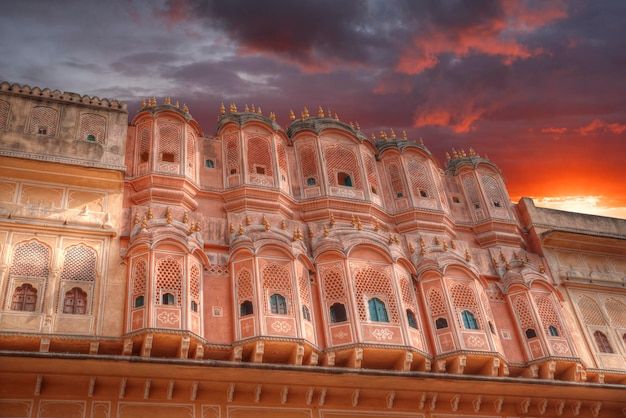
india, jaipur, wind palace, jaipur, jaipur, jaipur, jaipur, jaipur
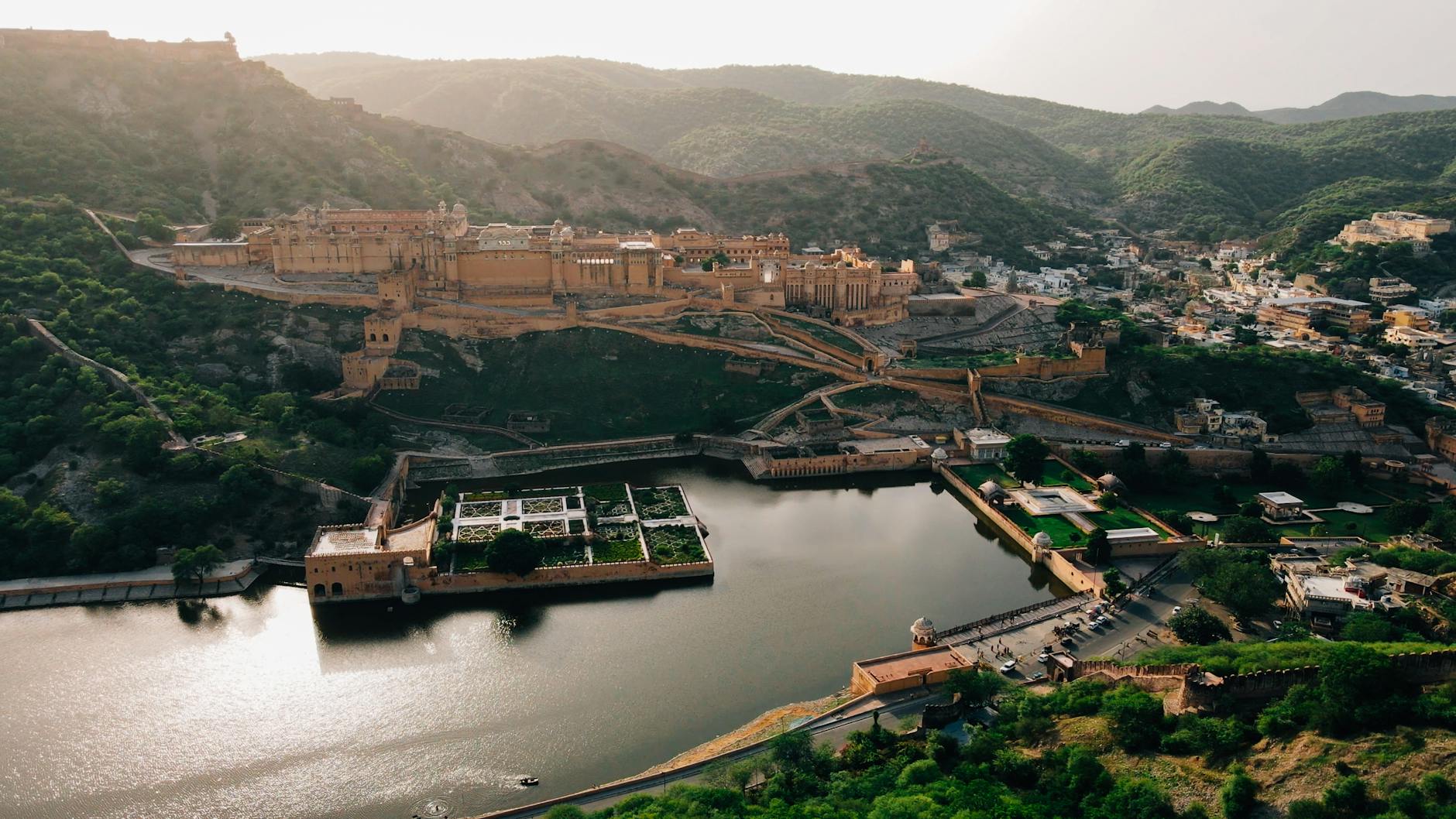
A breathtaking aerial view of Amber Fort, Jaipur with Maota Lake and scenic surroundings.
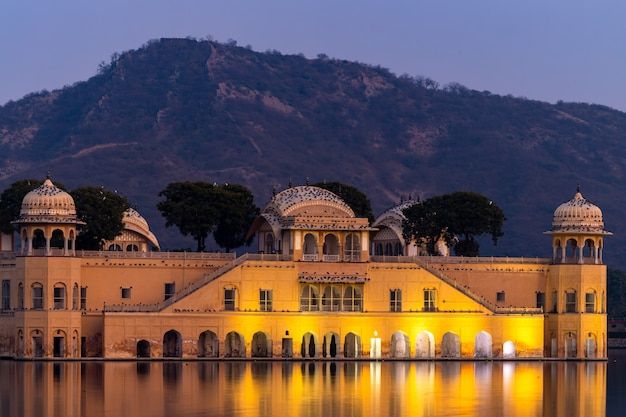
Jal Mahal Palace at night, Jal Mahal in the middle of the lake, Water Palace was built during the 18th century in the middle of Man Sager Lake, Jaipur, Rajasthan, India, Asia.
Hawa Mahal

Jaipur

India
HistoricalArt & ArchitectureCulturalUNESCO World Heritage
i

india, jaipur, wind palace, jaipur, jaipur, jaipur, jaipur, jaipur

Photo by isowan990

Stepping into Jaipur feels like diving into spilled sunlight. The Pink City’s walls glow warm and rosy, especially at sunset when the light softens everything. Hawa Mahal’s honeycomb windows catch the breeze, while Johari Bazaar bursts with gem-studded bangles and the chatter of bargaining voices. Ride an elephant up to Amber Fort’s ramparts, then wander courtyards echoing with old Rajput stories. Street-food carts sizzle with pakoras, and the air carries hints of cardamom and dust. In quieter corners, like the cenotaph gardens, peacocks strut between marble arches. Traffic hums loud and close, but step into a palace courtyard and the world goes still. Jaipur’s beauty is bold, but its charm hides in small, everyday moments.

Quick Facts

currency
INR
languages
Hindi, English, Rajasthani
airports
Jaipur International Airport
size
Large City
power
Type C, Type D, Type M
timezone
Asia/Kolkata (UTC+5:30)
safety
Moderately safe
costs
Cheap

General Information

Safety indexJaipur is generally considered safe for tourists, with a moderate safety index. Normal precautions should be taken, such as avoiding isolated areas at night, safeguarding valuables, and being cautious of scams and overly persistent vendors. Solo female travelers should exercise additional caution in public spaces. The city has a visible police presence and most major tourist spots are well-patrolled.

Best Time to TravelThe best time to visit Jaipur is from October to March, when the weather is pleasant and suitable for sightseeing. Temperatures range between 15°C to 25°C (59°F to 77°F), making it ideal for exploring forts, markets, and city attractions.

Least crowded and still a good time to visitJuly to September (the monsoon season) sees fewer tourists but still offers a good experience. While occasional showers occur, the rain is usually not too heavy and the surrounding Aravalli hills turn green, making the city scenic. Attractions and accommodations are less crowded, and prices are often lower.

BudgetJaipur caters to all budgets. Budget travelers can expect to spend around $20–$40 USD per day (including local transport, meals, and budget accommodations). Mid-range travelers may spend about $50–$100 per day, covering nice hotels, some entrance fees, and occasional dining at better restaurants. Luxury travelers should expect to pay upwards of $150 per day for premium hotels, private tours, and fine dining.

Healthcare and VaccinationsJaipur has several good hospitals and clinics. Travelers should have comprehensive travel insurance covering medical costs. Standard vaccinations such as Hepatitis A and Typhoid are recommended; check for up-to-date travel health advisories. Drink only bottled or filtered water and avoid street food to minimize stomach issues. Emergency medical services (dial 108) are available, though private hospitals often provide faster service.

Visa RequirementsMost foreign nationals require a visa to visit India. An e-visa facility is available for citizens of many countries for tourism purposes and can be applied for online prior to travel. The tourist e-visa is usually valid for 30 days, 1 year, or 5 years, depending on the applicant's nationality. Passport validity of at least 6 months from the date of arrival is required.

Weather in Jaipur

°C°F
46115
3595
2475
1355
236
Jan
Feb
Mar
Apr
May
Jun
Jul
Aug
Sep
Oct
Nov
Dec
3020100
Avg. min. temperature
Avg. max. temperature
Avg. precipitation days

First-time travelers

The pink haze of Jaipur’s dawn calls out wonder and possibility. Jaipur, while famous for grandeur and color, will enchant first-time travelers most with surprises beneath its famous facades. Rajasthan’s capital can overwhelm, but its beauty is gentle and revealing—if you let the city guide you, step by step.

Arrival and Awe

From the window of your ride from Jaipur International Airport, watch as the uniform terracotta of the Old City appears like a scene out of a folktale. The Amber Fort stands with regal patience against the Aravalli hills; the Hawa Mahal's honeycomb windows wink at the bustle below. Yet there’s warmth in the swirl of rickshaws, the bright saris, and aroma of street-side kachoris frying.

Immersion for the Senses

Wander through Johari Bazaar before noon, when shopkeepers set armfuls of lac bangles in rows. Stop at Lassiwala on MI Road—the original one—for creamy, cardamom-laced lassi served in clay cups. See artisans sculpting silver in Gopalji Ka Rasta, and take in the flash of dye from the cloth printers in Sanganer village. On the streets, life is an open stage: vendors offering guavas dusted with black salt, camels and motorbikes threading through traffic.

At sundown, climb to Nahargarh Fort. The city glows below, a sparkling tapestry. A sip of masala chai on the ramparts, wind cool and sweet—Jaipur’s generosity, spelled out in little moments.

  • Try breakfast at Rawat Misthan Bhandar for pyaaz kachori and sweets
  • Stroll in Ram Niwas Garden in the early morning for the freshest flower scents
  • Watch a Bollywood movie with locals at Raj Mandir Cinema

Let Jaipur surprise you. Don’t rush to tick off monuments—take in the people, the flavors, the rhythm. The city leaves its color on you long after you go.
Return travelers

Familiar streets, but new stories—Jaipur, for the returning traveler, reveals deeper currents. Memory draws you first to the old gates, yet it’s the city’s layers of tradition that wait quietly, hidden in plain view. Return is less about spectacle, more about presence.

Beyond the Painted Walls

This time, pass up Amber and Hawa Mahal. Instead, mingle with students in C Scheme’s cozy cafés—try Curious Life for single-origin coffee and conversations about poetry. In the morning, stroll the lesser-known streets of Amer village, noticing stone-carvers at work on tiny shrines, the air fragrant with sandalwood dust.

Insider’s Jaipur

At Anokhi Museum of Hand Printing, examine wood-block artistry and chat with artisans about their craft. Share dal baati churma at a workers’ eatery near Chandpole, where the smoky, ghee-drenched flavors linger hours later. Visit the marble Jain temples at Khole Ke Hanuman Ji—a serene spot apart from the city’s tumult, where monkeys dash between bell towers, and pilgrims offer fresh marigolds.

Catch the Qawwali sung at the 18th-century Adarsh Nagar Dargah on Thursday evenings—it’s a wave you feel deep and low. Stop by Baapu Bazaar for indigo fabrics and sandal soaps; barter gently, listen more than you speak. In the evening, join locals jogging around the Jal Mahal promenade, the palace afloat in silver moonlight.

  • Attend a block-print textile workshop at Bagru village
  • Eat homestyle thali at Laxmi Misthan Bhandar (ask for the khasta samosas)
  • Meet emerging artists at Jawahar Kala Kendra’s gallery show
  • Pause for jasmine-scented kulfi at Pandit Kulfi, MI Road

Jaipur deepens once the showpieces blur and daily life comes forward. On return, let your curiosity wander smaller lanes—you’ll find a warmer, quieter pulse beneath the city’s riotous color.

Must-see locations

Ajmeri Gate

Ajmeri Gate

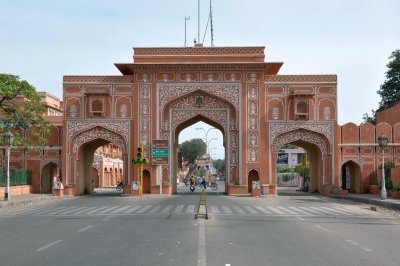
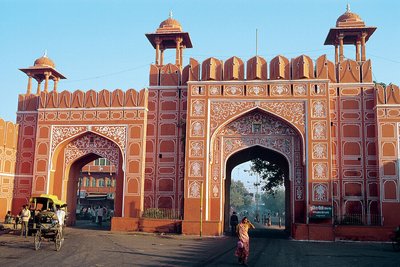
Ajmeri Gate arches over Jaipur's bustling entryway, where pink sandstone meets vibrant markets. Shop for Rajasthani crafts, sample street food, and soak up daily life as rickshaws dart beneath 18th-century walls.

Learn More
Sanganeri Gate

Sanganeri Gate

At Sanganeri Gate, Jaipur’s pink walls glow at sunset, framing bustling street life and easy entry to markets full of textiles and spices. Lively festivals, vibrant bazaars, and Mughal-era architecture shape each corner.

Learn More
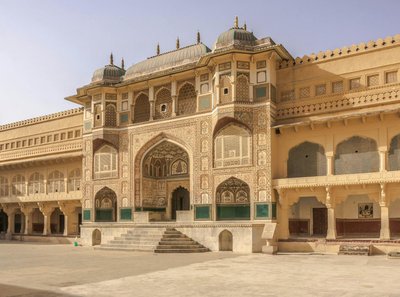
Intricate facade of Amber Fort showcasing traditional Rajasthani architecture in Jaipur, India.
i

Intricate facade of Amber Fort showcasing traditional Rajasthani architecture in Jaipur, India.

Photo by Roman Saienko

Amber Palace

Amber Palace rises above Maota Lake with grand sandstone walls and ornate gates. Intricate mirror work dazzles in Sheesh Mahal. Explore secret tunnels, ride elephants up steep paths, and catch sweeping views of Jaipur.

Learn More
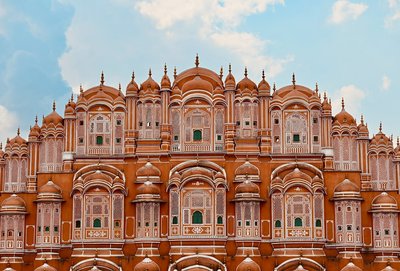
a very tall building with many windows and arches
i

a very tall building with many windows and arches

Photo by Jayanth Muppaneni

Hawa Mahal

Hawa Mahal, Jaipur’s iconic “Palace of Winds,” draws visitors with its intricate pink sandstone facade, 953 small windows, and breezy corridors where queens once watched bustling streets below—an emblem of Rajput artistry and culture.

Learn More
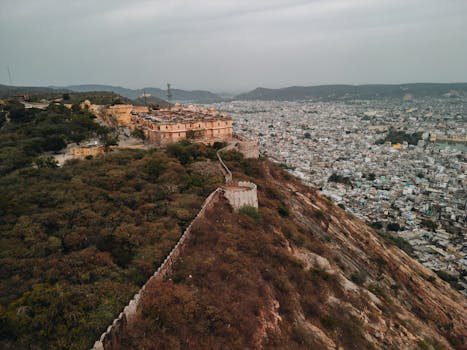
Stunning aerial shot of Nahargarh Fort overlooking the hillside and cityscape of Jaipur, Rajasthan.
i

Stunning aerial shot of Nahargarh Fort overlooking the hillside and cityscape of Jaipur, Rajasthan.

Photo by urtimud.89

Nahargarh Fort

Rising on the Aravalli hills, Nahargarh Fort offers sweeping Jaipur views and peaceful walks among ancient ramparts. Travelers explore royal quarters, dine at Padao rooftop café, and watch the city glow at sunset.

Learn More

How to get there

By air

Jaipur is served by Jaipur International Airport (JAI), located about 12 km from the city center. The airport is well connected to major Indian cities such as Delhi, Mumbai, Bangalore, Kolkata, and some international destinations. Regular flights are operated by various airlines.
Options to get to town:
Taxi
Price:
₹400–₹600
Duration:
30–45 minutes
Where to buy:
Book at airport taxi counter or through ride-hailing apps like Ola/Uber at arrivals
Airport bus
Price:
₹50–₹100
Duration:
45–60 minutes
Where to buy:
Tickets at the airport bus stop, prepaid booths or pay directly to driver
Train/shuttle
Price:
N/A
Duration:
N/A
Where to buy:
No direct airport rail or shuttle service available

By train

Jaipur Junction (JP) is the main railway station in the city, well connected to all major Indian cities including Delhi, Mumbai, Agra, and Kolkata, with frequent and affordable trains of different classes.
Useful websites for train tickets:

By car

Jaipur is accessible by road from major northern and western Indian cities. The Delhi-Jaipur Expressway (NH 48) is a popular and well maintained route. Driving by car offers flexibility and scenic views, but be mindful of traffic, especially during holidays and weekends.
Additional charges to be aware of:
Toll / vignette / emission sticker
Cost:
₹200–₹500 depending on entry point and distance (payable at toll booths)
How to pay:
Pay cash or via FASTag at highway toll plazas
Other driving costs
Cost:
Fuel costs approximately ₹1000–₹2000 for Delhi-Jaipur (one way) depending on vehicle
How to pay:
Buy at petrol stations along the route

How to get around

Public transport

Public transport in Jaipur consists of buses operated by Jaipur City Transport Services Limited (JCTSL), as well as Jaipur Metro. Metro covers key parts of the city, while buses connect neighborhoods and main attractions. Both are economical options for travelers, though schedules may vary and can be crowded during peak hours.

Ticket options:
Ticket TypePriceWhere to buy
Single ticket₹10–₹30 (bus), ₹6–₹18 (metro)Bus tickets: Pay cash to conductor on board. Metro tokens: Buy at metro station counters or ticket machines.
Day pass₹50 (metro only)Available at Jaipur Metro station ticket counters.

Taxis & ridesharing

Taxis & ridesharing are widely available in Jaipur, making it easy and convenient to reach your destination. Auto-rickshaws and cycle-rickshaws are common for shorter distances. Ridesharing apps offer upfront pricing and air-conditioned vehicles.

Service providers:
ProviderPriceHow to book
Local taxi₹200–₹400 for short city ridesBook at hotel desks, taxi stands, or hail on the street.
Ridesharing app₹100–₹300 per ride (fare varies)Book via Ola or Uber apps.

Car rental

Car rental gives flexibility for exploring Jaipur and nearby attractions. You can rent self-drive cars or hire a car with a driver, which is often preferred due to local traffic conditions. Check if your license is valid in India.

Rental options:
ServicePriceHow to book
Daily rental₹1,200–₹2,000 per day (self-drive)Local agencies or national companies like Zoomcar, Savaari.
Weekly rental₹7,000–₹12,000 per weekBook in advance via rental agencies in Jaipur.

Bike & scooter rental

Bike & scooter rental is a popular option for solo travelers and young tourists looking for affordable, independent transportation. Jaipur has several rental shops and app-based platforms offering daily or longer rentals.

Rental options:
ServicePriceHow to book
Bike rental₹250–₹400 per dayLocal rental shops (such as Royal Brothers, Rentabike Jaipur).
Scooter rental₹250–₹400 per dayAvailable from rental shops or through mobile rental platforms.

What to eat

There’s a rush of warm cumin and ghee as you stroll Jaipur’s early morning lanes. Street carts hiss, making kachoris. Saffron milk steams in tin mugs. The Pink City seduces you right from the first bite—each dish bright with history, each market crowded with color. I leaned in close to marwari mothers at spice shops, caught up in the thrill of a city whose food is as layered as its palaces. Hunger sharpens here. Jaipur doesn’t just feed visitors—it transforms them.

Signature Dishes

  • Dal Baati Churma: Golden wheat balls baked, doused in clarified butter. Served over spicy lentils, crumbled with sweet, gritty churma. The soul of Rajasthan on one big steel thali.
  • Lal Maas: Spicy, brick-red mutton curry. Brimming with Mathania chilies—robust, fiery, warming on cold Jaipur nights. Order with bajra roti and expect a slow burn.
  • Ghewar: Honeycomb-shaped dessert in syrup. Nutty, buttery, born for festival feasts, especially during Teej.
  • Pyaaz Kachori: Flaky, deep-fried pastry, stuffed with sautéed onions and spices. Sold hot at Rawat Mishtan Bhandar—crunchy, sweet, unforgettable with tangy tamarind chutney.
  • Ker Sangri: Stir-fried desert vegetables; tart, smoky, cooked simply with chilies. Local, hardy, and pure old Rajasthan.

Street Food & Markets

Jaipur’s streets buzz all day with snackers and shouting vendors. Johari Bazaar fizzes with samosas, dripping in mint chutney, and crisp mirchi vada—hot, fried chilies in chickpea batter. Chandpole pulses at dusk with aloo tikki stalls and men wielding steaming vats of masala chai. Try roadside Rabri at Bapu Bazaar, thickened milk turned caramel-gold from hours of stirring. Squeeze up to LMB (Laxmi Misthan Bhandar) for Raj Kachori, stuffed with potato, sprouts, yogurt, topped with pomegranate. Be alert for crowds and a slow-moving line; many stalls get packed, especially after dusk. But it’s worth every jostle.

Sweet Treats & Drinks

No trip to Jaipur finishes without a taste of its sweets. Try Mawa Kachori at Rawat, its syrupy center oozing almond and pistachio—serious sugar rush. Sample Kulfi falooda at local dairy stalls, threads of vermicelli in rose water. Saffron lassi in tall clay glasses at Lassiwala, tangy, creamy, almost a meal by itself. If you fancy adventure, sip masala chai from a rusted kettle, poured piping hot on busy corners.

Why Travelers Eat Here

  • Jaipur mixes royal recipes and rugged street snacks, catering to every taste and budget.
  • Markets burst with colors and aromas, and stalls dish authentic Rajasthani flavors day and night.
  • Sweets, curries, and crunchy savories reflect centuries of Marwari and Mughal tradition, tweaked over time.
  • Traditional thalis and signature dishes offer a crash course in local life—no guidebook needed.

Eating in Jaipur is no quiet affair. It’s alive, social, and just a little wild—exactly like the city itself. One meal and you’ll want to pack the magic home.

Top Rated Restaurants

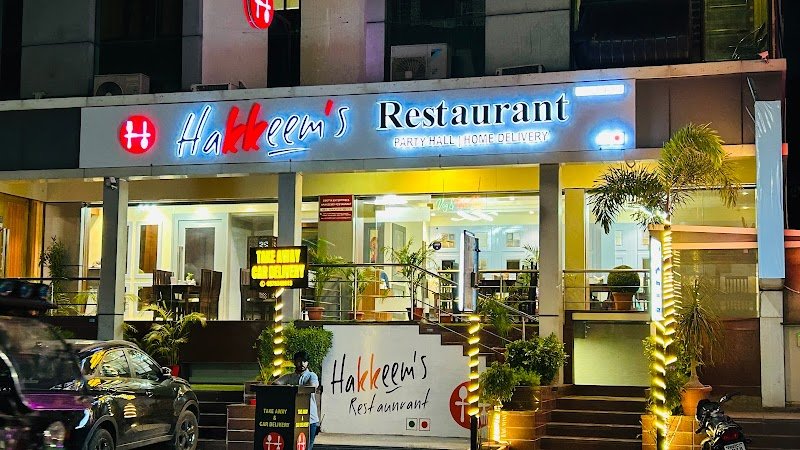
Hakkeem's Restaurant

Hakkeem's Restaurant

4.8 (1.3k reviews)
LocationB-18, Girdhar Marg, Jawahar Lal Nehru Marg, Sector 9, Malviya Nagar, Jaipur, Rajasthan 302017, India
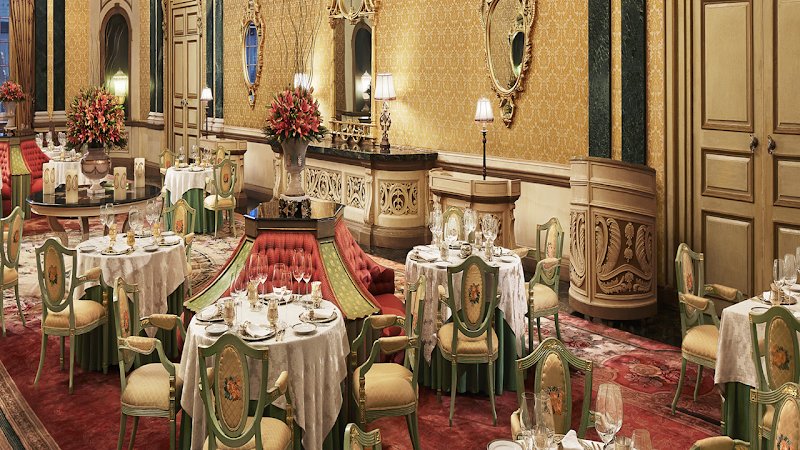
Suvarna Mahal

Suvarna Mahal

4.7 (3.6k reviews)
$$
LocationRAMBAGH PALACE, Bhawani Singh Rd, Rambagh, Jaipur, Rajasthan 302015, India
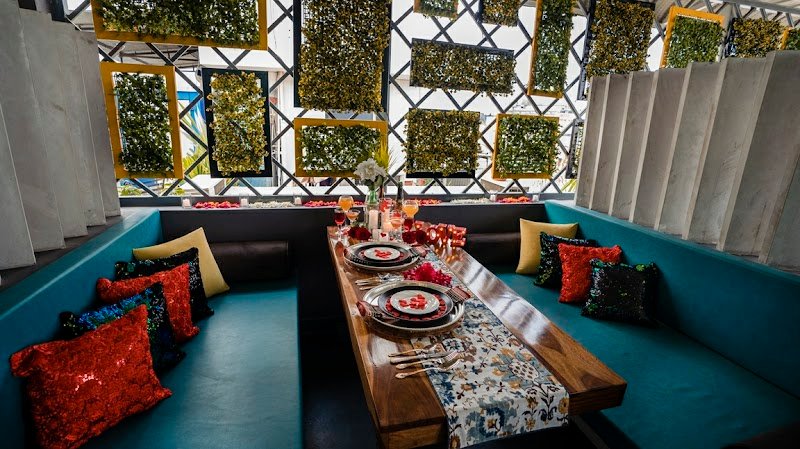
Topaz & Sangria

Topaz & Sangria

4.6 (3.2k reviews)
LocationGanpati Plaza, Hotel Natraj, Motilal Atal Rd, Sindhi Camp, Jaipur, Rajasthan 302001, India
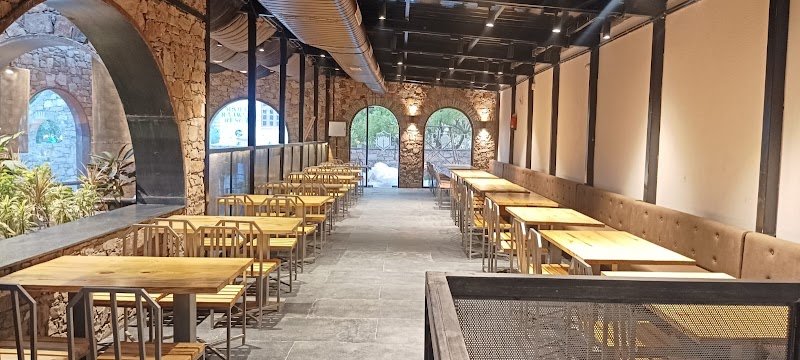
Fort Palms

Fort Palms

4.6 (1.2k reviews)
LocationPlot no. 180 and 181, Sirsi Rd, Scheme, Hanuman Nagar Extension, Paschim Vihar, Vaishali Nagar, Jaipur, Rajasthan 302012, India
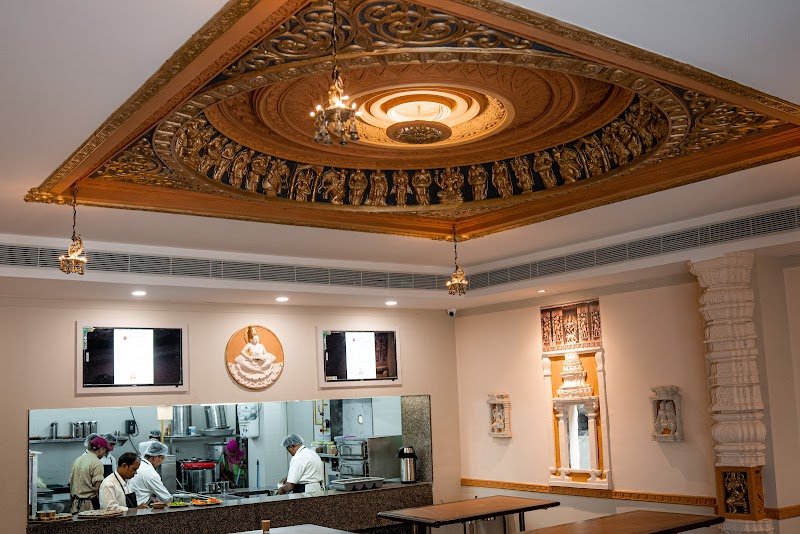
Annpoornam - Best South Indian Restaurant In Jaipur

Annpoornam - Best South Indian Restaurant In Jaipur

4.5 (1.4k reviews)
$$
LocationGround Floor, Moondra Tower, Plot No 012A, Ashok Marg, near Ahinsa Circle, Patrakar Colony, C Scheme, Ashok Nagar, Jaipur, Rajasthan 302001, India

Accommodations

Palace pink walls. Roaring auto-rickshaws. Cows, camels, dust and color—Jaipur overloads the senses right away. But where you lay your head shapes the adventure even more. Families crave calm. Night owls want buzz. In Jaipur, district matters. Pick the wrong spot and all those marvels—the forts, bazaars, and food—might lose their charm by nightfall.

Neighborhood Overview

  • C-Scheme: Wide roads, leafy parks, boutiques, and hip coffee shops. This zone charms professionals, digital nomads, and families. You can walk at night and find some peace, but you’re still near trendy bars and shopping. Higher price tag, lower chaos.
  • The Pink City (Old City): History fans love this. The walls rise salmon pink, narrow lanes hold havelis and temples. It’s often noisy—a riot of rickshaws, honking, markets, and spice-seller calls. Good for those wanting heritage and action. Less ideal for light sleepers.
  • Bani Park: Just north of the center, Bani Park blends old and new. Quieter than the Pink City, but it’s not boring. Mid-range hotels cluster here. Great for business travelers and families who want to be close to sights without the stress.
  • MI Road: Jaipur’s main artery. Hotels line the street among jewelry stores and rooftop restaurants. Good access to everything. Foot traffic never stops—perfect for urban energy seekers, not for quiet nights.
  • Raja Park: A classic residential area with local eateries and chill cafes. Slower pace. Not many tourist hotels, so it feels more like daily Jaipur. Young travelers, foodies, or long-term visitors enjoy the down-to-earth vibe.

Types of Accommodation

  • Heritage Hotels: Stay in history—Samode Haveli and Alsisar Haveli are stand-outs. Grand courtyards and mosaic-tiled suites. Expect ₹6,000–₹25,000 per night and a dash of palace drama.
  • Mid-range Hotels and Guesthouses: Pearl Palace and Arya Niwas top many lists. Prices ₹1,200–₹4,000, good for backpackers and families. Reliable, clean, and central.
  • Hostels: Zostel and The Hosteller suit budget travelers and solo adventurers. Dorms start around ₹350 per bed. Lively social spaces; privacy costs more.

Insider Tips for Booking

Book winter (October–March) rooms months ahead—prices double over Diwali and wedding season. Always check fine print for GST taxes. Some city hotels add mandatory heritage restoration or festival fees. Avoid air-conditioning add-ons if traveling in cool months.

Dusk falls golden across old pink ramparts. Laughter ripples from balconies. Somewhere, a tuk-tuk coughs awake. In Jaipur, return each night to the right address—and everything else feels richer, softer, and sweetly, temporarily yours.