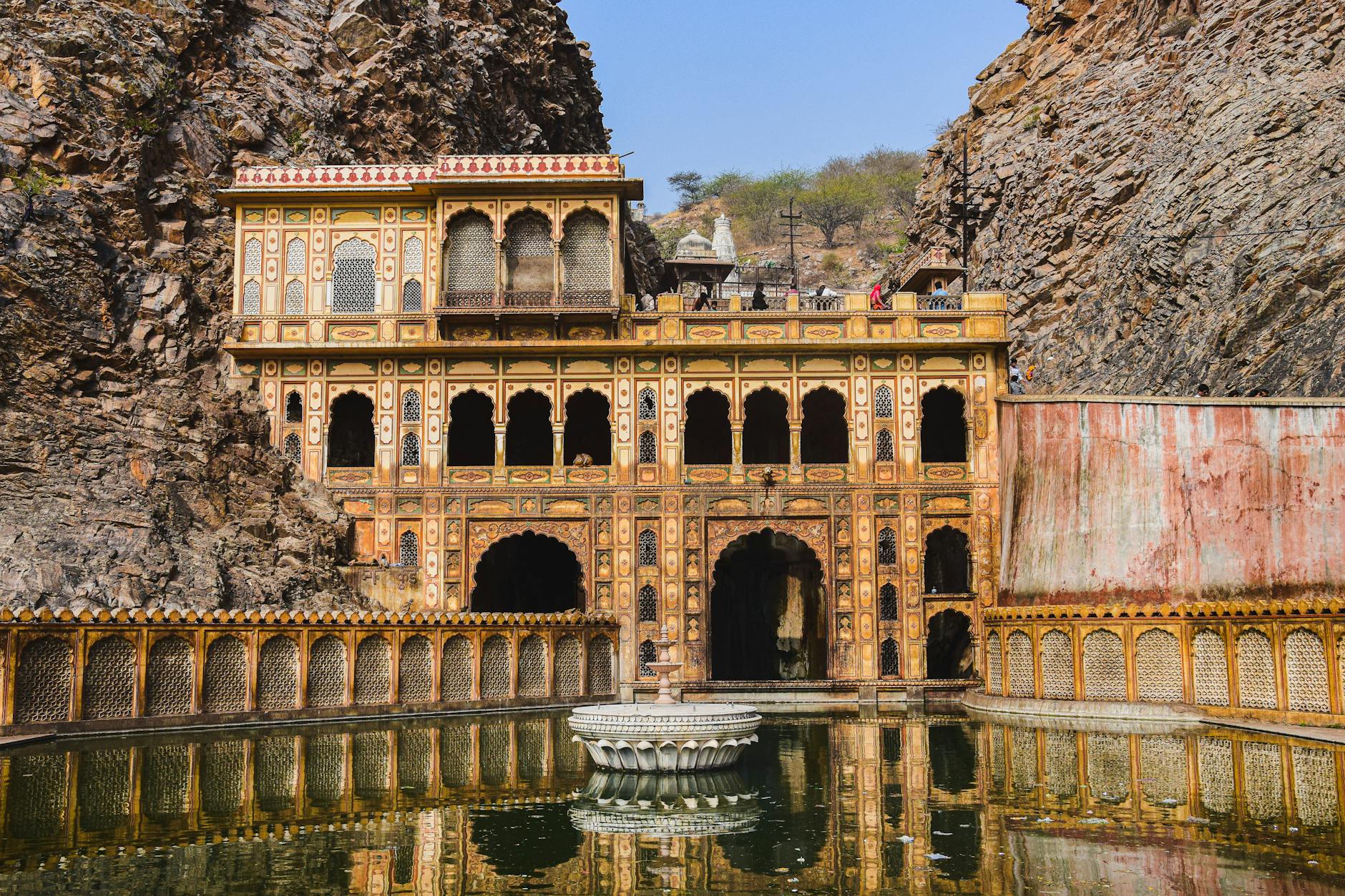
Explore the stunning architecture of Galta Ji Temple set amidst the rocky landscape of Jaipur, India.

Shri Galta Peeth

Jaipur, India
i

Explore the stunning architecture of Galta Ji Temple set amidst the rocky landscape of Jaipur, India.

Photo by AXP Photography

Along a dry, russet hillside just outside Jaipur, Shri Galta Peeth reveals a different side of Rajasthan—a place where clusters of domed temples hug the cliffs and sacred springs draw both pilgrims and playful monkeys. Water gurgles down ancient steps. Prayer bells ring out, echoing across forested valleys. Some visitors come seeking blessings, while others soak up the serene atmosphere and spectacular views, away from the city's thrum.

Visiting Info

Currency
Entrance fee
50 INR
Hours
Opening hours
Monday: 5:00 AM – 7:00 PM
Tuesday: 5:00 AM – 7:00 PM
Wednesday: 5:00 AM – 7:00 PM
Thursday: 5:00 AM – 7:00 PM
Friday: 5:00 AM – 7:00 PM
Saturday: 5:00 AM – 7:00 PM
Sunday: 5:00 AM – 7:00 PM

Contact Information

Location
Address
Galta Ji, Jaipur, Rajasthan 302003, India

Planning your visit

Organizing a trip to Shri Galta Peeth, also known as Galta Ji or 'Monkey Temple,' requires a little forethought but rewards careful planning. Located about 10 kilometers east of Jaipur’s Pink City center, this landmark can feel peaceful in the early morning but draws crowds and cheeky rhesus macaques as the sun climbs. No ticket is required for entry to most areas, though donations at the temple shrines are appreciated. The terrain includes steep steps and uneven stone paths, so families with young children or visitors with mobility challenges should plan accordingly. While no large shops or cafés crowd the foothills, water and snacks are easily found at roadside stalls.

  • Best time to visit: Early morning (sunrise) or late afternoon from October to March, when weather is cooler
  • How to get there: Hail an auto-rickshaw, use a private car, or book a taxi—pink city center to Galta Peeth takes about 30–40 minutes in regular traffic
  • Accessibility: Some stairs and rocky sections; best for moderate walkers; children can manage with help; less suitable for wheelchairs
  • Average visit duration: 1.5–2.5 hours, including time for walking and exploring temples
Must see stuff

Shri Galta Peeth offers an array of unique sights—some shaped by nature, others by centuries of devotion. Visitors wander from sun-bleached courtyards to silent hollows, where priests chant next to sacred tanks (kunds) fed by natural springs. The complex includes several distinct temples, sprawling over the hillside and down into lush, shaded valleys. Meandering groups of monkeys, considered sacred by many, add a lively touch. Photographers and history buffs both linger by the intricate frescoes and bustling pilgrim rituals happening daily.

  • Key sights: The main temple devoted to Saint Galav; Surya (Sun God) Temple perched above; panoramic Galtaji Kunds reflecting temple domes in their waters
  • Unique experiences: Feeding monkeys at designated spots, attending afternoon aarti (prayer) by the water, and trekking hillside paths for wide views of Jaipur’s skyline
  • Photo-worthy locations: Sunset vistas from Surya Mandir, scalloped archways over the central tank, and monkeys amid crumbling terraces
  • Cultural fact: According to legend, Saint Galav meditated here for many years, bringing water to the site; locals believe the springs never run dry, even in Rajasthan’s hottest month

Tips for your visit

Comfort and courtesy both matter at Shri Galta Peeth. Shoes must come off before entering inner sanctums; respectful dress (shoulders and knees covered) is customary. Travelers often encounter assertive monkeys who sniff out snacks, so keeping food and small items zipped away helps avoid unwanted attention. Hiring a local guide at the gate can bring out the site’s hidden stories. For serious photographers, late afternoon light casts golden reflections across the pools, but occasional crowds are likely. Don’t forget a bottle of water and a hat—shade is patchy on the walk up to Surya Mandir, especially in warmer months.

  • Best times to avoid crowds: Arrive before 9:00 a.m. or after 4:00 p.m., especially on weekdays
  • What to bring: Water, sun hat, sturdy walking shoes, scarf or shawl, camera with wrist strap
  • Local etiquette: Remove footwear before entering shrines; offer quiet respect during rituals; never feed monkeys inside temple interiors
  • Safety and comfort: Watch bags and belongings around monkeys, take care on slippery stone, avoid aggressive monkeys (move away calmly if approached)