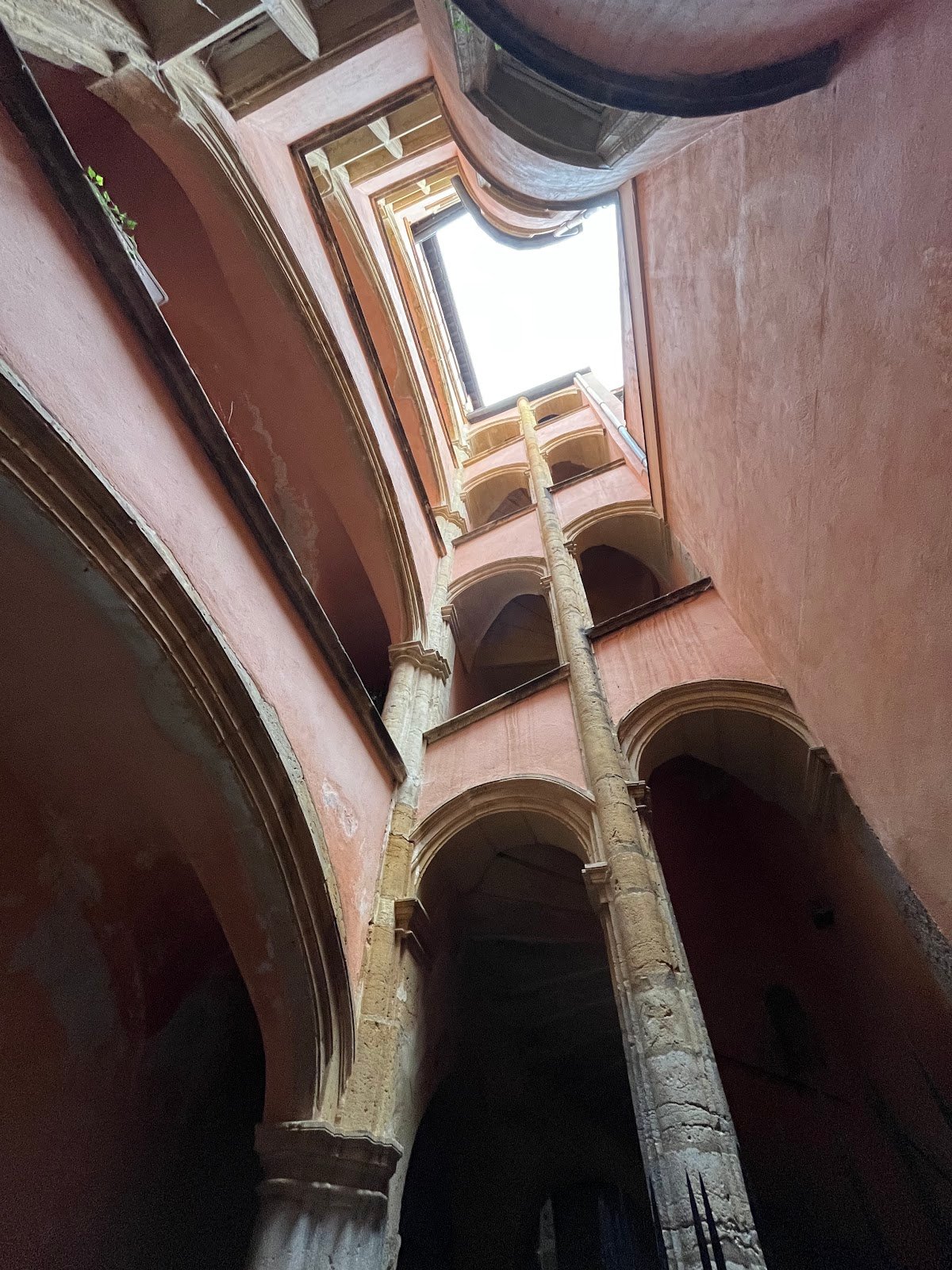
Traboules du Vieux Lyon

Traboules of Lyon

Lyon, France
i

Traboules du Vieux Lyon

Photo by Murat Güner

Ancient passageways, half-hidden behind slate-grey doors or crouched beneath honey-colored courtyards, give Lyon a kind of secret life. The traboules—these winding covered corridors—breathe with centuries of footsteps and whispers. While the busy streets above hum with modern city life, down below, crooks of stone and quiet light connect the past to the present. Travelers searching for a sense of wonder will find it here, where every arch, spiral stair, and tiled floor holds a story.

Visiting Info

Currency
Entrance fee
Free
Hours
Opening hours
Monday: Open 24 hours
Tuesday: Open 24 hours
Wednesday: Open 24 hours
Thursday: Open 24 hours
Friday: Open 24 hours
Saturday: Open 24 hours
Sunday: Open 24 hours

Contact Information

Location
Address
27 Rue Saint-Jean, 69005 Lyon, France

Planning your visit

Getting ready to explore Lyon’s traboules requires a little preparation. Their entrances hide in plain sight, usually marked only by a plain wooden door or a metal plaque. Some passageways welcome all guests, while others remain closed for private use. Most major routes can be visited without a ticket, though guided tours often add historic detail that brings the labyrinth to life. Mornings and late afternoons see fewer visitors, making narrow spaces feel more peaceful. Most traboules are nestled within the neighborhoods of Vieux Lyon and La Croix-Rousse, each offering a different slice of local history.

  • Best time to visit: Spring or fall for mild weather; early morning or late afternoon for quiet.
  • How to get there: Metro lines D and C stop near Vieux Lyon and Croix-Rousse. Walking from Place des Terreaux also works well.
  • Accessibility: Many passageways have steep stairs or uneven floors. Families with strollers or visitors with mobility needs may find some areas challenging.
  • Average visit duration: 2–3 hours for self-guided exploration; guided tours last 1–2 hours.

Must see stuff

Exploring the traboules is more than just following twisting halls. Painted ceilings, light wells, and pink-hued spiral stairs often surprise visitors in these ancient, shared passageways. Each area, from the Renaissance facades of Vieux Lyon to the quiet courtyards of Croix-Rousse, carries its own character. Some traboules still serve as community walkways for residents, offering a rare glimpse into daily life away from busier boulevards. And everywhere, details reward a careful eye: sculpted lintels, medieval graffiti, the play of sunlight on stone. Bringing a camera is highly recommended, but pausing to listen to the echoes proves just as memorable.

  • Key sights or features: The traboule at 54 Rue Saint-Jean (Vieux Lyon) for its classic architecture; Cour des Voraces (Croix-Rousse) with its dramatic staircase and social history; long passages on Rue des Trois Maries.
  • Unique experiences: Joining a guided tour to hear about silk weavers and WWII Resistance; searching for traboule doors with only a city map and intuition; noticing how neighbors greet each other while crossing inner courtyards.
  • Photo-worthy locations: The grand spiral stair at Cour des Voraces; sunlight filtering through glass roofs; mossy wellheads hidden among laundry lines.
  • Cultural or historical facts: Traboules first helped silk workers move bolts of cloth during rain, later playing a secretive role for Resistance fighters during World War II. Each passage tells a piece of Lyon’s layered story.

Tips for your visit

Making the most of the traboule trail means staying flexible. Some doors, marked by discreet signs, open freely to respectful guests. Others may suddenly close without warning, due to private events or maintenance. Most passageways remain dim and damp regardless of season, but sturdy shoes and a jacket help with comfort. While Lyonnais are friendly, quiet voices and a little patience with slow walkers earn appreciation from locals. Some spaces, particularly in Croix-Rousse, fill quickly with small tour groups by midday. Map apps can be helpful, but traditional paper guides from the tourist office make for a more adventurous route. And if energy fades, plenty of cafés nearby offer a break for coffee and people-watching.

  • Best times to avoid crowds: Early mornings on weekdays; avoid major local festivals when neighborhood traffic increases.
  • What to bring: Sturdy walking shoes, lightweight jacket, camera or smartphone, a city map (paper or digital), and a water bottle.
  • Local etiquette or rules: Keep voices down; do not disturb residents; close doors gently; photography is welcome, but privacy should be respected.
  • Safety or comfort advice: Expect uneven or slippery steps in some passages. Taller visitors may need to mind low beams. Not all pathways are well-lit, so take care during evening hours.
Traboules of Lyon – Tickets, Hours & Visitor Guide