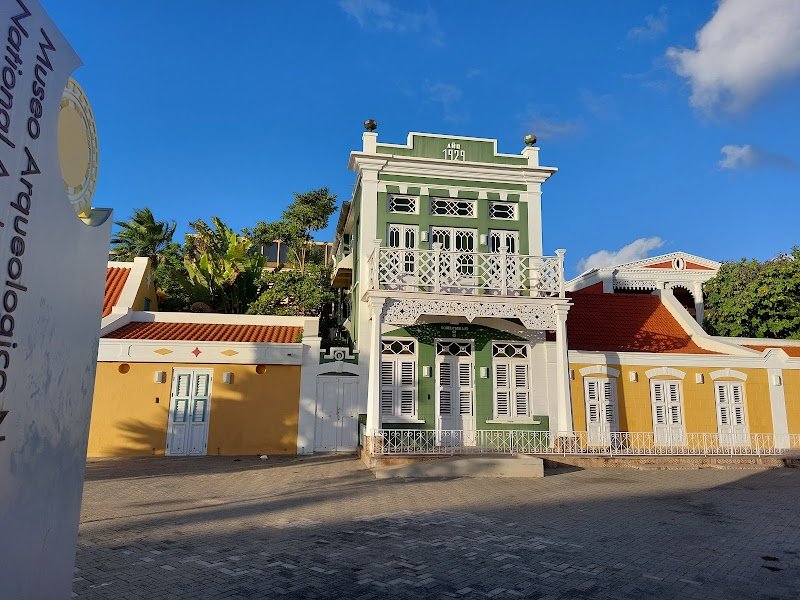
Google Places photo

National Archaeological Museum Aruba

Oranjestad, Aruba
i

Google Places photo

Photo by Libardo Sierra

Vivid colors, ancient artifacts, and a sense of island history come together inside the National Archaeological Museum Aruba. Centered in bustling Oranjestad, this landmark throws open the doors to the stories of Aruba’s earliest people, from pre-Columbian times to recent centuries. Carefully restored, with both modern wings and preserved historic buildings, the museum suits those searching for insight into the island’s roots and vibrant culture.

Visiting Info

Currency
Entrance fee
Free
Hours
Opening hours
Monday: 9:00 AM – 5:00 PM
Tuesday: 9:00 AM – 5:00 PM
Wednesday: 9:00 AM – 5:00 PM
Thursday: 9:00 AM – 5:00 PM
Friday: 9:00 AM – 5:00 PM
Saturday: Closed
Sunday: Closed

Contact Information

Location
Address
Schelpstraat 42, Oranjestad, Aruba

Planning your visit

Early birds and curious families find the museum easy to reach, thanks to its central location. Aruba’s gentle weather means almost any day is a good day, but mornings are quietest—an ideal time for those wanting to linger at displays or chat with staff. No need for advance tickets unless visiting with a large group. Crowds tend to stay manageable, though cruise ship days can bring a bit more bustle. The museum is compact, and most areas are accessible, though a few preserved rooms in the older building have some steps or narrow passages.

  • Best time to visit: Morning hours, weekdays for fewer crowds, or the dry season (March to August) for the most pleasant weather.
  • How to get there: Located on Schelpstraat in downtown Oranjestad; walkable from most hotels, with nearby public bus stops and parking lots. Taxis and bikes are popular, too.
  • Accessibility: Most galleries and restrooms cater to wheelchair users, families with strollers, and older visitors, though historic wings have some uneven floors.
  • Average visit duration: Plan on 60 to 90 minutes for a standard walk-through, or up to two hours for those reading every panel and exploring interactive features.

Must see stuff

The collection inside the National Archaeological Museum Aruba is both broad and deeply local, covering over 4,500 years of island history. The exhibits mix ancient artifacts—pottery, shell tools, jewelry, and ceremonial objects—with well-explained dioramas and models that piece together the daily lives of the Caiquetio people and other indigenous groups. Spacious, sunlit galleries display everything from vibrant colonial tiles to giant dugout canoes. Authentic reconstructed dwellings outside blend hands-on learning with quiet reflection.

  • Pre-Columbian gallery: See beautifully preserved shell ornaments, pottery shards, and tools that tell stories of Aruba’s first settlers.
  • Colonial-era rooms: Walk through the restored 1929 Ecury family home, with original furnishings and carved wood details.
  • Interactive map wall: Trace ancient trade routes and migration patterns using touch screen displays.
  • Courtyard garden: Relax in this shaded spot, filled with native plants and stone sculptures—perfect for photos and a peaceful break.
  • Temporary exhibitions: Look for rotating galleries featuring local artists, recent archaeological finds, or children’s art projects.
  • Photo ops: The pastel blue historic house façade and the scenic inner courtyard provide memorable, colorful backdrops for snapshots.
  • Cultural fact: The museum’s artifacts highlight Aruba’s deep ties to both indigenous peoples and European settlers, showing how these cultures shaped the island’s language and customs.

Tips for your visit

Preparation pays off at the museum. Since the galleries stay cool and bright, bring a light sweater if expecting extended explorations—air conditioning can feel strong. Photography is allowed in most areas, but expect a few “no flash” signs near delicate artifacts. The gift shop stocks unique locally made souvenirs, but closes early on some days. For families, bathrooms and changing areas are clean and easy to access. A slight drawback: only light snacks and water are available, so plan meals elsewhere.

  • Best times to avoid crowds: Arrive before 11am or after 3pm, and check the cruise ship schedule if you want a quieter experience.
  • What to bring: Water bottle, camera, comfortable walking shoes for the stone paths, and a sunhat for the courtyard.
  • Local etiquette and rules: Respect no-touch and photography restrictions; keep voices low in exhibit areas where guides often lead classes.
  • Safety and comfort: Watch out for slightly uneven floorboards in the historic home; staff are happy to help with directions or special needs.