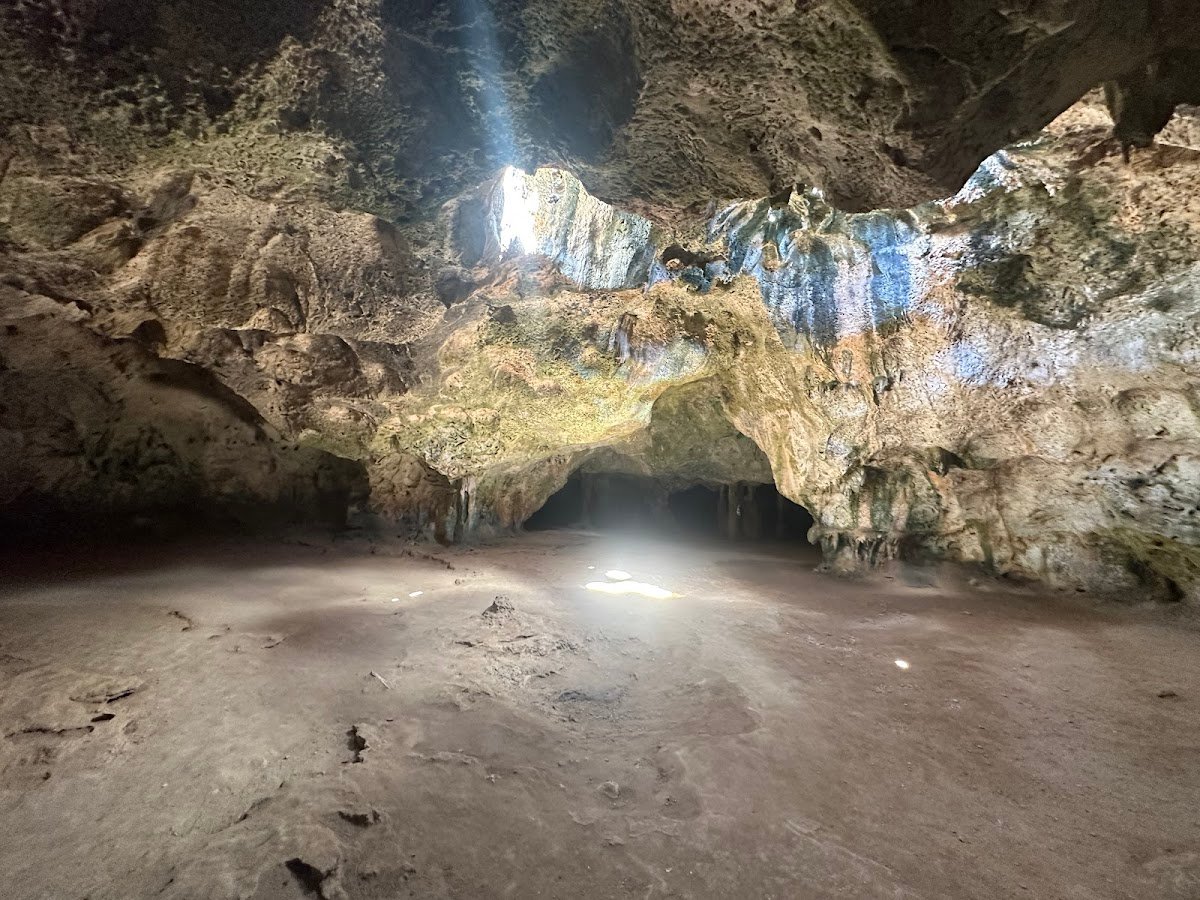
Quadirikiri Cave

Quadirikiri Cave

Oranjestad, Aruba
i

Quadirikiri Cave

Photo by A HooZ

Hidden beneath the arid landscapes and swaying divi-divi trees of Aruba sits a natural marvel—Quadirikiri Cave. Inside this striking limestone cavern, sunlight pours through ancient holes in the ceiling, illuminating chambers where bats nest and mysterious petroglyphs decorate the stone. For those seeking more than just beaches on their Caribbean travels, Quadirikiri offers an otherworldly journey into the heart of Aruba’s wild past and vibrant present—a side of the island many miss.

Visiting Info

Currency
Entrance fee
15 USD
Hours
Opening hours
Monday: 9:00 AM – 3:30 PM
Tuesday: 9:00 AM – 3:30 PM
Wednesday: 9:00 AM – 3:30 PM
Thursday: 9:00 AM – 3:30 PM
Friday: 9:00 AM – 3:30 PM
Saturday: 9:00 AM – 3:30 PM
Sunday: 9:00 AM – 3:30 PM

Contact Information

Location
Address
F4J2+W3G Arikok National Park, Savaneta, Aruba

Planning your visit

Quadirikiri Cave lies within the Arikok National Park, a sprawling reserve that protects Aruba’s rugged interior. Planning is essential because the cave’s location, humidity, and popularity shape the ideal trip. With two main chambers to explore and wildlife to observe, a visit blends adventure and contemplation. Arriving early in the day, before the crowds and the heat peak, usually means quieter chambers and gentler sunlight. No tickets are required for the cave itself, but access to Arikok National Park comes with a fee. Guided tours operate seasonally and can provide a deeper insight, though independent exploration remains popular, especially for photographers and families. Public buses don’t reach the park, but car rentals and taxis are widely available, making it accessible for most travelers willing to venture beyond Oranjestad’s main streets.

  • Best time to visit: Early morning, especially between March and August, when the sunlight inside is at its best and the caves stay cooler.
  • How to get there: Located inside Arikok National Park; easiest access is by car or taxi from Oranjestad (25–30 minutes).
  • Accessibility: Caves have uneven terrain and some narrow passages, making them challenging for those with mobility issues. Families should supervise young children.
  • Average visit duration: 30 to 60 minutes inside the cave; add time to explore nearby sights.

Must see stuff

Walking into Quadirikiri Cave feels like stepping inside a stone cathedral, one shaped by ancient water and time. The main chambers, pierced by shafts of tropical light, showcase a dance of shadows, limestone columns, and swirling roots. Local legend tells of forbidden lovers once trapped inside, lending a hint of romance to the quiet air. Painted on the rocks, red-ochre petroglyphs hint at the island’s first people. Hundreds of harmless long-tongued bats—Aruba’s subtle nighttime pollinators—roost in darker recesses. For photographers and nature lovers, sunlight streaming through those roof holes creates brilliant effects not to be missed. And a lucky few find their way to the smaller, more hidden caverns nearby, where the stillness feels almost magical.

  • Key sights: Twin sunlit chambers with their signature ceiling holes.
  • Unique experiences: Watching beams of light move through the cave as clouds pass overhead.
  • Photo-worthy locations: At the cave entrance, where green scrub meets stone, and inside the illuminated main chamber.
  • Cultural highlights: Indigenous Arawak petroglyphs on the walls and stories of Quadirikiri’s haunting legends.

Tips for your visit

To enjoy Quadirikiri Cave, travelers benefit from a mix of preparation and respect for the unique environment. Although bats shy away from the main paths, visitors sensitive to smells may notice a slight mustiness inside. Paths can be slick with moisture, so sturdy shoes help. Local custom asks guests not to touch petroglyphs or disturb bats. There are no shops or water sources by the cave, and shade is limited until inside. Simple courtesies and practical choices turn a rough journey into a rewarding one.

  • Best times to avoid crowds: Arriving before 10 a.m., and weekdays outside school breaks, generally means fewer people.
  • What to bring: Reusable water bottle, camera, closed-toe shoes, and a small flashlight.
  • Local etiquette: Respect all posted signs, do not use flash photography near bats, and leave no trace.
  • Safety advice: Exercise care with steep steps and low ceilings—watch your head in narrower passages.