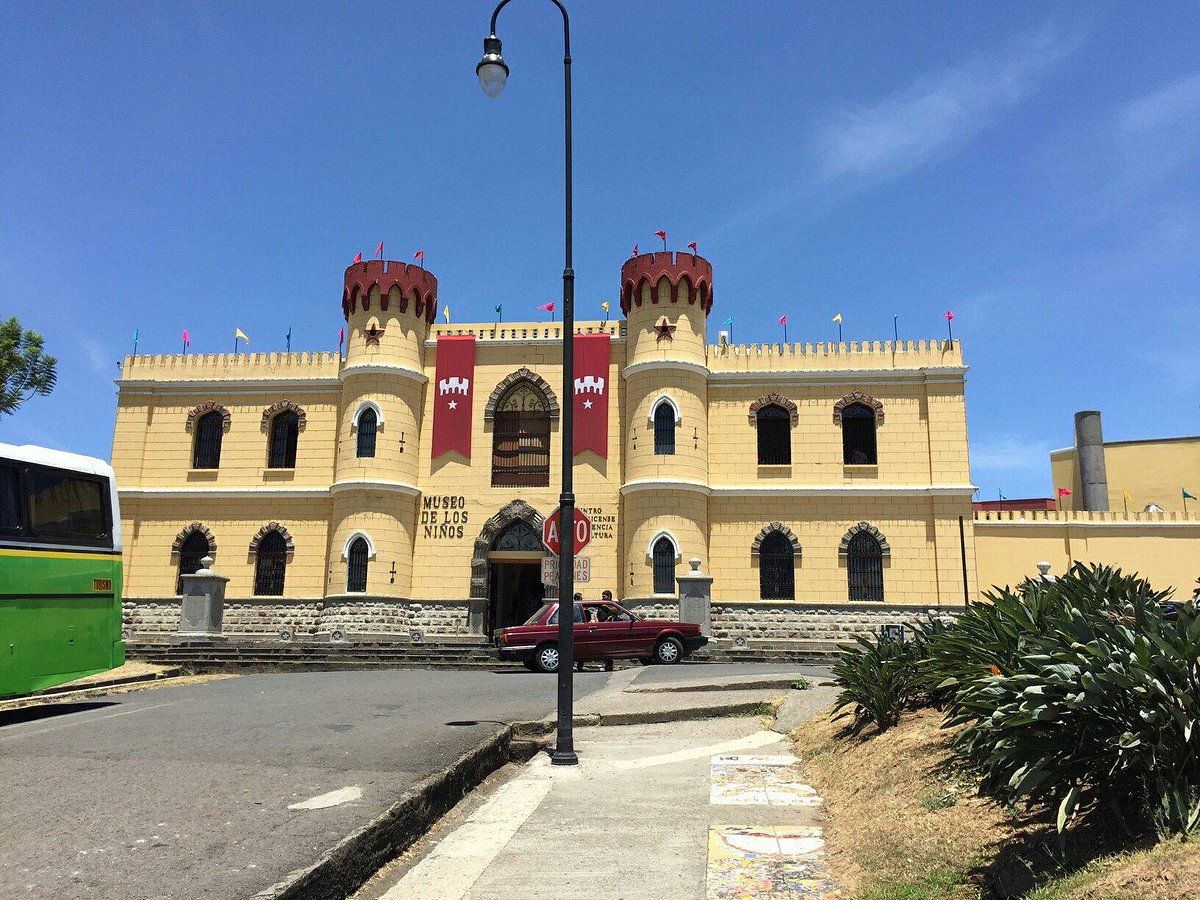
Beautiful view of Children’s Museum

Children’s Museum

San José, Costa Rica
i

Beautiful view of Children’s Museum

Given the bright murals, laughter, and hands-on exhibits filling every corner, few local attractions inspire as much creative curiosity as the Children’s Museum in San José. Found inside a bold, restored neoclassical building, this magnet for families, teachers, and day-tripping vacationers offers more than just playtime. Learning, discovery, and Costa Rican heritage weave through every immersive activity. Whether a first-time visitor or an annual member, few leave without a new favorite memory—or several hours unexpectedly gone.

Visiting Info

Currency
Entrance fee
2500 CRC
Hours
Opening hours
Monday: Closed
Tuesday: 8:30 AM – 4:30 PM
Wednesday: 8:30 AM – 4:30 PM
Thursday: 8:30 AM – 4:30 PM
Friday: 8:30 AM – 4:30 PM
Saturday: 9:00 AM – 5:00 PM
Sunday: 9:00 AM – 5:00 PM

Contact Information

Location
Address
WWR9+GR4, Av 9, San José, Bajos de La Union, Costa Rica

Planning your visit

Visiting the Children’s Museum does not require complex planning but a bit of preparation ensures a smooth day. Mornings, especially on weekends or during school holidays, see high energy and even higher crowds—midweek afternoons tend to offer more room to roam. Public buses and taxis stop nearby, and there’s ample parking if traveling by car. Tickets can be purchased at the entrance, with discounts sometimes available for locals or large groups. Wheelchair access is available, though some older corners of the building require extra attention with strollers or small children.

  • Best time to visit: Weekday afternoons, especially outside of local school holidays.
  • How to get there: Buses and taxis stop steps from the entrance; parking lots adjacent to the building.
  • Accessibility: Most exhibits are stroller- and wheelchair-friendly; accessible restrooms are on each floor.
  • Average visit duration: Two to four hours, or a full morning for families keen to see every corner.

Must see stuff

Spanning multiple floors and expansive courtyards, the Children’s Museum bursts with themed adventure zones, live science shows, and Costa Rican culture tucked around each twist. Families bounce from climbing walls to space exhibits, while budding chefs whip up make-believe meals in the pint-sized supermarket. Art, music, and engineering blend with daily demonstrations and countless selfie spots. Despite the clamor, some quiet nooks invite winding down with a story book or a thoughtful chat.

  • Key sights: The Planetarium with immersive space exploration projections, “The City” play area—a full-scale child-sized town, and the busy fire truck zone where future firefighters clamber aboard.
  • Unique experiences: Live science experiments in the Chemistry Lab, try-on costumes in the theater workshop, and tiny trains chugging the outdoor tracks.
  • Photo-worthy locations: Rainbow steps outside the museum’s main entrance and the wall-sized, swirling mural in the central hall.
  • Cultural and historical facts: Housed inside a repurposed 1900s jail, the museum merges local history with imaginative design, making the building itself an artifact worth exploring.

Tips for your visit

While most outings go smoothly, a few tips make for a better experience. On humid, sunny days, the open courtyards heat up—drinks and a hat help. Some themed rooms close briefly for cleaning, so be flexible with your route. Lockers are available and worth using for bags or snacks, since re-entry comes with another ticket. Local families are friendly—don’t hesitate to ask for directions or advice. Signs appear in Spanish, with some English translations available.

  • Best times to avoid crowds: Visit early afternoon, midweek.
  • What to bring: Water bottle, comfortable shoes, sunscreen, extra socks for soft play zones, and a camera.
  • Local etiquette: Observe posted age restrictions in certain areas; staff encourage shared use of popular exhibits.
  • Safety and comfort: Keep valuables locked up, supervise younger children closely, and schedule short breaks to avoid overstimulation.