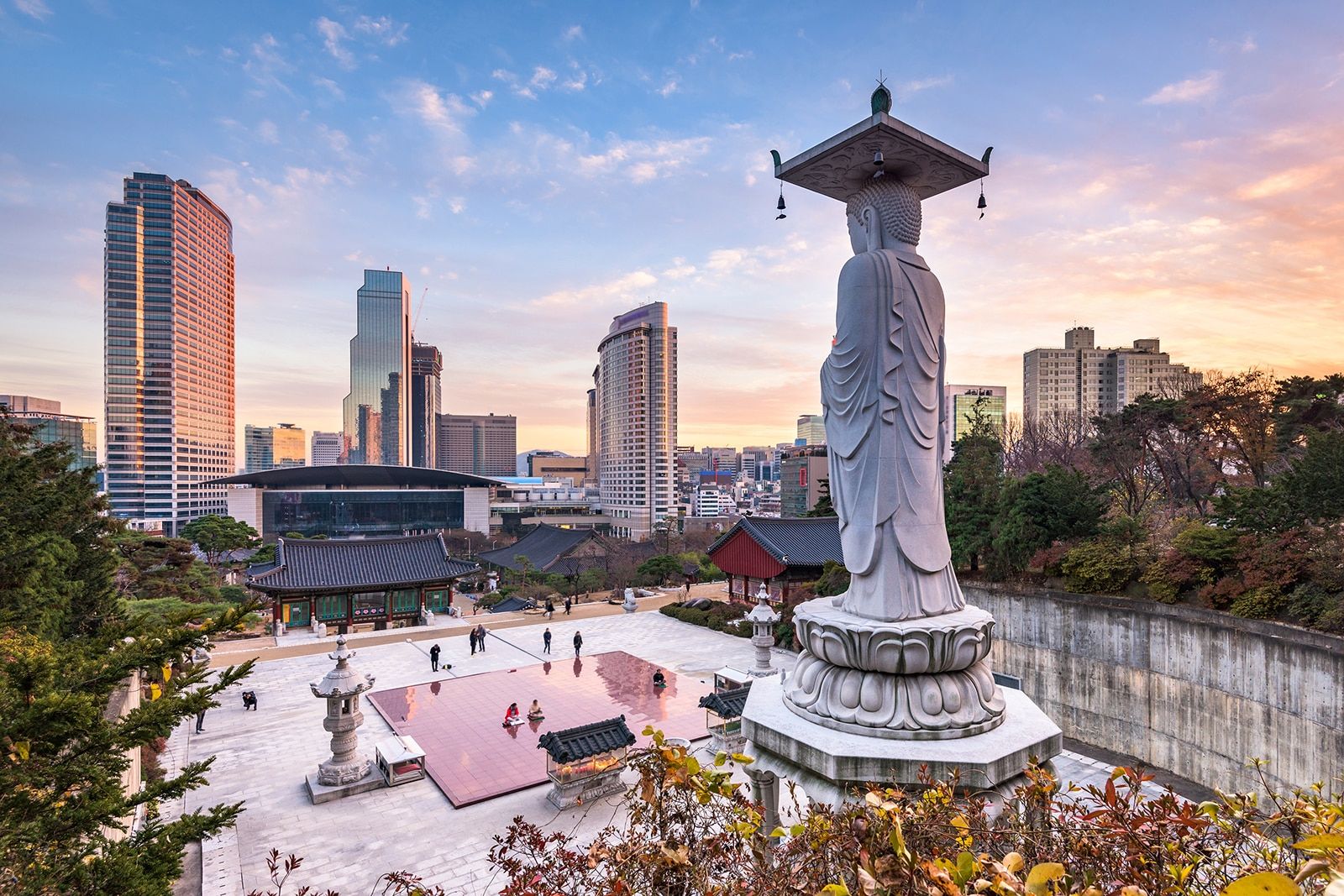
Beautiful view of Bongeunsa Temple

Bongeunsa Temple

Seoul, South Korea
i

Beautiful view of Bongeunsa Temple

Bongeunsa Temple stands as an unexpected retreat, centuries-old and almost ethereal, amid Seoul’s whirlwind of modern commerce and incline of high-rises. Sloping temple rooftops balance against glass facades, while steady chanting drifts above city sounds. Here, the past feels present, and tranquility finds a way through every winding path, tranquil courtyard, and serenely carved statue.

Visiting Info

Currency
Entrance fee
Free
Hours
Opening hours
Monday: 5:00 AM – 10:00 PM
Tuesday: 5:00 AM – 10:00 PM
Wednesday: 5:00 AM – 10:00 PM
Thursday: 5:00 AM – 10:00 PM
Friday: 5:00 AM – 10:00 PM
Saturday: 5:00 AM – 10:00 PM
Sunday: 5:00 AM – 10:00 PM

Contact Information

Location
Address
531 Bongeunsa-ro, Gangnam District, Seoul, South Korea

Planning your visit

Located just a stone’s throw from the stylish COEX Mall, Bongeunsa Temple welcomes travelers all year but rewards those who plan ahead. Early mornings deliver peaceful energy, as soft sunlight skirts around ancient pines and temple bells ring clearly. Most visitors use Seoul’s subway system; Samseong Station’s Exit 6 places the main gate within easy walking distance, avoiding busy traffic. The grounds remain open without an entrance fee, yet organized temple stay programs and guided tours may require advance bookings, especially during weekends or holidays.

  • Best time to visit: Spring for cherry blossoms, autumn for fiery foliage; ideal hours are before 10 a.m. or after 4 p.m. to dodge tour groups.
  • How to get there: Ride Seoul Subway Line 2 to Samseong Station, Exit 6, then walk about five minutes north.
  • Accessibility: Mostly wheelchair and stroller-friendly, with paved paths; some areas have stairs, but staff offer assistance if needed.
  • Average visit duration: 1–2 hours for highlights; up to 4 hours with programs or slow exploration.

Must see stuff

Bongeunsa Temple rises from calm terraces, where bursts of fluttering prayer flags and the scent of incense greet curious visitors. Historic halls line leafy courtyards. Impressive statues and hidden walkways give Bongeunsa a comforting scale—never overwhelming, always full of detail to notice. While vividly-painted shrines and tall Buddhas draw crowds, a few quiet corners and scriptures provide insight into centuries of Korean Buddhism.

  • The Great Statue of Maitreya: A jaw-dropping, 23-meter-tall stone Buddha that towers above the city skyline.
  • Main Dharma Hall (Daeungjeon): Home to daily chanting, especially powerful at dusk or dawn.
  • 1165-year history: A collection of ancient pagodas and stone lanterns showcase the temple’s longevity.
  • Lantern-lined pathways: Especially colorful during Buddha’s Birthday celebrations in spring.
  • Scripture Library (Beopbojeon): Shelters delicate woodblock prints and holy texts—few visitors ever peek inside.
  • Photo-worthy spots: Sunrise through temple gates; courtyards framed by red maple in October; monks in traditional robes passing under gingko trees.
  • Unique experiences: Temple stay programs and tea ceremonies with monks for a hands-on slice of daily life.

Tips for your visit

Bongeunsa Temple always offers new things to notice, but planning ahead smooths out the rough spots. Weekends invite occasional festival crowds, and school groups from nearby neighborhoods can make it busy. Dress conservatively—covered shoulders and calm colors fit best. Whispering voices are encouraged, especially in prayer halls and during services. Photography is welcome almost everywhere outside, but always ask before shooting monks or private ceremonies. The grounds offer just a few vending machines, so carrying water and a snack can be smart. Slopes and cobblestones challenge tired feet, but benches invite longer pauses. While crime is rare, personal belongings should remain close in all public spaces.

  • Early visits: Arrive between 7–9 a.m. for the most tranquil temple experience.
  • What to bring: Comfortable shoes, refillable water bottle, extra camera battery, hat for sunny days.
  • Local etiquette: Step lightly, bow respectfully in active shrines, and turn off phone sounds in prayer halls.
  • Comfort & safety: Take breaks, especially on humid summer days; watch young children near stone railings.