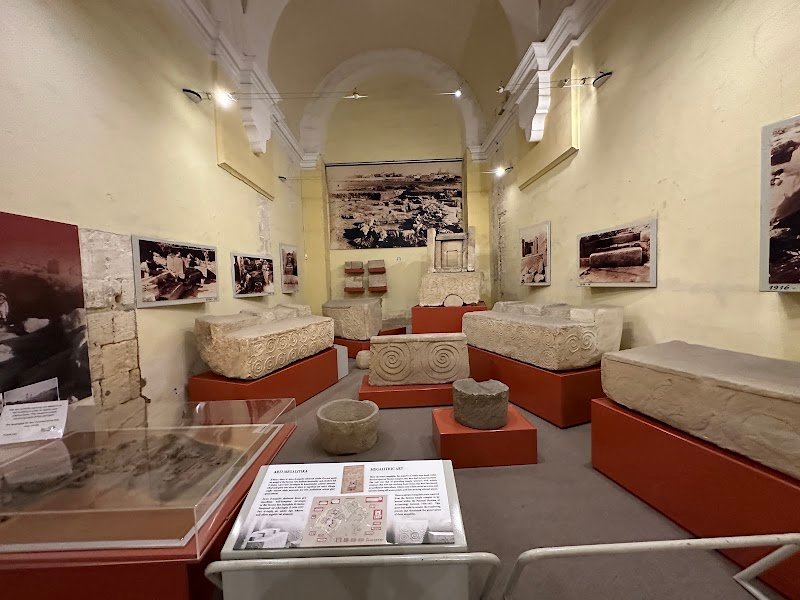
Google Places photo

National Museum of Archaeology

Valletta, Malta
i

Google Places photo

Photo by Oscar Vignone

Time flows differently inside the National Museum of Archaeology. Ancient stone, golden statues, and weathered artifacts quietly tell stories of Neolithic Malta, drawing visitors into a deep and layered sense of history. This landmark, settled within the ornate Auberge de Provence, offers more than relics behind glass—every corridor whispers of daily life from millennia past. Anyone curious about Malta’s roots or Europe’s ancient cultures will discover a trove of surprises here, both majestic and humble.

Visiting Info

Currency
Entrance fee
5 EUR
Hours
Opening hours
Monday: 9:00 AM – 7:00 PM
Tuesday: 9:00 AM – 7:00 PM
Wednesday: 9:00 AM – 7:00 PM
Thursday: 9:00 AM – 7:00 PM
Friday: 9:00 AM – 7:00 PM
Saturday: 9:00 AM – 7:00 PM
Sunday: 9:00 AM – 7:00 PM

Contact Information

Location
Address
Auberge de Provence, Republic St, Valletta, Malta

Planning your visit

Thoughtful planning helps make the most of a day at the National Museum of Archaeology. Since the museum sits at the start of Republic Street, Valletta’s pedestrian hub, entry is easy and the atmosphere lively. Weekdays tend to welcome fewer school groups and tour crowds than weekends. The museum isn’t vast, but its collections reward lingering, so visitors should expect gentle pacing. Detailed panels and hands-on digital displays appeal to curious minds of all ages, though younger children may move quickly between rooms. Ticket purchases at the door rarely cause long waits except during peak summer or national holidays.

  • Best time to visit: Late morning or early afternoon on weekdays, October through May
  • How to get there: Walk from Valletta’s city gate, arrive by city bus, or take a taxi; public parking sits just outside Valletta’s walls
  • Accessibility: Wheelchair access is limited on upper floors (historic building), but the ground floor is friendly to families and seniors
  • Average visit duration: One to two hours is ideal for most visitors

Must see stuff

No two visits feel quite alike, but a few treasures always capture attention. A calm hush often settles before the magnificent ‘Sleeping Lady’ figurine, whose delicate pottery has journeyed inward from a prehistoric tomb. Galleries glow with golden jewelry worn by Malta’s earliest islanders, while the towering temple models invite comparisons with the world’s first stone buildings. The museum’s second floor showcases the mysterious ‘Priest’s Head’ and other displays from the Copper Age—a great spot for budding archaeologists. Local guides sometimes point out lesser-known amulets or tools, each with a story to tell about vanished Maltesi cultures.

  • The ‘Sleeping Lady’: This small but spectacular statue, found in the Hypogeum, amazes with its artistry and links to Maltese spiritual beliefs.
  • Bronze Age weaponry and tools: Displays reveal daily work and ancient survival strategies.
  • Temples in miniature: Scale models and carvings help explain Malta’s status as home to some of the world’s oldest freestanding structures.
  • Second-floor galleries: Home to the elegant ‘Venus of Malta’ and a huge stone altar slab, this area taps into the island’s oldest rituals.
  • Photo-worthy staircase: The baroque staircase itself makes a dramatic backdrop for travel snaps—don’t miss looking up as you climb.
  • Contextual exhibits: Panels provide vivid archaeological detail, while digital screens recreate vanished landscapes.

Tips for your visit

Making the most of a museum day means more than simply walking hall to hall. Patience pays off in quieter rooms, where reading display notes uncovers rich stories behind simple stones. The building’s thick walls keep things cool in summer, but bring a sweater for winter visits—central heating is rare. This is not a hands-on children’s museum, so thoughtful conversations spark the most curiosity. Photography is welcome without a flash; just remember, some rooms may have restrictions when special exhibitions arrive. Staff often share directions to nearby cafes for a break after viewing the collections.

  • Best times to avoid crowds: Arrive at opening (around 9 a.m.) or during late afternoons after 3 p.m.
  • What to bring: Reusable water bottle, comfortable walking shoes (stone floors), camera or phone, light sweater
  • Local etiquette or rules: Keep voices low; refrain from touching objects even if unguarded; respect marked no-photo zones
  • Safety or comfort advice: Some stairs are steep and handrails may be narrow—move slowly; young children should be kept near in busy galleries