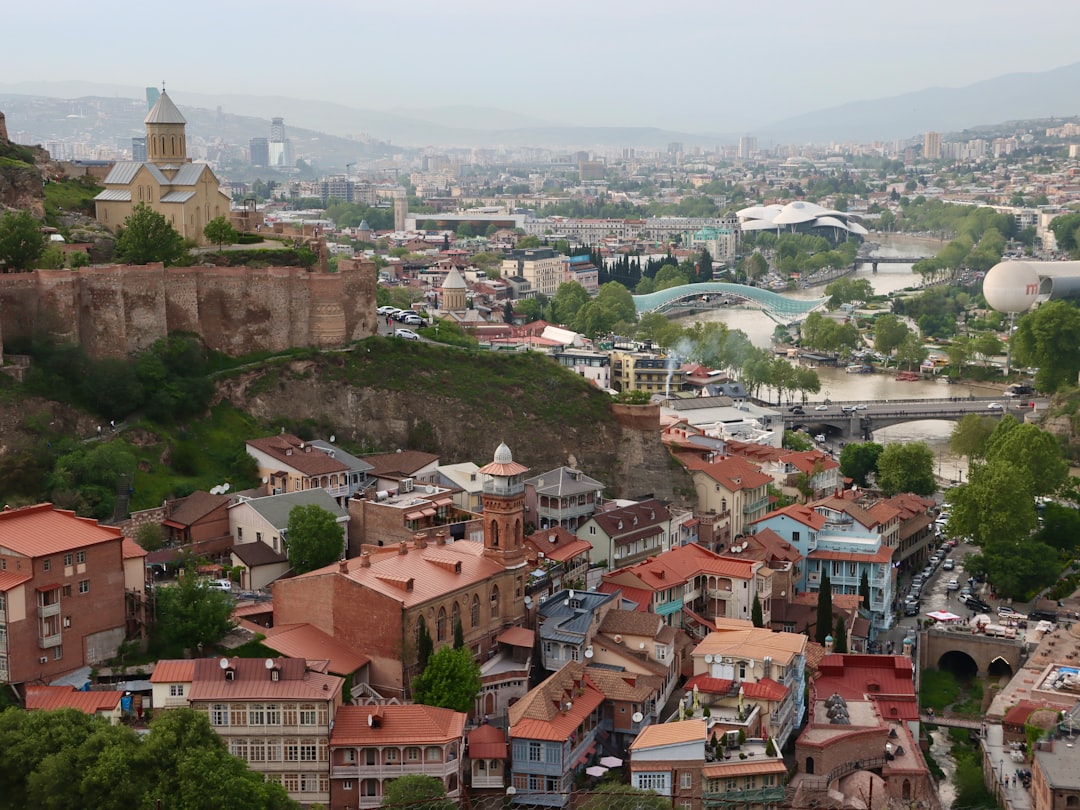
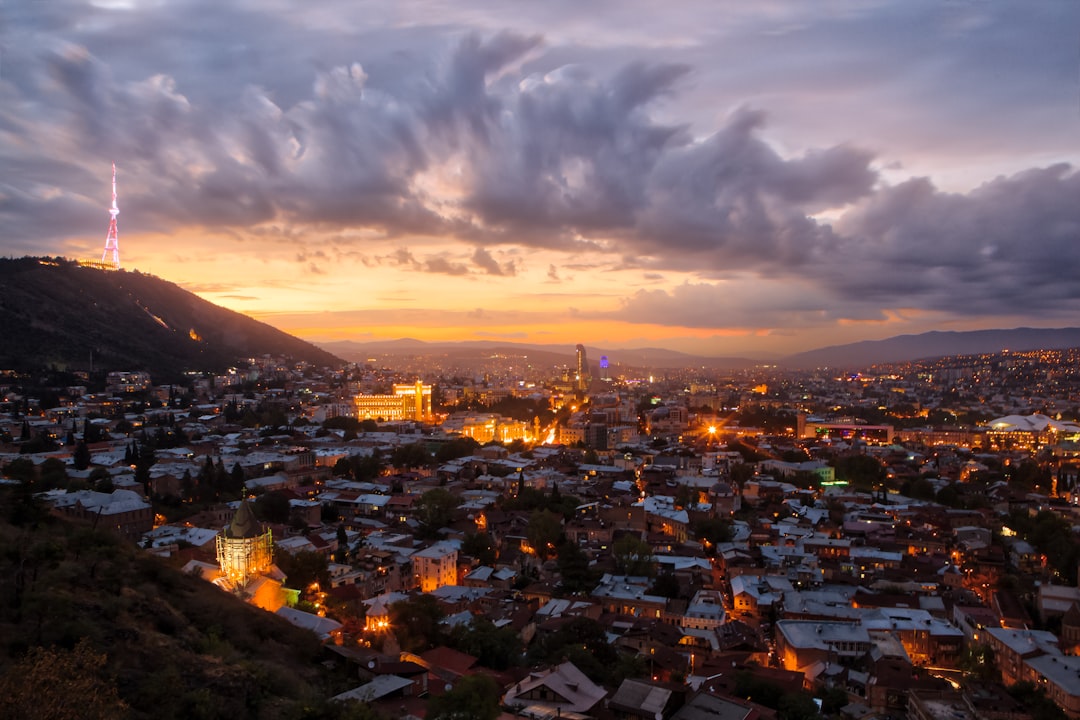
a view of a city from a high point of view
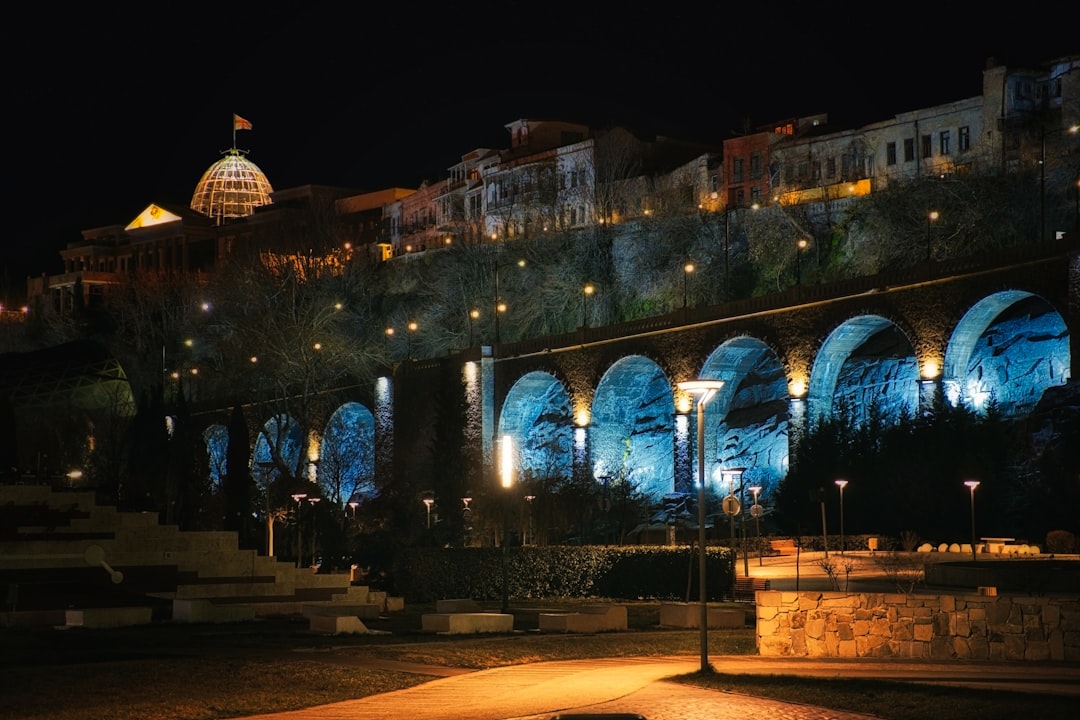
A night view of a building with arches lit up
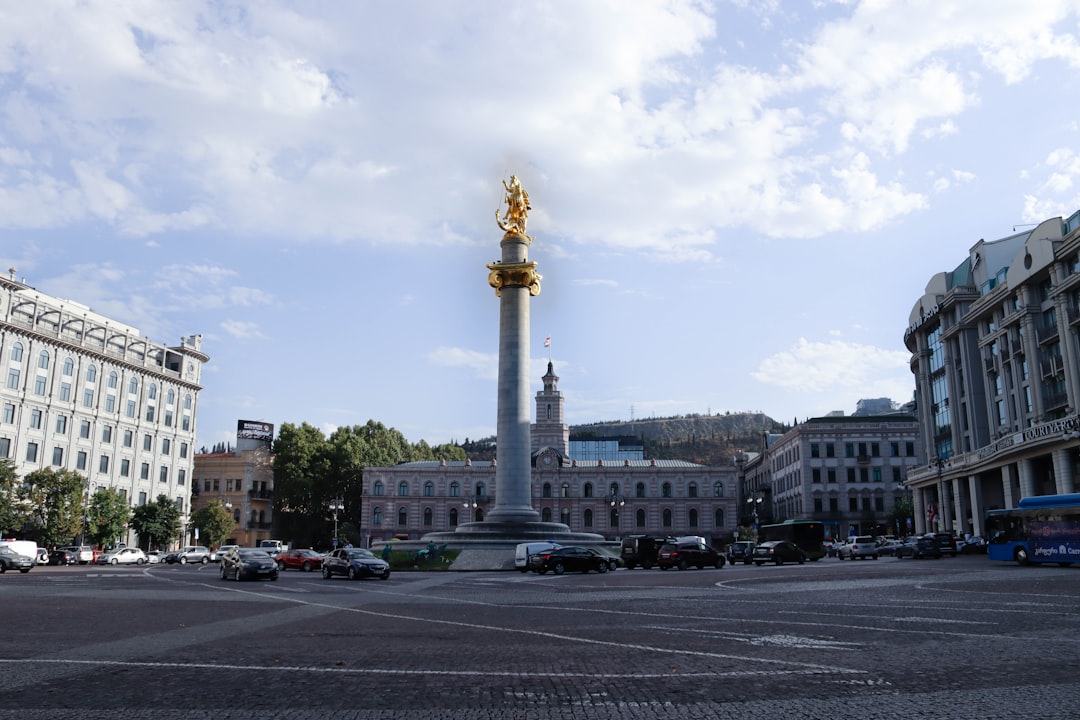
a large statue in a city
houses under clouds

Tbilisi

Georgia
Religious & SpiritualCulturalHistoricalUrban HighlightsArt & Architecture
i

a view of a city from a high point of view

Photo by Hongbin

Tbilisi greets you with a swirl of sulphur steam and jazz from a riverside café. Rust-red rooftops tumble down to the Kura, while Narikala Fortress watches from its hill. Stroll Marjanishvili for buttery khachapuri and street buskers, or lose yourself in Sololaki’s faded courtyards, vines dripping from balconies. At the Dry Bridge market, Soviet relics mingle with handmade crafts—a treasure hunt in the open air. Evening pulls you to the baths, tiles warm and echoing, sulphur-rich water softening the day’s dust. Tbilisi’s charm comes ragged and real: graffiti, church bells, laughter over shared wine. It’s a city that doesn’t hide its cracks, and somehow feels more alive for them.

Quick Facts

currency
GEL
languages
Georgian
airports
Tbilisi International Airport
size
Large City
power
Type C, Type F
timezone
GMT+4
safety
Safe
costs
Cheap

General Information

Safety indexTbilisi rates as moderately safe for travelers. Petty crime such as pickpocketing can occur, especially in crowded areas or tourist hotspots, but violent crime is rare. Exercise common sense precautions, avoid poorly lit areas at night, and keep your belongings close.

Best Time to TravelThe best time to visit Tbilisi is from late May to early October. During these months, the weather is warm and pleasant, with many cultural events and festivals taking place in the city.

Least crowded and still a good time to visitLate September to early November and late March to early May are less crowded, but still offer enjoyable weather. These shoulder seasons mean fewer tourists, lower prices for accommodation, and comfortable temperatures for sightseeing.

BudgetTbilisi is considered a budget-friendly destination by European standards. Budget travelers can get by on $30–50 USD per day, including hostel accommodation, meals at local restaurants, and public transport. Midrange travelers can expect to spend $60–120 USD per day for nicer hotels and more varied dining.

Healthcare and VaccinationsHealthcare facilities in Tbilisi are generally adequate for basic and minor emergencies, but more serious medical conditions may require evacuation. It is recommended to have travel health insurance. Tap water is generally safe in the city, but bottled water is widely available.

Visa RequirementsCitizens of many countries, including the EU, USA, Canada, Australia, and most CIS nations, can enter Georgia visa-free for up to one year. Others will need to apply for an e-visa in advance. Check the latest requirements on the official Georgian government site before traveling.

Weather in Tbilisi

°C°F
3799
2780
1661
642
-523
Jan
Feb
Mar
Apr
May
Jun
Jul
Aug
Sep
Oct
Nov
Dec
3020100
Avg. min. temperature
Avg. max. temperature
Avg. precipitation days

First-time travelers

Tbilisi caught me off guard. Georgia’s capital sits at a crossroads, inviting newcomers to tumble right into tradition and surprise. My first walk down Rustaveli Avenue felt surreal—peeling Soviet facades beside Art Nouveau wonders, with church bells echoing over street music and sudden laughter. Even the traffic seemed to dance in unpredictable rhythms.

First Impressions: Layers of History

Everything in Tbilisi seems stacked—old baths over ancient caves, wooden balconies above crumbling courtyards. I found my senses sharpening: the sharp whiff of sulfur from Abanotubani’s bathhouses; cool stone underfoot in the twisting lanes of the Old Town. Street vendors—quick smiles, walnut churchkhela pirouetting from their fingertips—brought the city’s flavors right to me. It wasn’t just sights, but voices, smells, textures, all layered together.

Daily Life Unfiltered

I tried khinkali dumplings at Pasanauri restaurant, juice dribbling down my wrists after the first bite. Locals gestured with pride. Their city doesn’t hide its wear or worry about perfection. In the morning, the dry tang of baked bread from Tone bakeries wafted through the air. At dusk, rose-gold light tumbled down from Narikala Fortress, coloring even mismatched rooftops in soft glow.

  • Skip fancy restaurants. Instead, try Racha Tavern for rustic stews and homemade wine.
  • Wander in Sololaki to spot pastel balconies and mosaic courtyards.
  • Watch elderly men play backgammon in leafy 9 April Park.
  • Take a marshrutka minibus to Lisi Lake for an afternoon stroll among locals.

Tbilisi welcomes you with arms and eyebrows raised. Don’t rush. Let yourself be surprised by its warmth, grit, and grand, gentle decay.
Return travelers

Second visits to Tbilisi move slower—like sipping qvevri wine in the shade. You’ve walked the cobbles and soaked in sulfur. Now, the city’s quieter joys await, hiding behind ordinary doors and in alleyway art scenes few guidebooks cover.

Beneath the Surface

This time, I settled into everyday rhythms. In the Vera district, mural-covered walls led me past bakeries so familiar the clerks greeted me by name. Avlabari’s hidden Armenian cathedral, with its smoky candles and fading icons, drew me in for silent refuge. I lingered at small tea shops in Marjanishvili, chatting with students about jazz, poetry, and football.

New Tastes, Deeper Talks

On my return, I hunted for places untouched by recent trends. The strip-lit corridors of Deserter Market revealed vendors hawking tarragon soda and wild mushrooms. Upstairs, a table of babushkas pressed wild herb khachapuri into my hands—herbs I’d never tasted before. After dark, I joined locals at dive bars on Kote Abkhazi Street, their laughter spilling out into the warm night, local bands riffing on polyphonic harmonies.

  • Browse Dry Bridge Market for Soviet relics and hand-painted chess sets.
  • Visit the Tower of Rezo Gabriadze for offbeat puppet shows.
  • Drop into Fabrika, a former factory-turned-art space, for pop-up galleries and indie film screenings.
  • Ride the old cable car from Chugureti for sweeping evening panoramas.

For returning travelers, Tbilisi peels back deeper layers. Slow down—even strange corners might start to feel like home.

Must-see locations

Google Places photo
i

Google Places photo

Photo by Tal (TalkoT)

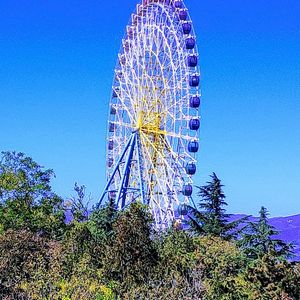
Mtatsminda Park

High above Tbilisi, Mtatsminda Park combines sweeping city views, classic amusement rides, and shady trails. Families ride the Ferris wheel. Couples stroll past old cafes. Sunset paints the city below—an unbeatable evening spot.

Learn More
a large bridge over a river next to a city
i

a large bridge over a river next to a city

Photo by EIICHI HIRAKAWA

Bridge of Peace

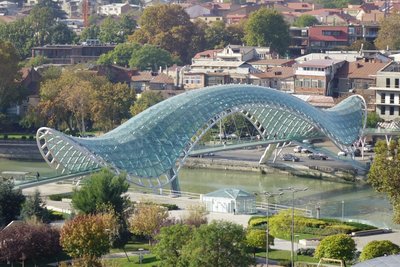
Stretching across the Kura River, the Bridge of Peace connects Tbilisi’s old city with lively Rike Park. Glass and steel arches glow at night. Locals stroll, musicians play, and views of Narikala Fortress frame every step.

Learn More
Google Places photo
i

Google Places photo

Photo by Iban Martinez

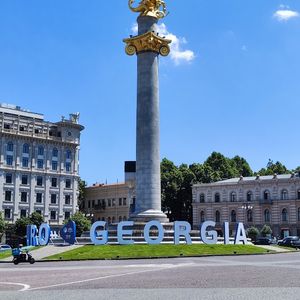
Liberty square

In central Tbilisi, Liberty Square pulses with city life, drawing locals and visitors to the golden St. George statue. Street performers animate the plaza. Cafés nearby buzz. Historic buildings, like the former City Hall, frame every photo.

Learn More
Google Places photo
i

Google Places photo

Photo by Hasan Noori

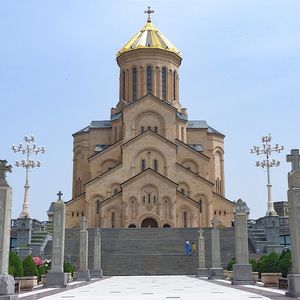
Holy Trinity Cathedral of Tbilisi

Holy Trinity Cathedral of Tbilisi, rising above the Avlabari district, blends golden domes and sweeping city views. Marvel at vast frescos. Watch worship or stroll quiet gardens, soaking in Georgia’s heart and deep religious life.

Learn More
Google Places photo
i

Google Places photo

Photo by Ado Lito

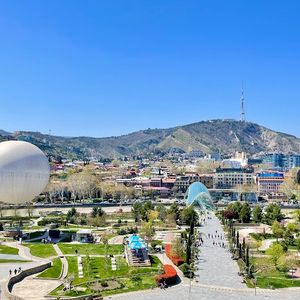
Rike Park

Rike Park in Tbilisi blends modern design with lush gardens, the Mtkvari River’s flow, and striking views of the Peace Bridge. Enjoy giant chess, fountains, outdoor concerts, or riverside walks in the city’s lively cultural heart.

Learn More

How to get there

By air

Tbilisi International Airport (TBS) is the main international gateway to Georgia’s capital, with direct flights from various European, Middle Eastern, and CIS cities. The airport is located about 17 km southeast of the city center.
Options to get to town:
Taxi
Price:
40–60 GEL
Duration:
20–30 minutes
Where to buy:
At the official taxi stand outside arrivals or by using a ride-hailing app (e.g., Bolt, Yandex Go)
Airport bus
Price:
1 GEL
Duration:
40–60 minutes
Where to buy:
On board (exact change), at kiosks in the airport, or using a Georgian transport card
Train/shuttle
Price:
0.5 GEL (train)
Duration:
20 minutes (train, limited daily departures)
Where to buy:
At the airport train station or using a Georgian transport card

By train

Tbilisi is served by regular trains from other Georgian cities (Batumi, Zugdidi, Kutaisi) and from Azerbaijan (Baku). International trains from Armenia (Yerevan) are also available seasonally. The main train station is centrally located in Tbilisi.

By car

Tbilisi is accessible by road from neighboring countries (Armenia, Azerbaijan, Turkey) through international highways. Driving conditions are generally reasonable, though mountain roads can be challenging. Car rental is available in major cities.
Additional charges to be aware of:
Vignette
Cost:
No vignette required for Georgia
How to pay:
N/A
Other driving costs
Cost:
Potential entry/exit fees at borders; fuel cost varies (approx. 3.8–4.5 GEL/liter)
How to pay:
Paid at border crossings and fuel stations

How to get around

Public transport

Public transport in Tbilisi includes an efficient metro system, city buses, and minibuses called "marshrutkas." The metro is often the quickest way to travel longer distances within the city, while buses and marshrutkas reach more neighborhoods. All three use the same stored-value Metromoney card.

Ticket options:
Ticket TypePriceWhere to buy
Single ticket₾1 (Georgian Lari) per rideAt metro stations, bus terminals, or via Metromoney card top-up points
Day pass₾3 for unlimited rides in 90 minutesAvailable via Metromoney card at metro stations

Taxis & ridesharing

Taxis & ridesharing are widely available and affordable in Tbilisi. You can hail a taxi from the street or use popular ridesharing apps for safer and more convenient service. Always ensure the fare is agreed upon or the app is used to avoid overcharging.

Service providers:
ProviderPriceHow to book
Local taxiTypically ₾5-20 depending on distanceCan be hailed on the street or booked by phone
Ridesharing appVaries with demand but usually displayed before bookingYandex Go, Bolt apps

Car rental

Car rental is available from local and international agencies. It is a good option if you plan to explore areas outside Tbilisi but can be challenging due to traffic and limited parking in the city center.

Rental options:
ServicePriceHow to book
Daily rentalFrom ₾80-150 per dayMajor car rental offices at the airport or downtown
Weekly rentalFrom ₾450-900 per weekMajor car rental offices or pre-booked via international platforms

Bike & scooter rental

Bike & scooter rentals are growing in popularity, especially in central Tbilisi. These are ideal for short distances and sightseeing but note that not all areas have dedicated bike lanes.

Rental options:
ServicePriceHow to book
Bike rentalFrom ₾10 per hourRental shops in tourist areas or hotels
Scooter rentalFrom ₾15 per hourShared e-scooter apps like Scroll or at rental stands

What to eat

The scent of fresh bread and sizzling meat swirls together on Rustaveli Avenue. Cafés spill out onto cobblestones, pushing platters of khinkali, those pleated dumplings, toward hungry hands. Tbilisi feels like a feast in motion—noisy, joyful, unselfconscious. Eating here is not just a meal; it’s the city’s heartbeat. Every bite pulls you deeper into Georgia’s blend of history and warmth. Come hungry, and leave greedy for more.

Signature Dishes

  • Khinkali – Soupy dumplings stuffed with beef, pork, or mushrooms. Bite, slurp, and savor the peppery filling on a chilly day.
  • Khachapuri adjaruli – A boat-shaped bread bubbling with salty sulguni cheese, finished with a runny egg. Tear the crust, dip in the molten center. Ultimate Georgian comfort.
  • Ojakhuri – Hearty skillet potatoes, caramelized onions, and pork, tossed with herbs. Served still sizzling at old-school taverns like Salobie Bia.
  • Badrijani nigvzit – Fried eggplant rolls stuffed with garlicky walnut paste, dusted with pomegranate seeds. Rich, tangy, and found on nearly every table.
  • Lobio – Spiced kidney bean stew cooked in clay pots, best with crumbly cornbread and pickles. Pair with a mountain view if you can.

Street Food & Markets

Tbilisi’s Dezerter Bazaar buzzes from dawn with cries for mountain cheese, pickled jonjoli, and piles of tarragon. Vendors hand out samples of churchkhela—walnut-stuffed grape candy—while locals assemble for hot lobiani (bean pies) from bakeries on Leselidze Street. On sidewalks, women fry shashlik skewers, brushing meat with smoky adjika paste. Try soda bread straight from tone ovens—crust crackling, still warm, best eaten roadside. Night markets swarm, but that chaos is half the joy. Watch your wallet for inflated prices at stalls near the tourist core. Ask locals where to find khinkali stands—the best are bursts of laughter beneath string lights.

Sweet Treats & Drinks

Tbilisi loves pastry and wine. Bite into puri (Georgian bread) hot from a clay oven, flaky and steamy. Sample churchkhela for a taste of nuts and fruit soaked in grape must. Locals finish meals with pelamushi, a spoon-coating grape pudding. Try chacha, a grape brandy, for a fiery finish; or sip qvevri wine at sultry cellars like Vino Underground. Walnut baklava lines café cases—go early before they disappear.

Why Travelers Eat Here

  • One of the oldest continuous food cultures, with Silk Road influences in every bite.
  • Locally grown produce, hand-pressed wine, and artisan bread at every meal.
  • Welcoming hospitality—strangers invite you to their supra (feast), raising a glass to new friends.
  • Inventive, affordable street eats set against a dramatic mix of old and new neighborhoods.

Eating in Tbilisi is a sensory jolt—a city that pours its story into every dish. Here, the past and present meet at the table, with nothing held back.

Top Rated Restaurants

Ethnographer restaurant

Ethnographer restaurant

4.9 (6.2k reviews)
LocationT, 105 Akaki Beliashvili St, T'bilisi 0159, Georgia
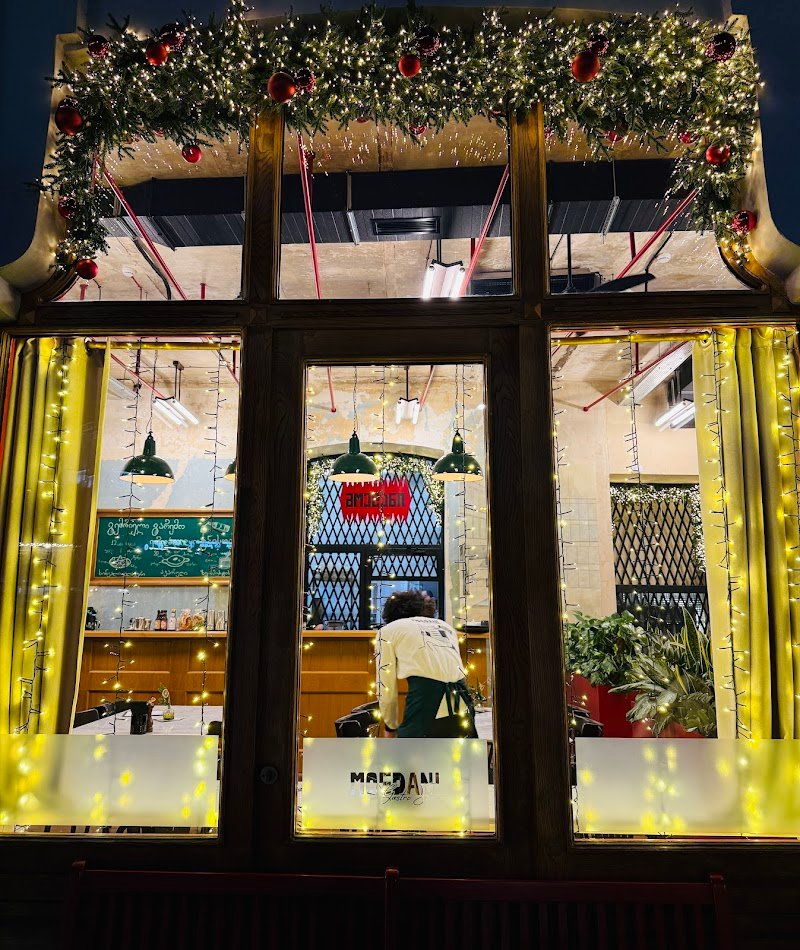
Moedani Gastro Station

Moedani Gastro Station

4.9 (423 reviews)
Locationპუშკინის 10, T'bilisi 0108, Georgia
See360 Restaurant

See360 Restaurant

4.8 (2.8k reviews)
Location0105, 24 Betlemi St, T'bilisi 0105, Georgia
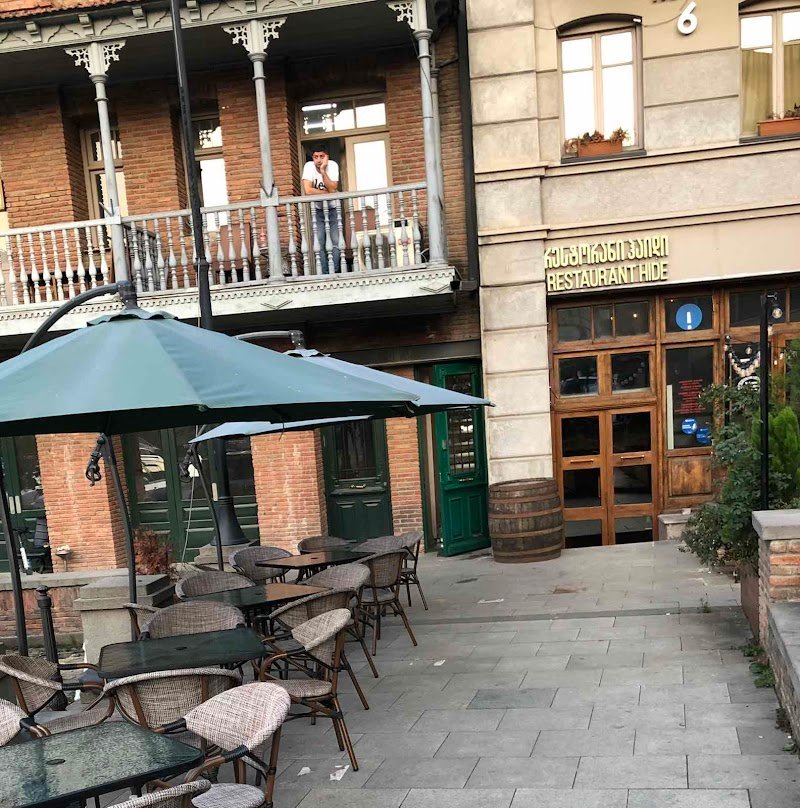
Restaurant Hide

Restaurant Hide

4.8 (4.4k reviews)
LocationVakhtang Gorgasali Square, T'bilisi, Georgia
Madre

Madre

4.8 (1.0k reviews)
Location5 Besiki Square, T'bilisi 0108, Georgia

Accommodations

First time in Tbilisi, I watched daybreak on a wooden balcony, amazed by peaceful streets yet close to buzzing chaos. That’s the charm—where you rest shapes your whole experience here. The city stretches across hills, riverbanks, leafy parks, and hidden lanes. Each neighborhood has a unique rhythm, attracting different personalities and needs. Your base is the compass for every adventure—choose it thoughtfully.

Neighborhood Overview

  • Old Tbilisi: The city’s heart—narrow lanes, pastel houses with carved balconies, cafes tucked into brick arches. Street music, centuries-old churches, and the sulfur bathhouses attract history lovers and intrepid couples. Night owls may trade silence for central action here.
  • Vake: Leafy, modern, slightly upscale. Wide boulevards with designer shops, stylish restaurants, coffee spots. Vake Park is the playground for joggers and families. Less touristy—ideal for longer stays or those seeking relaxation above old gods and crumbled stones.
  • Rustaveli Avenue: Formal, grand, and alive with theaters, museums, and classic hotels. A prestigious address for visitors craving comfort, desk service, and a quick walk to anywhere big. Best for first-timers or business travelers aiming for stress-free logistics.
  • Chugureti (Marjanishvili): Creative and up-and-coming. Old factories have become lofts, bakeries, and vintage bars. Artists, digital nomads, and students gather here—cheaper rents, a diverse crowd, and a slightly raw edge. Well-connected by metro but farther from postcard views.
  • Soliolaki: For seekers of quiet charm and a touch of hidden luxury. Elegant 19th-century buildings, high hills, secret courtyards. Suits couples, singles, or anyone valuing privacy, yet it’s just steps from the action.

Types of Accommodation

  • Cozy Guesthouses: Family-run like Hotel Nata, usually $20–50 nightly. Expect warm welcomes, home-cooked breakfast, and simple comfort—not silence.
  • Boutique Hotels: Urban Oasis, Shota@Rustaveli start near $70. Chic interiors, breakfast buffets, good mattresses—often in renovated old houses with character.
  • Short-term Apartments: Basics start around $35, swankier flats near $90. Good for self-caterers, families, or longer trips—check for heating and Wi-Fi before booking.

Insider Tips for Booking

Book at least two weeks ahead from May to September—rooms fill fast during festival season. Prices dip almost 30% in winter. Many listings show rates before the local VAT—double-check, as this can add 18% at checkout, especially with big chains or agencies.

A walk through lamp-lit streets after midnight—cheese bread in your hand, church bells echoing—reminds me that each address shapes its own memory. Tbilisi’s neighborhoods reward curiosity, but a great night’s sleep is still the finest luxury.