Google Places photo

Palazzo dell'Archiginnasio e Teatro Anatomico

Bologna, Italy
i

Google Places photo

Photo by Thomas Dubois-D.

Shaped by centuries of learning, the Palazzo dell'Archiginnasio and its Anatomical Theatre serve as a living reminder of Bologna’s deep love of knowledge. Wandering these halls reveals stories carved in stone and wood, from loud university debates to whispered lessons in the oldest medical school in Europe. Here, every vaulted ceiling and faded fresco speaks to an era when curiosity rewrote the future of science, medicine, and community life.

Visiting Info

Currency
Entrance fee
3 EUR
Hours
Opening hours
Monday: 10:00 AM – 6:00 PM
Tuesday: 10:00 AM – 6:00 PM
Wednesday: 10:00 AM – 6:00 PM
Thursday: 10:00 AM – 6:00 PM
Friday: 10:00 AM – 6:00 PM
Saturday: 10:00 AM – 6:00 PM
Sunday: Closed

Contact Information

Location
Address
P.zza Galvani, 1, 40124 Bologna BO, Italy

Planning your visit

Planning a visit to the Archiginnasio shows why preparation matters. The building sits in Bologna’s lively heart, drawing both tourists and locals, especially at midday. Early mornings and late afternoons bring fewer crowds, making it simpler to enjoy each carving and detail. The compact size means that an hour isn’t rushed, but history buffs or architecture fans may want more time. Guided tours dig deeper but walk-ins are welcome, except on busy weekends when tickets can sell out.

  • Best time to visit: Spring and autumn for mild weather; early morning or late afternoon to avoid crowds
  • How to get there: Easy walk from Piazza Maggiore; buses stop close, but parking nearby is scarce and streets are narrow
  • Accessibility: Ground floor is accessible; upper levels may pose challenges for those with mobility issues, but staff will try to help
  • Average visit duration: 1 to 2 hours
Must see stuff

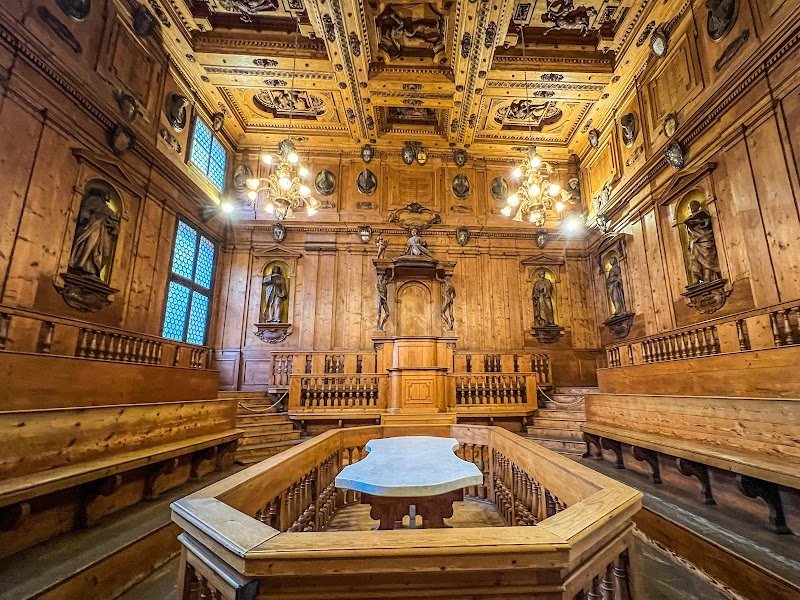
Within the walls of the Palazzo dell'Archiginnasio, a blend of art, science, and university history comes alive. The main courtyard, lined with 17th-century coats of arms and crests, invites photography and quiet reflection. The true showpiece, however, is the wooden Anatomical Theatre. In this ornate room—carved entirely from spruce and still illuminated by natural light—professors once taught anatomy by dissecting real corpses. Beyond the theatre, the grand Staircase, decorated with faded frescoes, and the ancient Library (when open) share the rich, academic soul of this building.

  • Key sights or features: Anatomical Theatre with its marble table and statues; open courtyard with coats of arms; main staircase with faded frescoes
  • Unique experiences: Stand at the professor’s chair in the theatre; hunt for the “skinless man” statue; join a guided history tour
  • Photo-worthy locations: Theatre balcony, sunlight across coat of arms in the courtyard, candle-lit staircases
  • Cultural or historical facts: The Archiginnasio was once the city’s main university building; the Anatomical Theatre was rebuilt after WWII damage; some family crests display stories of medieval rivalry and pride

Tips for your visit

Some practical advice makes a good visit great. The entrance can feel hidden, so keep an eye out for understated signs along Via dell’Archiginnasio. Family groups and seniors may want to avoid the steepest stairs, or ask for help if needed. Weekdays bring quieter moments, especially just after lunch when many visitors slip away. Since the atmosphere feels almost sacred, loud voices should be kept low and cameras should use silent mode. In summer, even the oldest rooms can feel muggy, so water helps and a light sweater never goes amiss.

  • Best times to avoid crowds: Weekday mornings or just before closing
  • What to bring: Camera, refillable water bottle, comfortable shoes, a light sweater (for cooler rooms)
  • Local etiquette or rules: Speak quietly, respect roped-off areas, follow staff instructions
  • Safety or comfort advice: Some rooms have uneven floors; wear shoes with good grip and avoid rushing

Similar Attractions