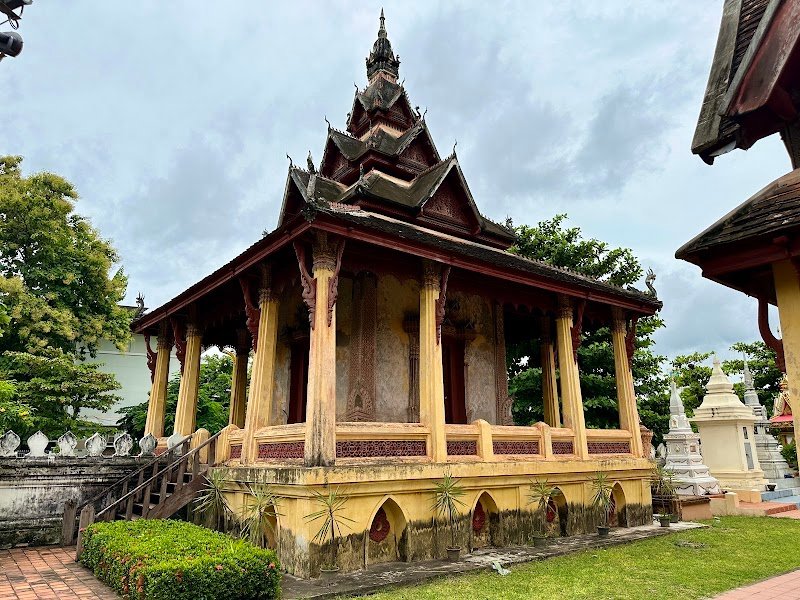
Google Places photo

Wat Sisaket

Vientiane, Laos
i

Along the sleepy streets of Vientiane, a timeless sanctuary quietly welcomes those seeking the gentler side of Lao history. Wat Sisaket, wrapped in fragrant frangipani and echoing with the slow rhythm of Buddhist chants, stands as the city’s oldest surviving temple. Locals still slip inside to light incense or rest in the shade, as ever-wandering travelers pause to appreciate the peace woven into ancient walls. A blend of faded paint, rustling palms, and thousands of serene Buddha images creates a soft, contemplative mood that lingers long after stepping outside.

Visiting Info

Currency
Entrance fee
10000 LAK
Hours
Opening hours
Monday: 8:00 AM – 5:00 PM
Tuesday: 8:00 AM – 5:00 PM
Wednesday: 8:00 AM – 5:00 PM
Thursday: 8:00 AM – 5:00 PM
Friday: 8:00 AM – 5:00 PM
Saturday: 8:00 AM – 5:00 PM
Sunday: 8:00 AM – 5:00 PM

Contact Information

Location
Address
XJ76+6HV, Ave Lane Xang, Vientiane, Laos

Planning your visit

Wat Sisaket rewards careful planning with moments of stillness and discovery. Early mornings brim with gentle sunlight and fewer footsteps. The mid-day heat, however, can leave slow explorers sticky and longing for ice-cold coconut. Located on Lan Xang Avenue near the Presidential Palace, the temple is easy for visitors to find—just a short walk or tuk-tuk ride from most downtown hotels. While tickets are required for foreigners, the modest fee keeps crowds manageable on most days. For families or senior visitors, the site’s even pathways and shaded corridors add welcome comfort.

  • Best time to visit: Early mornings (before 10 a.m.) or just before closing for calmer, cooler hours. Avoid peak midday heat from March to May.
  • How to get there: Walk from central Vientiane, use a local tuk-tuk, or hire a bicycle for a relaxed ride along the Mekong riverside.
  • Accessibility: Flat walkways and limited stairs make the site manageable for most ages and abilities.
  • Average visit duration: Most visitors spend 45-90 minutes exploring at a gentle pace.

Must see stuff

Wat Sisaket's graceful cloisters, faded murals, and thousands of Buddha images offer sensory surprises at each turn. The center of the complex draws most eyes first—a sturdy wooden sim, or ordination hall, guarded by nagas at the entrance. Along the outer courtyard, quiet passageways glow with tiny Buddha statues, each tucked into gentle alcoves. Between incense and shaded gardens, every step reveals stories carved in paint and stone. The space feels self-contained, yet layered: echoes of devotion drift from one generation to the next, sheltered behind ochre walls.

  • Key sights or features: The main ordination hall with its five-tiered roof, unique for resisting destruction during 19th-century invasions. The walls in the surrounding cloister, where more than 6,000 Buddha figures—some tiny and worn, others gleaming new—watch over the courtyard.
  • Unique experiences: Pause to listen to monks chanting from beyond the open doors, or hunt for faded Jataka murals illustrating Buddhist fables. The wat’s library, known as the ‘Ho Trai,’ usually remains closed, but glimpses of its lacquered cabinets reward a curious eye.
  • Photo-worthy locations: The outer colonnade where sunlight falls in golden patterns across rows of sitting Buddhas. The main hall’s roof, best admired from the shaded gardens outside, captures classic Lao design.
  • Cultural or historical facts: Unlike most Vientiane temples, Wat Sisaket survived the Siamese invasion of 1828. Some say its unique Siamese architectural style helped spare it; others point to the wisdom of the resident monks who converted it to a sanctuary during conflict.

Tips for your visit

Savvy visitors prepare for serenity—and a few surprises. While Wat Sisaket remains less crowded than bigger temples across Southeast Asia, occasional school groups and bus tours can still fill the courtyard. A bit of thoughtful packing and cultural awareness can make the difference between a rushed trip and a lingering, meaningful visit. The small on-site café nearby offers simple snacks and cooling drinks for those needing a break. Mosquitoes, especially during the rainy season, can be more persistent in the shaded corners. And while the compound’s calm shields much street noise, be ready for the brief roar of traffic outside the gates.

  • Best times to avoid crowds: Arrive early, just after opening (typically around 8 a.m.), or in the last hour before closing as tour groups fade away.
  • What to bring: Water bottle, sunscreen, insect repellent, camera, and shoes that slip on and off easily for entering temple spaces.
  • Local etiquette or rules: Dress modestly (shoulders and knees covered). Speak softly, especially if monks or locals are praying. Always ask before photographing people.
  • Safety or comfort advice: Watch your step on slightly uneven stones, especially after rain. Keep valuables tucked away—pickpocketing is rare but possible in any city. Pause often to soak in shady corners; there’s no rush here.

Similar Attractions