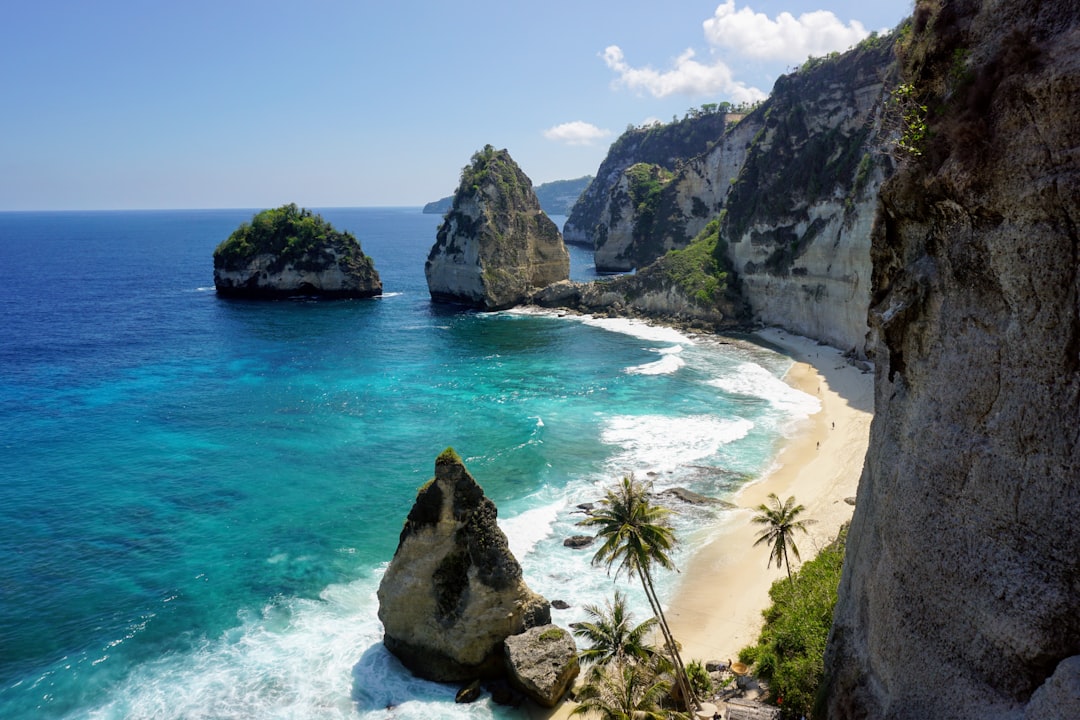
a beach with rocks and trees

Diamond Beach

Bali, Indonesia
i

a beach with rocks and trees

Photo by Anton Rymarev

Blue waves crash onto white sand beneath limestone cliffs. Palm trees bend over the shore, casting floating shadows. Diamond Beach, on Nusa Penida in Bali's southeast, offers a split-second silence before leaving visitors in awe. Sunlight turns the water a milky turquoise, and the cliffs, untouched by resorts, give an ancient, wild feeling. Despite growing popularity, the beach holds on to its rawness—those who make the trek are rewarded with one of Indonesia’s purest coastal scenes.

Visiting Info

Currency
Entrance fee
25000 IDR
Hours
Opening hours
Monday: 6:00 AM – 6:00 PM
Tuesday: 6:00 AM – 6:00 PM
Wednesday: 6:00 AM – 6:00 PM
Thursday: 6:00 AM – 6:00 PM
Friday: 6:00 AM – 6:00 PM
Saturday: 6:00 AM – 6:00 PM
Sunday: 6:00 AM – 6:00 PM

Contact Information

Location
Address
Pejukutan, Nusa Penida, Klungkung Regency, Bali 80771, Indonesia

Planning Your Visit

Trips to Diamond Beach require a bit of strategy. This isn't a landmark approached by hopping on a city bus—plan for a journey, a little sweat, and a camera ready for action. Nusa Penida, an island just off southeast Bali, welcomes visitors who are prepared for ferries, weaving roads, and some steep stairs. While crowds peak midday, early mornings and late afternoons hold more magic, and cooler temperatures help with the climb. Bring basic necessities but leave no trace—Nusa Penida's beaches still rely on visitors' respect.

  • Best time to visit: Dry season (April–October) brings calm seas and clear skies. Arriving before 10 am or after 3 pm avoids both strong sun and peak crowds.
  • How to get there: Fast boats depart from Sanur Harbor in Bali to Nusa Penida. From the harbor, hire a scooter or book a car to drive about an hour east to Diamond Beach. Roads get narrow and bumpy as you near the coast.
  • Accessibility: The beach is reached by a steep set of steps carved into the cliff. Not suitable for wheelchairs or visitors with limited mobility, and families should keep close watch on small children.
  • Average visit duration: Two to three hours, including the descent and rest stops. Many visitors stay nearby or combine Diamond Beach with visits to neighboring sights.

Must See Stuff

Diamond Beach does not rely on commercial draws. The landscape alone creates a sense of wonder. The beach takes its name from the blade-shaped rock formations that jut up offshore, shining when struck by the sun. The Stairway to Diamond Beach, a daring ribbon of steps cut into stone, makes for an Instagram celebrity but also serves as a rite of passage—every visitor climbs down, sand slipping underfoot, the view getting grander every step. Once below, shaded spots under palm trees offer a place to pause while turquoise surf washes up on pale sand. Local vendors often sell fresh coconuts right on the edge of the cliffs—simple and cold, the perfect fuel after the climb. For those eager to explore, a rope swing perched over the beach lets daring visitors fly out above the water, feet dangling high above the shoreline.

  • Key sights: Blade-shaped limestone rocks in the surf, the sweeping view from the top of the stairs, and lush palm groves on the cliff platform above.
  • Unique experiences: The cliffside stairway descent, the iconic rope swing, and coconut water from local stalls. Early risers sometimes catch traditional fishing boats slipping out to sea in the morning mist.
  • Photo-worthy locations: The first landing of the stairway (overlooking the diamond-shaped rocks), mid-climb panoramic angles, and the beach itself with towering cliffs as backdrop.
  • Cultural or historical facts: Nusa Penida’s beaches were largely unknown even to many Balinese for decades. The island holds spiritual significance, with small shrines built above the sands by local families for safe passage and good fortune.

Tips for Your Visit

Trekking to Diamond Beach calls for both a spirit of adventure and a little preparation. While the journey down the stairs rewards with epic views, stone steps can be uneven, and crowds sometimes slow the passage. Sand underfoot grows hot by midday, and tides rise suddenly—swimming may look tempting but be cautious, as strong currents are common and there are no lifeguards. Vendors offer basics, but amenities are few, so pack water, sunblock, and snacks. As some beachgoers leave litter, bringing a small bag for trash helps keep the scene pristine for everyone. Locals appreciate modest clothing on the cliffs and at the shrines, though beachwear is appropriate on the sand itself.

  • Best times to avoid crowds: Arrive before 9 am or visit after 4 pm when most tour groups have left.
  • What to bring: Water, wide-brimmed hat, sunblock, steady sandals or trainers, and a camera. Swimsuit and towel for brave swimmers, but caution is advised.
  • Local etiquette: Stay on marked paths, give right of way to those climbing up, and respect shrine sites. Purchase coconuts or drinks from small vendors as a show of support (and refreshment).
  • Safety or comfort advice: Watch your footing on the stairway and avoid swimming at high tide or during rough seas. If visiting with young children, closely supervise at all times. Don’t feed monkeys on the path.

Similar Attractions